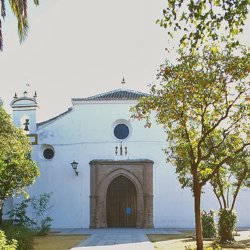
CHURCH OF SAINT SEBATIAN
The church of San Sebastián is a Gothic-Mudejar temple originally built between the 15th and 16th centuries as a hermitage on the outskirts of the city. It has undergone profound transformations throughout its history, especially during the 19th and 20th centuries, in relation to the ... ➪
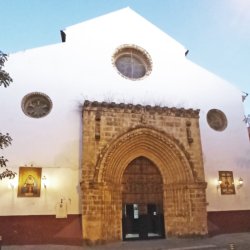
CHURCH OF SAINT JULIAN
The church of San Julián is a Gothic-Mudejar temple, built mostly in the 14th century, although with significant subsequent modifications. It is the headquarters of the Hermandad de la Hiniesta, which processes on Palm Sunday. It has a rectangular floor plan and three naves, separated ... ➪
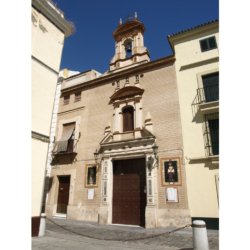
CAPILLA DEL MAYOR DOLOR (VIRGIN OF THE GREATEST PAIN)
The chapel of the Mayor Dolor is a small 18th-century temple located in the Plaza de Molviedro, which is why it is sometimes known as the Molviedro chapel. Today it is the headquarters of the Hermandad de Jesús Despojado, which processes on Palm Sunday ... ➪
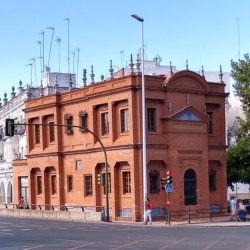
BUILDING OF THE SEVILLE CHARITY ASSOCIATION
This regionalist building designed by Aníbal González stands at the intersection of Arjona and Reyes Católicos streets. It is known by the name of the organisation that commissioned its construction, the Asociación Sevillana de Caridad. It was built between 1912 and 1914 and originally had ... ➪
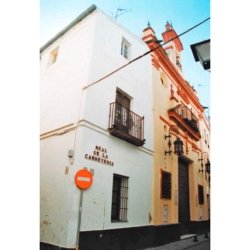
CHAPEL OF LA CARRETERÍA
The Carretería chapel is a small 18th-century temple located in the Arenal district of Seville. It is one of the smallest chapels in Seville, with less than 100 square meters. As its name indicates, it is the headquarters of the Carretería brotherhood, which takes part ... ➪

CHAPEL OF LA PIEDAD DEL BARATILLO
The chapel of La Piedad del Baratillo is a small baroque temple located in the Arenal district of Seville. It is the headquarters of the Baratillo Brotherhood, which processes on Holy Wednesday afternoon with two floats, La Piedad and the Virgen de la Caridad ... ➪
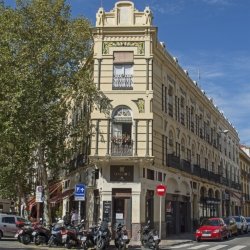
HOUSE OF FLIES
The residential and commercial building located on the corner of Adriano and Pastor y Landero streets is one of the few examples of modernist architecture in Seville. Its design was by the Sevillian architect Antonio Gómez Millán and it is popularly known as the “House ... ➪
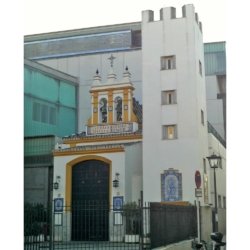
ROSARY CHAPEL – HERMANDAD DE LAS AGUAS
It is a small neo-baroque temple located in the Arenal neighbourhood, the result of the reconstruction in 1990 of a previous chapel that was in a state of ruin. Since 1977 it has been the headquarters of the Hermandad de las Aguas, which processes on ... ➪
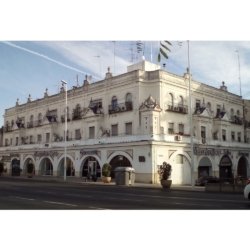
KING’S WOOD WAREHOUSES
The so-called Almacén del Rey is an old building originally built around 1735. Its purpose was to house the wood that arrived in the city down the Guadalquivir from the Sierra del Segura (Jaén). Its current appearance is far from the original, since between 1950 ... ➪
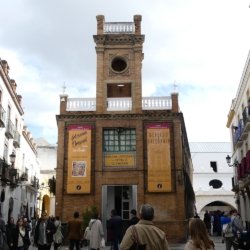
MERCADO DEL POSTIGO – POSTIGO’S MARKET
The Postigo Market is an interesting regionalist-style building designed by Juan Talavera y Heredia around 1926. Today it houses the El Postigo Handicraft Market, where around twenty local artisan workshops sell their products ... ➪
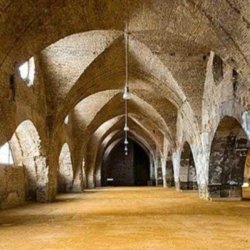
REALES ATARAZANAS – ROYAL SHIPYARDS
The Royal Shipyards were a large shipyard built in the port area of Seville by order of Alfonso X the Wise (1252), becoming the most important naval base in the history of the Crown of Castile. Today, only a few of its original ships remain, ... ➪
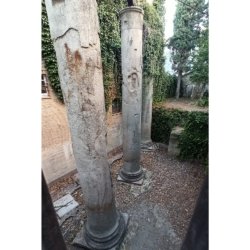
ROMAN COLUMNS ON “CALLE MÁRMOLES”
In a plot of land at the beginning of Calle Mármoles, three Roman columns are preserved, aligned in a northwest-southeast direction. They are at their original level, which means that they are about 4.50 metres below the current level of the city. Traditionally, they were ... ➪

DUCK FOUNTAIN
Located in the Plaza de San Leandro, this fountain is known as the Pila del Pato (Duck Fountain) because of the bronze spout in the shape of this bird that crowns it. It is made up of three vessels of decreasing size, all of them ... ➪
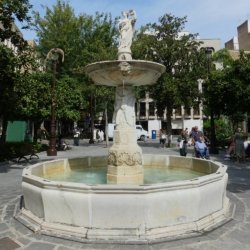
CALLIOPE FOUNTAIN
In the centre of the Plaza de la Magdalena there is a marble fountain from 1844, crowned by an 18th century sculpture representing the muse Calliope. The fountain is made up of a large polygonal vessel, in the centre of which there is a stem-shaft ... ➪
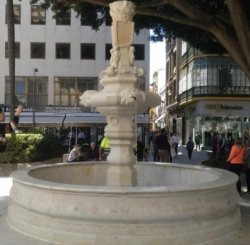
FOUNTAIN IN THE PLAZA DE LA ENCARNACIÓN
In the Plaza de la Encarnación there is an original marble fountain from the 18th century, considered the oldest of those preserved in Seville. It is made up of a large circular section vessel, in the centre of which stands a baroque-shaped fountain-shaft. In the ... ➪
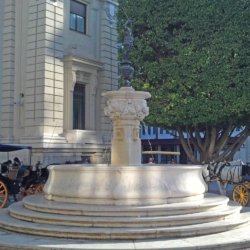
FOUNTAIN OF THE GOD MERCURY
Located at one end of Plaza de San Francisco, opposite the main façade of the Bank of Spain, we find a fountain dedicated to the god Mercury. It has a circular basin raised on four steps, in the centre of which there is a pillar ... ➪
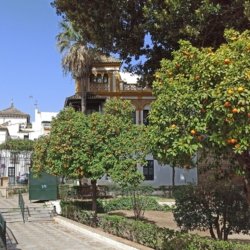
MURILLO GARDENS
The Murillo Gardens and the Catalina de Ribera promenade form one of the most interesting garden areas in the city of Seville, both historically, artistically, scenically and environmentally. They are fully involved in the life of the city and preserve interesting botanical species as well ... ➪
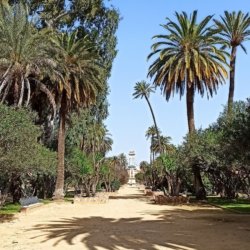
CATALINA DE RIBERA PROMENADE
The Paseo de Catalina de Ribera and the Murillo Gardens make up one of the most interesting garden areas in terms of history, art, landscape and environment in the city of Seville. They are fully involved in the life of the city and preserve interesting ... ➪
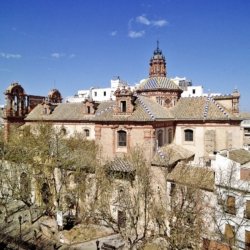
CHURCH OF THE MAGDALENE
The Church of Santa María Magdalena in Seville is an imposing Baroque temple built in the transition between the 17th and 18th centuries under the direction of the architect Leonardo de Figueroa. It is one of the most outstanding churches in the city due to ... ➪
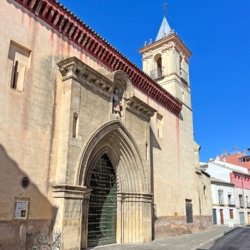
CHURCH OF SAN ESTEBAN
The church of San Esteban is located in the Alfalfa neighborhood, which has historically been the main access axis to the city from the East. It is a Mudejar Gothic temple built in the second half of the 14th century, although its exterior façades are ... ➪
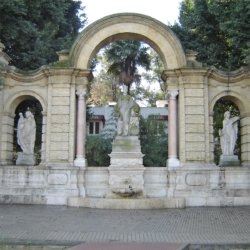
FOUNTAIN IN GLORIETA DE SAN DIEGO
In the San Diego roundabout, at the northern end of the María Luisa Park, a structure in the shape of a triumphal arch is preserved with three openings that house the allegorical figures of Spain, in the center, and the city of Seville in its ... ➪
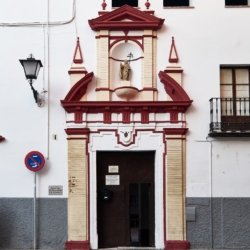
CONVENT OF SAN LEANDRO
The convent of San Leandro is a convent of Augustinian nuns that occupies a large sector of the Alfalfa neighborhood, a place where they have settled since the 14th century. It is famous among Sevillians for the baking work of its nuns, who prepare the ... ➪

MONUMENT TO THE CID CAMPEADOR
Located in the center of Avenida del Cid, it is an equestrian statue by the American artist Anne Hyatt Vaugh. It was a gift from the New York Hispanic Society to the city of Seville on the occasion of the celebration of the Ibero-American Exposition ... ➪
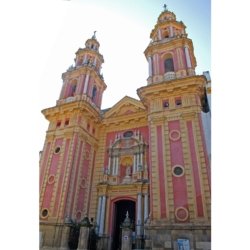
CHURCH OF SAN ILDEFONSO
The church of San Ildefonso is an imposing neoclassical temple that stands right in front of the convent of San Leandro, in the Alfalfa neighborhood. Its construction began at the end of the 18th century and, from the outside, it is one of the most ... ➪
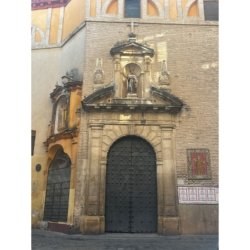
CHURCH OF SAN ALBERTO
The church of San Alberto is the temple of the Convent of the same name, currently occupied by the Congregation of the Oratory of San Felipe Neri (Philippian fathers). It is a church with a single nave built in the first half of the 17th ... ➪
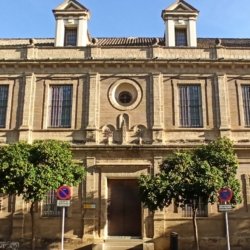
OLD SILO OF THE CATHEDRAL COUNCIL
The Old Silo of the Cathedral Council (Antigua Cilla del Cabildo de la Catedral) is an 18th century building that stands on Santo Tomás Street in Seville. Throughout its history it has undergone various remodeling in relation to the different uses it has received. Currently ... ➪
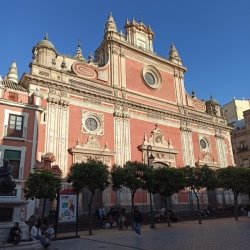
CHURCH OF THE SAVIOR
The Church of the Divine Savior of Seville is the second largest temple in the city, only after the Cathedral. It is one of the great architectural jewels of the city and inside it houses a magnificent sculpture collection, with works by the most prominent ... ➪
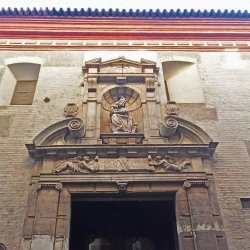
CONVENT OF SANTA MARÍA DE JESÚS
The church of the convent of Santa María de Jesús is the only currently visitable part of a monastic complex of Poor Clare sisters that has been located on Águilas Street since the 16th century. It is a classic “box church”, so common in Sevillian ... ➪
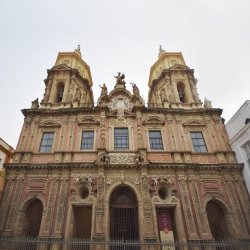
CHURCH OF SAN LUIS DE LOS FRANCESES
The church of San Luis de los Franceses constitutes one of the most outstanding examples of Sevillian baroque, with a clear influence of the great works of religious architecture in Rome in the 17th century. It has a central plan in the shape of a ... ➪
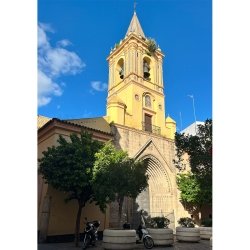
CHURCH OF SAN ISIDORO
The church of San Isidoro is one of the medieval parishes of Seville. Several authors much later than its foundation say that it was built on the site that would have been occupied by the family house of San Isidoro during the Visigothic period. Naturally, ... ➪
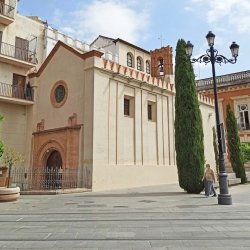
CHAPEL OF SANTA MARÍA DE JESÚS (MAESE RODRIGO’S CHAPEL)
This Puerta de Jerez chapel is the only vestige that remains of the primitive University of Seville, which was founded by Master Rodrigo de Santaella in 1506. The rest of the buildings of this first university were demolished at the beginning of the 20th century ... ➪
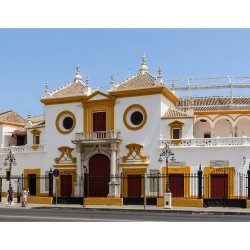
MAESTRANZA BULLRING
The Plaza de la Maestranza in Seville is among the oldest in Spain and is the most important for the world of bullfighting, along with Las Ventas in Madrid. It has a capacity for 12,000 people and its construction lasted in different phases for more ... ➪
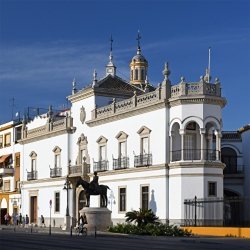
HEADQUARTERS OF THE REAL MAESTRANZA
The headquarters of the Real Maestranza de Caballería is located next to the Plaza de Toros, of which this institution is the owner. It is a regionalist building in the neo-baroque style, designed by Aníbal González in 1929. However, the property would undergo successive renovations ... ➪
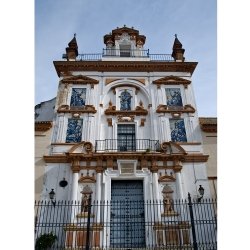
HOSPITAL DE LA CARIDAD (CHARITY HOSPITAL)
The Hospital de la Caridad is the headquarters of the brotherhood of Santa Caridad, whose purpose is to assist sick people with few resources. It was founded in the 15th century and still carries out valuable healthcare work in Seville today. The architectural complex that ... ➪
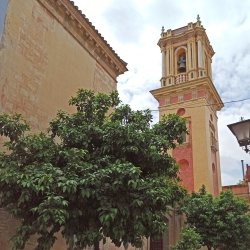
CHURCH OF SAN BARTOLOMÉ
The church of San Bartolomé sits on one of the places in the city where successive worship as a mosque, synagogue and Christian temple has been confirmed throughout history. A mosque was originally located there, which was converted into a synagogue when the Jewish quarter ... ➪
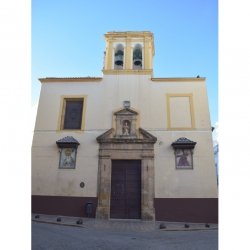
CHURCH OF SAN NICOLAS DE BARI
The current temple of San Nicolás de Bari was built in the 18th century on the site of a previous 16th-century church, which in turn replaced a previous medieval one. The church is located next to what was one of the entrances to the Jewish ... ➪
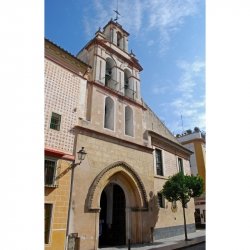
SANTA MARÍA LA BLANCA
The church of Santa María la Blanca, in the San Bartolomé neighbourhood, is a precious jewel of Sevillian Baroque. It is known that a mosque was built in this same place during the Islamic period and some authors have pointed out that this mosque could ... ➪
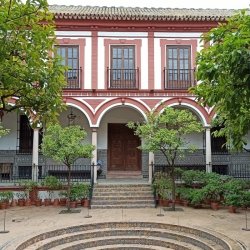
HOSPITAL OF THE VENERABLE PRIESTS
The Hospital de los Venerables Sacerdotes was built at the end of the 17th century at the request of Canon Justino de Neve, as a place of care and shelter for elderly and underprivileged clergy. Its works began in 1675 under the direction of Juan ... ➪
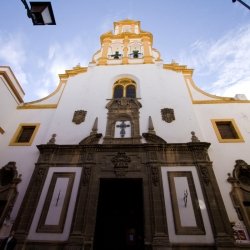
SANTA CRUZ CHURCH
The current temple on Mateos Gago street was originally the church of the Espíritu Santo convent, of the Clérigos Menores congregation. The primitive church of Santa Cruz was located in the current square of the same name, but its demolition began during the Napoleonic invasion, ... ➪
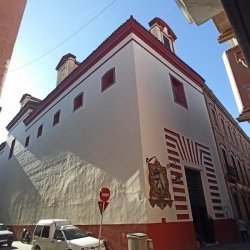
CHURCH OF SAN BUENAVENTURA
The church of San Buenaventura is a temple built in the 17th century as part of the former Colegio de San Buenaventura and is currently the church of the Franciscan Fraternity that is annexed on its west side ... ➪
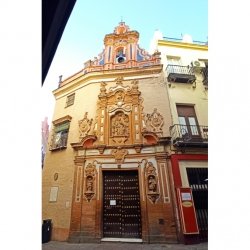
SAN JOSÉ CHAPEL
This small church was built at the initiative of the city's carpenters' union, and hence its dedication to Saint Joseph, patron saint of woodworkers. It is known that the carpenters already had a temple in this area in the 16th century, but its dilapidated state ... ➪
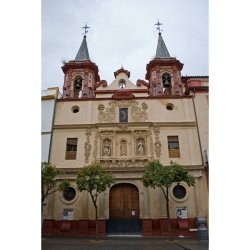
CHURCH OF THE OLD HOSPITAL OF OUR LADY OF PEACE
The Hospital of Nuestra Señora de la Paz is a welfare foundation belonging to the Order of Hospitaller Brothers of San Juan de Dios, settled in Seville since 1543 and in the location they currently occupy since 1574. It was founded as a center for ... ➪
CHURCH OF THE DIVINE SAVIOR
The Church of the Divine Savior of Seville is the second largest temple in the city, only after the Cathedral. It is one of the great architectural jewels of the city and inside it houses a magnificent sculpture collection, with works by the most prominent ... ➪

ARCHBISHOP’S PALACE
The Archbishop's Palace of Seville stands on the land that has occupied the bishop's residence since the Christian conquest of the city in the 13th century. However, nothing has survived from the primitive palace to the present day and the oldest preserved remains date from ... ➪
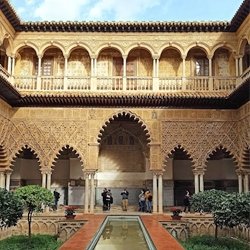
ROYAL ALCÁZAR
The Alcazar of Seville is one of the most fascinating royal residences in Spain. This is due to the fact that it does not respond to a single project undertaken at a given moment, but rather is the result of numerous construction phases that have ... ➪

CHURCH OF EL SAGRARIO
The church of the Tabernacle was attached to the Cathedral between 1618 and 1662, following the plans of the architects Miguel de Zumárraga, Alonso de Vandelvira and Cristóbal de Rojas. It is an imposing Baroque temple with a single nave with side chapels, on which ... ➪
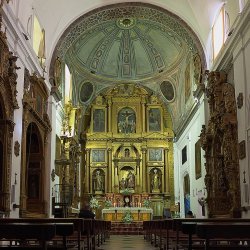
CONVENT OF LAS TERESAS (SAN JOSÉ DEL CARMEN)
This community of Discalced Carmelites settled in Seville in 1575 at the hands of Saint Teresa herself, who traveled to the city to supervise the foundation. They first settled in some houses on Calle Alfonso XII and later on Calle Zaragoza, until in 1586 they ... ➪
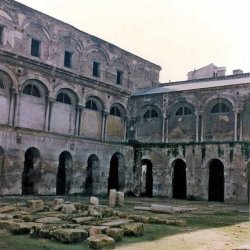
CONVENT OF SAN AGUSTÍN (OLD)
The Convent of San Agustín was one of the great Sevillian convents during the Middle and Modern Ages, founded according to Ortiz de Zúñiga already in the 13th century, shortly after the Christian conquest of the city. It seems that the religious settled here at ... ➪
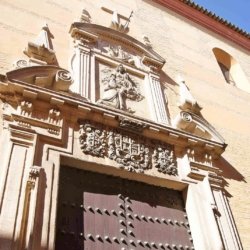
CONVENT MADRE DE DIOS
Convent of Dominican nuns founded at the end of the 15th century, when Queen Isabella the Catholic ceded a large plot of the old Jewish quarter of Seville to the nuns. Some authors maintain that the convent was partly based on one of the old ... ➪
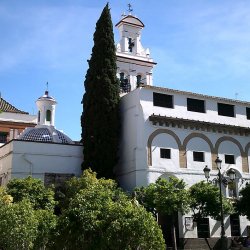
CONVENT OF LA ENCARNACIÓN
This convent was built at the end of the 14th century as Hospital de Santa Marta, a name by which many Sevillians still know it. At the end of the 19th century it became a convent, when the community of Augustinian nuns who occupied the ... ➪
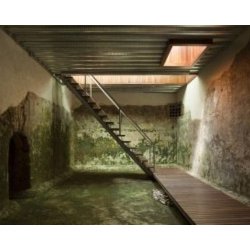
ROMAN CISTERN
Under the Plaza de la Pescadería, and accessible through a modern glass structure, a cistern or 'castellum aquae' from Roman times has been preserved. Its construction has been dated to the 2nd century AD. and it is believed that it was in operation until the ... ➪
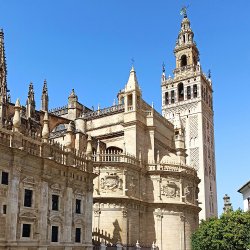
CATHEDRAL OF SEVILLE
The Cathedral of Seville is probably the most emblematic monument of the city. Unesco declared it a World Heritage Site in 1987, along with the Alcázar and the Archivo de Indias. It is considered the largest Gothic temple in the world ... ➪
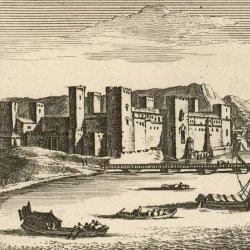
OLD CASTLE OF SAN JORGE
In the place where the Triana Market is located today, a castle was built in the Almohad period (XIII) that would later be known as the castle of San Jorge. It may have been built on previous constructions, even Roman or Visigothic, and that it ... ➪
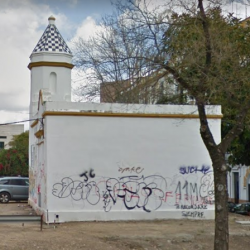
ELECTRICITY SHED OFF THE 1929 PARK
This small electricity booth, with its Neo-Baroque style, is the only remainder that has survived to this day from the great amusement park that was built for the Ibero-American Exposition of 1929. It occupied an area of almost 43,000 square meters between the avenues of ... ➪
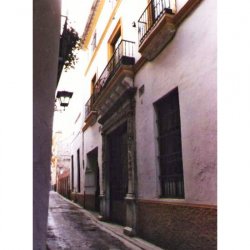
PALACE HOUSE AT GUZMÁN EL BUENO STREET 4
We are in front of a 16th century palace house, of which we do not know documentary origin. However, it is clear that it has undergone successive reforms over the following centuries, mainly in the 17th and 19th centuries, as reflected in the inscription on ... ➪
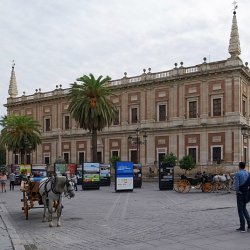
GENERAL ARCHIVE OF THE INDIES
The large Renaissance building that we know today as the Archivo de Indias was originally conceived as the Lonja de Mercaderes, to house and organize part of the commercial activity that arrived in the city during the 16th century. Until its construction, merchants used the ... ➪
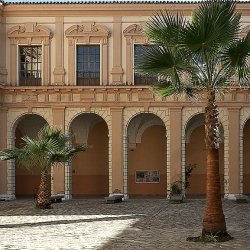
OLD CONVENT OF EL CARMEN
This enormous building, which today occupies the Superior Conservatory of Music and the Superior School of Dramatic Art, was originally a Carmelite convent founded in 1358 and known as Casa Grande del Carmen. In the 19th century it became a barracks and remained in that ... ➪
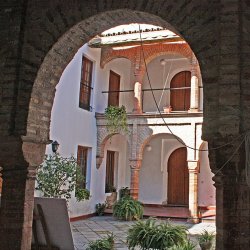
HOUSE OF EL REY MORO
The House of the Moorish King is a construction dating from the fifteenth century, which makes it one of the oldest houses that we can find in Seville. It is currently the headquarters of the Blas Infante Foundation ... ➪
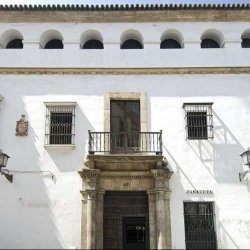
HOUSE OF SANTA TERESA
This palace house on Zaragoza street is known as Casa de Santa Teresa because the first foundation of the Discalced Carmelites in the city was established there, by the hand of six nuns who accompanied Saint Teresa herself to Seville. Her brother, Lorenzo de Cepeda, ... ➪
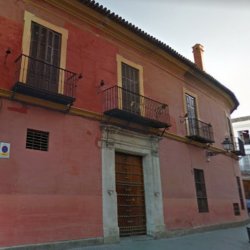
HOUSE OF SALINAS
The Casa de Salinas is an example of the type of Sevillian palace house from the 16th century, characterized by synthesizing the contributions of the Renaissance with the Gothic-Mudejar tradition of the city. It was ordered to be built by Baltasar de Jaén y Roelas ... ➪

HOUSE OF PILATOS
The Casa de Pilatos is one of the most outstanding examples of 16th century civil architecture in Andalusia, constituting a beautiful synthesis of Italian Renaissance art and the Sevillian Mudejar style ... ➪
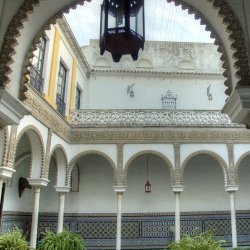
HOUSE OF OLEA
This is a palace house that was originally built in the 14th century, but has undergone numerous modifications throughout its history, especially in the 16th, 18th and 19th centuries. The main façade, in neoclassical style, corresponds to this last period. Currently, it serves as the ... ➪
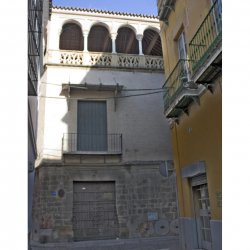
HOUSE OF THE PINELO
Splendid Sevillian palace house from the early 16th century that mixes Gothic, Mudejar and Renaissance elements in its style ... ➪
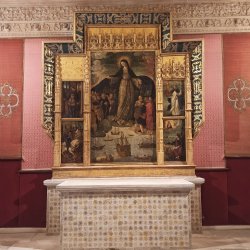
HOUSE OF TRADE OF THE INDIES
The House of Trade was an institution founded in 1503 by order of Isabel la Católica, in charge of managing everything related to navigation and commercial exploitation of the new territories of the Crown overseas ... ➪
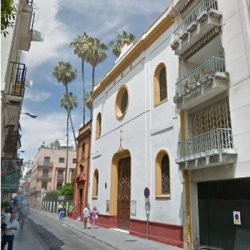
CHURCH OF SAN GREGORIO MAGNO
The Church of San Gregorio Magno, also called the Chapel of the Holy Sepulchre, originally belonged to the English college founded by the Jesuits in the city at the end of the 16th century. Currently, the brotherhood of the Holy Burial is located in the ... ➪
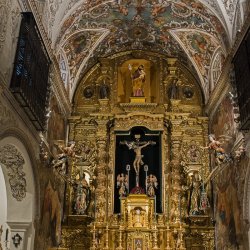
CHAPEL OF EL DULCE NOMBRE DE JESÚS
The Vera Cruz Brotherhood has its headquarters in this chapel on Baños street, which makes a penance station every Holy Monday with two pasos, the Cristo de la Vera Cruz and the Virgen de las Tristezas ... ➪
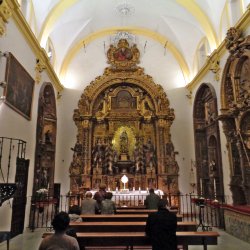
CHAPEL OF SAN ONOFRE
This small chapel was originally part of the now-defunct Casa Grande de San Francisco, a huge Franciscan convent that was located until the 19th century in what is now Plaza Nueva and its adjoining areas. In fact, it can be considered that it is the ... ➪
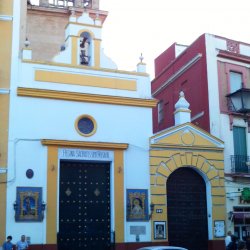
CHAPEL OF THE ROSARIO DE MONTE-SION
In this chapel on Calle Feria, the Brotherhood of Monte-Sion has its brotherhood, which makes its penance station every Holy Thursday with two steps, the Lord of Prayer in the Garden and the Virgin of the Rosary ... ➪
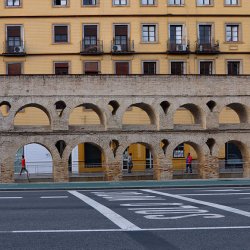
CAÑOS DE CARMONA
The 12th century aqueduct that carried water from the nearby town of Alcalá de Guadaira to the city is known as Caños de Carmona. The name 'de Carmona' comes from the fact that the aqueduct reached the city next to the Puerta de Carmona. From ... ➪
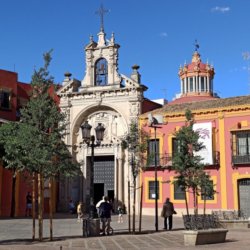
BASILICA OF EL GRAN PODER
The Brotherhood of El Gran Poder has its headquarters in this Basilica in the Plaza de San Lorenzo. They do their penance station in the 'Madrugá' from Thursday to Good Friday, in the midst of absolute silence, being one of the brotherhoods that arouse the ... ➪
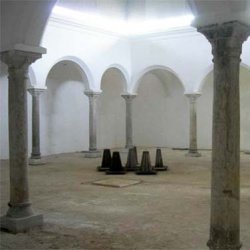
BATHS OF THE MOORISH QUEEN
These are Almohad baths from the 13th century, which originally constituted one of the largest public baths built in Al Ándalus. After the Christian conquest of the city, they were ceded by Alfonso X to his stepmother, Queen Juana de Ponthieu. That would probably be ... ➪
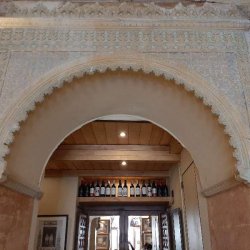
ARAB BATHS OF THE GIRALDA BAR
In the Bar Giralda Brewery, one of the many public baths that Isbiliya had has been preserved. In this case, it has the particularity that they were probably the closest to the great aljama mosque ... ➪
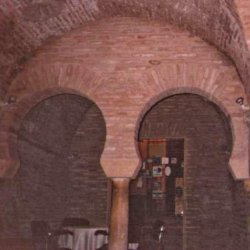
ARAB BATHS OF THE MESON DEL MORO
In this space currently occupied by a restaurant, the remains of one of the numerous public baths that Islamic Seville had have been preserved ... ➪
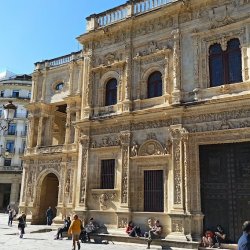
SEVILLE CITY HALL
The Sevillian town hall has its headquarters in a magnificent 16th century building, which preserves much of its façade traces of the exquisite Plateresque Renaissance style in which it was built ... ➪
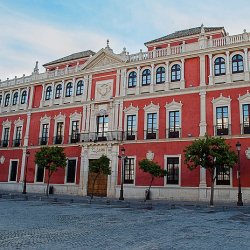
ROYAL AUDIENCE OF SEVILLE
The Royal Court was the highest judicial institution in the city and settled in this space since the beginning of the 16th century, when it moved from its previous headquarters in the Casa de Pilatos. The current building would be built in the Renaissance style ... ➪
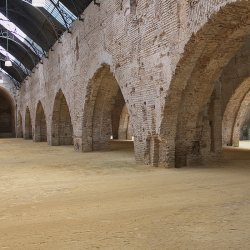
ROYAL SHIPYARDS
Las Atarazanas de Sevilla was an immense space dedicated to the manufacture, repair and storage of ships. Its construction began in the mid-13th century by order of Alfonso X the Wise, although it is known that there were already some shipyards in the area since ... ➪
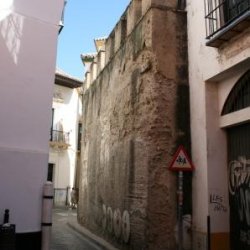
WALL OF THE JEWISH QUARTER
In Fabiola street we find a fragment of the wall barely ten meters long, which constitutes the only visible remains of the Jewish quarter wall that have come down to us. This wall was built in the 13th century to separate the Jewish community of ... ➪
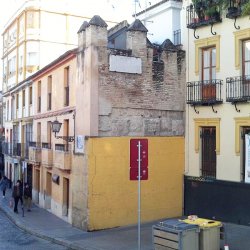
REAL DOOR OR GOLES DOOR
In this space was located one of the gates of the walled enclosure of the city. Today disappeared, only the canvas of the wall that had an annex has come down to us. It was called Puerta de Goles at least since the Christian conquest ... ➪
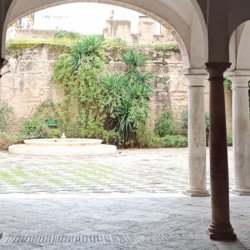
WALL OF THE CABILDO SQUARE
We can see here a fragment of about 60 meters of wall, built in the 13th century creating a fortress that was located in this area as part of the complex defensive framework that surrounded the Alcázar and the great mosque at the end of ... ➪
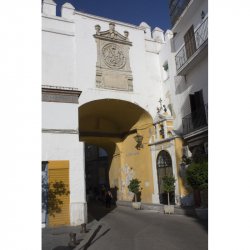
GATE OF OIL
It is one of the few gates of the walled enclosure of the city that have survived to this day. Its original construction has been dated to the Almohad period, probably in the 12th century, and it has been identified with the 'bab al-Qatai' or ... ➪
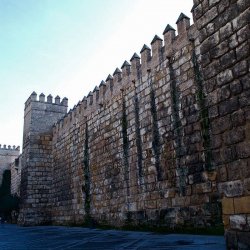
WALLS OF ALCAZAR
The walls that enclose the Alcázar of Seville on its northern side, towards the Plaza del Triunfo, are the most monumental and beautiful of those preserved in the city. Unlike the rest of the walls of Seville, here they were built using enormous stone ashlars, ... ➪
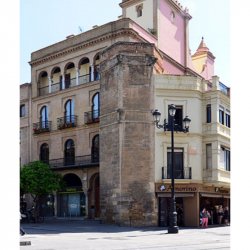
TOWER OF ABDELAZIZ
Also called Torre de Santo Tomás. It was built in the Almohad period, in the 13th century, as part of the canvas of the wall that linked the Alcázar with the Torre del Oro. It has a hexagonal floor plan and is about 15 meters ... ➪
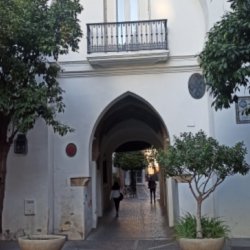
GATE OF ABDELAZIZ
Also called Arco de la Plata or Arco de Mañara. It is one of the entrance doors through which the walled enclosure that surrounded the Alcázar was accessed. It was built in the Almohad period, probably already in the 13th century, like the Torre del ... ➪
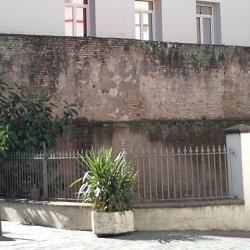
WALL OF SAN GREGORIO STREET
This fragment of barely 20 meters of wall was built in the Almohad period, in the middle of the 12th century, forming part of the so-called third enclosure of the Alcázar. It was built when the Alcázar was enlarged to be configured as a citadel, ... ➪
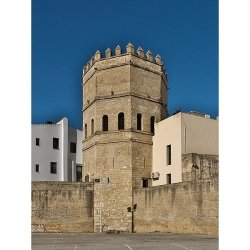
TOWER OF SILVER
The Torre de la Plata is located in what is now Santander street, and was originally linked to the Torre del Oro by a stretch of wall, most of which has now disappeared. Both were probably built at the same time, in the Almohad period, ... ➪
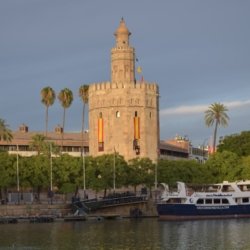
TOWER OF GOLD
The Torre del Oro is the most famous of those that have survived from the walled enclosure of Seville. It was built in the Almohad period, between 1220 and 1221 and apparently owes its name to the golden effects produced by its color when reflected ... ➪
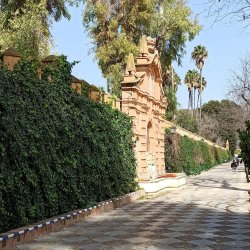
WALL OF THE PASEO CATALINA DE RIBERA (CONTEMPORARY)
As part of the urban redevelopment works in this sector of the city, undertaken at the beginning of the 20th century, this wall or fence was built to separate the gardens of the Alcázar from the Paseo de Catalina de Ribera and the Jardines de ... ➪
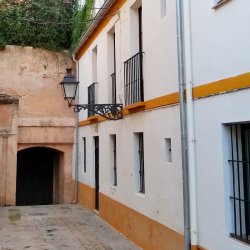
GATE OF THE WATER
Also called Postigo del Alcázar or Postigo de la Huerta del Retiro. It is a small door in the wall, one of the few that have been preserved from the medieval layout in Seville. It was erected in the Almohad period, between the 12th and ... ➪
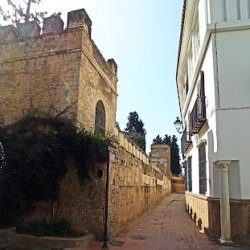
WALL IN THE CALLEJÓN DEL AGUA
The beautiful Callejón del Agua in the Barrio de Santa Cruz runs alongside a stretch of wall about 140 meters long. It is original from the 12th century, built using mud walls and today it appears much lower than it originally was due to the ... ➪
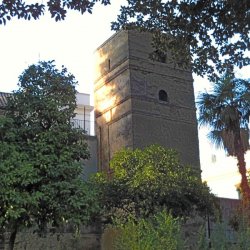
WALLS IN JARDINES DE MURILLO
Next to the Murillo gardens, several sections of the wall have been preserved, interrupted by the openings opened at the beginning of the 20th century to connect the Santa Cruz and Alfaro squares with the gardens. In total there are about 50 meters of wall, ... ➪
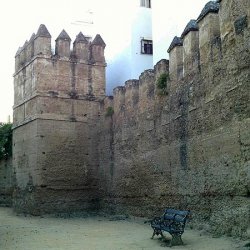
WALLS IN JARDINES DEL VALLE
This 'L'-shaped fragment, about 250 meters long, is the largest piece of medieval wall preserved in the city, after the Macarena walls. Its construction dates back to the Almoravid period, within the reform works of the walled enclosure that took place around 1133 ... ➪

GATE OF CORDOBA
The Puerta de Córdoba is the only one preserved from the walled enclosure of Isbilia in which it is still possible to see something of its original layout, dating from between the 12th and 13th centuries. As it has come down to us, it is ... ➪

WHITE TOWER
It is a tower inserted in the northern section of the city walls, very close to the Puerta de la Macarena. It is made of mud and brick, with an irregular octagonal plan. It is two stories high, both vaulted. when losing ... ➪
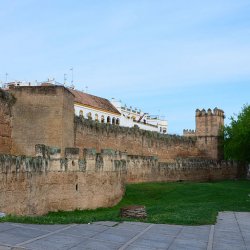
WALLS OF THE MACARENA
The Macarena walls are the fragment of walls that has been preserved in the northern end of the historic center of Seville, between the Puerta de Córdoba and Puerta de la Macarena. They are about half a kilometer long, making up the largest and best-preserved ... ➪

RENAISSANCE TONDOS OF JARDÍN DE LAS DELICIAS
Next to one of the fountains of the Jardines de las Delicias, a series of four joined brick walls was arranged in the 2007 reform, forming a series of three benches. On them were placed four Renaissance tondos, originally made for the Plateresque façade of ... ➪
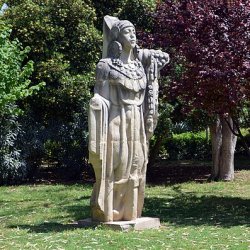
ALLEGORIES OF IBERIA, THE GUADALQUIVIR RIVER AND THE MAGDALENA RIVER
In a small meadow inside the Garden of Earthly Delights we find these three allegorical sculptures made around 1928. They were originally made as part of a large monumental fountain that was located in what was called Plaza de los Conquistadores, in the southern sector ... ➪
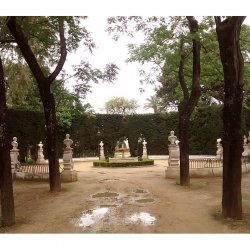
HAITI ROUNDABOUT
This gazebo has kept its original appearance since it was placed in the Garden of Earthly Delights around 1864. It was made up of a series of 18th-century sculptures and pedestals from the Archiepiscopal Palace of Umbrete. It has an elliptical shape and delimiting its ... ➪
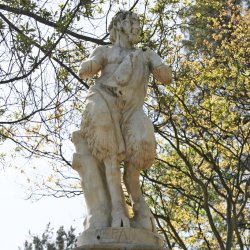
SCULPTURE TO THE GOD PAN
Pan was the Greek god of shepherds and flocks, especially revered in the Arcadian region. He was identified with Faun in Roman mythology. He was depicted mixing human and animal features, with legs, tail, and ram's horns. Here we see him resting on a trunk, ... ➪
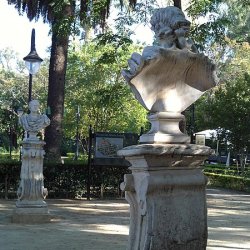
SCULPTURES OF AVENIDA DEL LÍBANO
The path inside Jardín de las Delicias that leads to Plaza de América is known as Avenida del Líbano. It is framed by a series of rococo pedestals made in the 18th century by Cayetano de Acosta for the Archbishop's palace in Umbrete. On them ... ➪
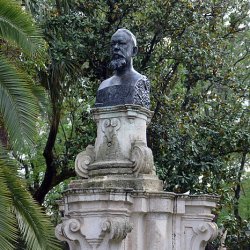
MONUMENT TO THE PAINTER JOAQUIN SOROLLA
Monument erected in 1929 to the Valencian impressionist painter Joaquín Sorolla. The bust of the painter was made by the also Valencian José Capuz Mamano and on its base you can read 'SOROLLA MCMXIX' (1929). The pedestal comes from the Archiepiscopal Palace of Umbrete and ... ➪
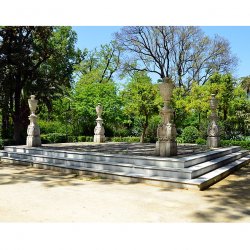
HIGH HALL OR SALÓN ALTO
This set is made up of a rectangular base with a slatted floor that is raised by means of a three-step tier. In the corners are a series of four Rococo pedestals made by Cayetano de Acosta in the 18th century. On them we see ... ➪
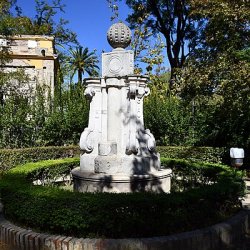
GRENADE OF THE COLOMBIAN PAVILION
This small monument was shaped as we can see it today in the remodeling of the Garden of Earthly Delights undertaken in 2007. It consists of a marble pedestal made in the 18th century in the Rococo style by Cayetano de Acosta. A grenade was ... ➪
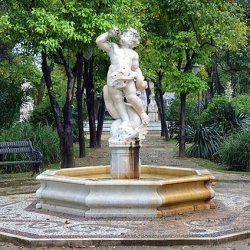
FOUNTAIN OF NEPTUNE CHILD
Baroque sculpture from the 18th century, made in Italy and from the Archiepiscopal Palace of Umbrete. It is a child figure of 1.70 m. approximately, holding a sea shell in an attitude of touching it. It is not clear if it is a representation of ... ➪
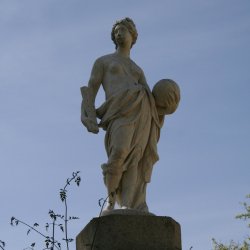
MONUMENT TO URANIA
Urania was the Greek muse of astronomy and astrology, generally considered the daughter of Zeus and Mnemosyne. Here she appears in an Italian baroque sculpture from the 18th century, from the Archiepiscopal Palace of Umbrete. We see the muse bare-chested, holding a world sphere in ... ➪
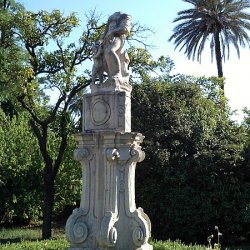
MONUMENT TO VENUS
It is a set of sculptures that represents Venus, the Roman goddess of love and beauty, accompanied by her son Cupid, the Eros of the Greeks, also considered the god of loving desire. They were made in Italy in the 18th century in the Baroque ... ➪
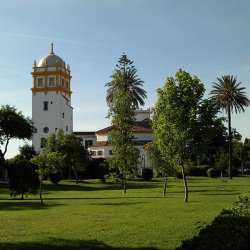
JARDÍN DE LAS DELICIAS (GARDEN OF DELIGHTS)
The Garden of Earthly Delights is one of the oldest public gardens in Seville. It was called Arjona's Garden of Earthly Delights, since it was set up during the mandate of the Seville Mayor José Manuel de Arjona y Cubas, between 1825 and 1835. They ... ➪

THE MACARENA ARCH
The Macarena arch is one of the few entrances to the walls of Seville that have come down to us, along with the Puerta de Córdoba and the Postigo del Aceite. It is attached to the longest wall canvas among the few preserved in the ... ➪