In the Gospel nave (left side):
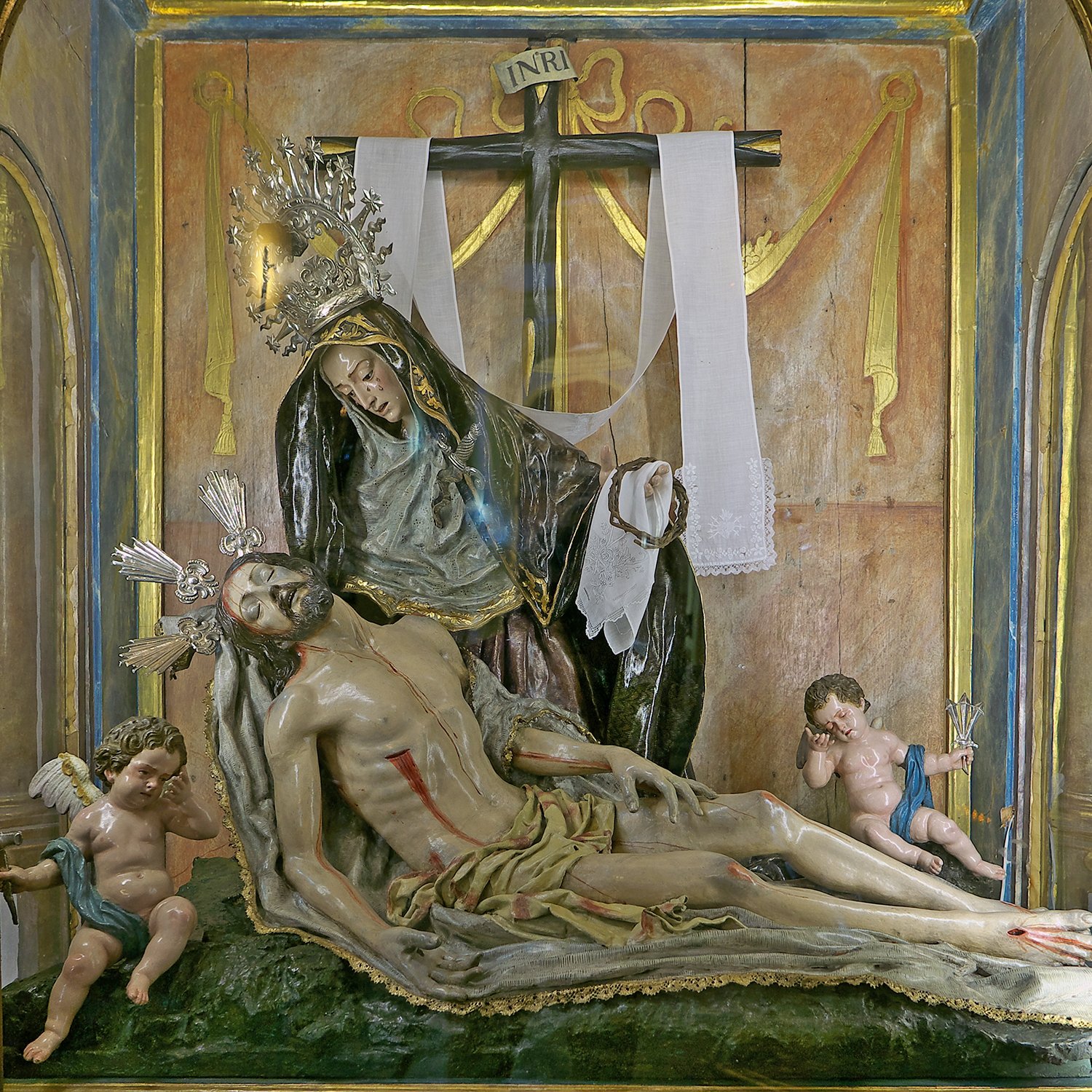
- At the foot of the nave, next to the entrance, a showcase like a temple houses a beautiful small-format Pietà. This is an image from the 18th century, most likely the work of the sculptor Cristóbal Ramos.
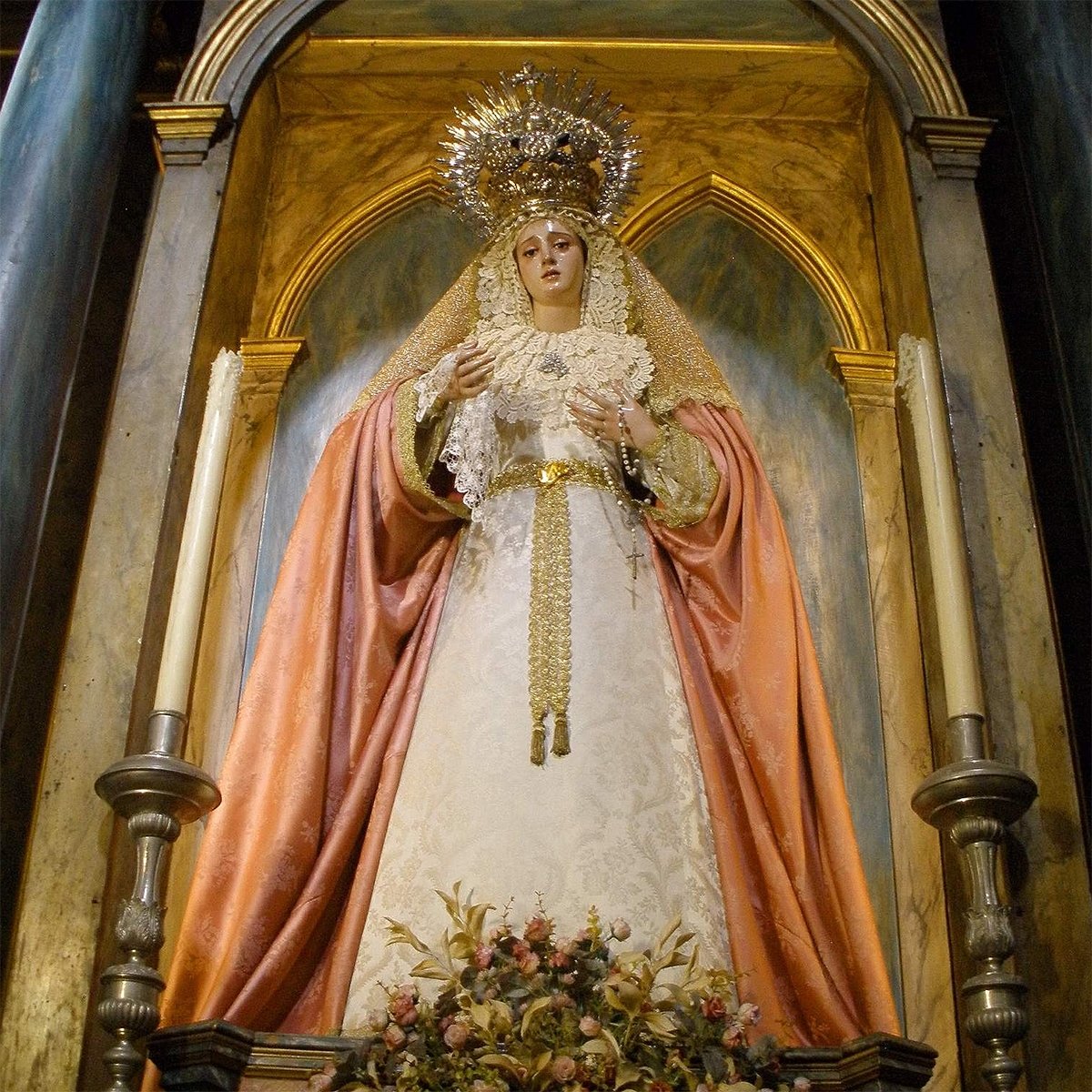
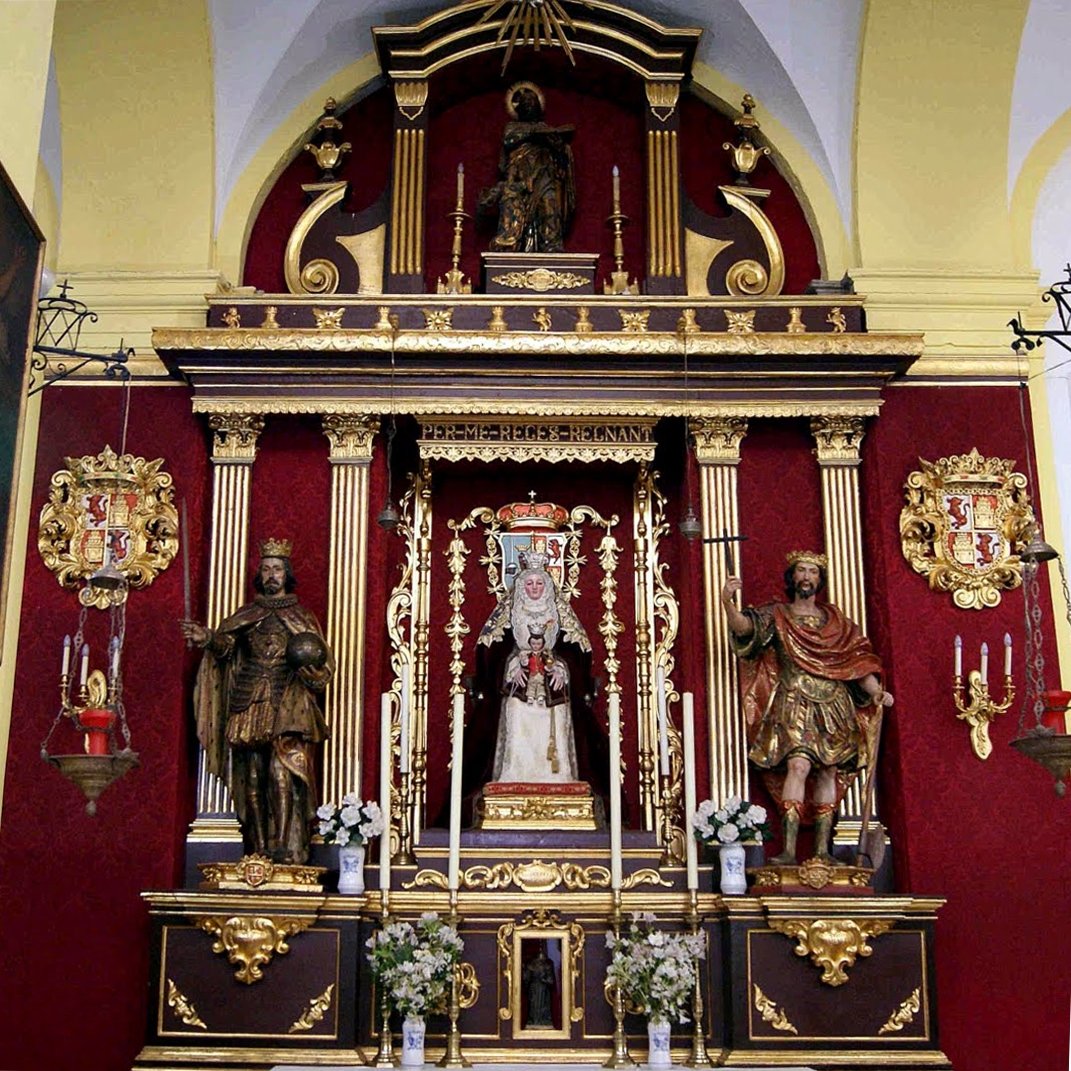
- Also on the Gospel side is the altarpiece of the Virgin of the Kings, also called “of the Tailors”, as this guild was the one that originally commissioned the image. Traditionally the image has been considered one of the so-called “fernandinas”, that is, original from the early times after the Christian conquest (13th century). Today there is a tendency to think that the image is the work of the 16th century, with notable baroque transformations, such as the Child himself, which was added in the 17th.
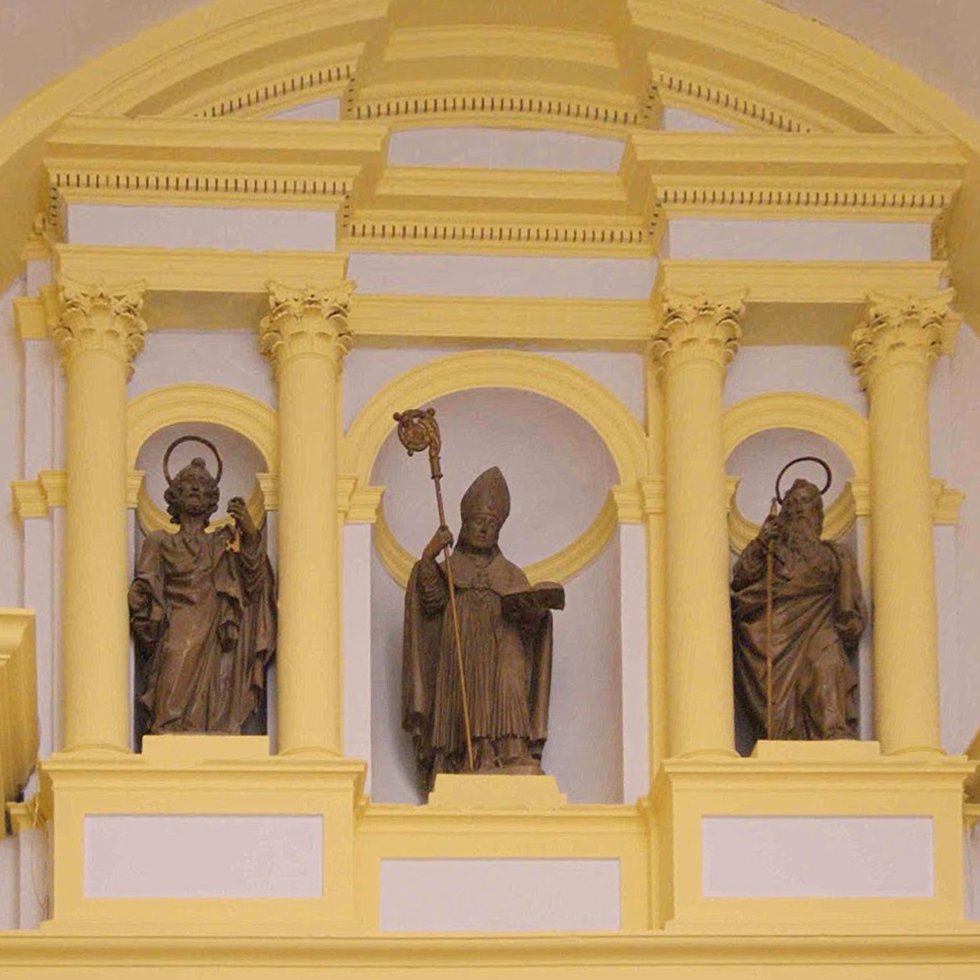
The image is owned by the Brotherhood of Tailors, which has its origin in the old San Marcos hospital, which was located in the Alfalfa area. This is the reason why we find a small carving of Saint Mark in the attic of the altarpiece. In the side streets, we find San Fernando and San Hermenegildo, patron saints of the Spanish monarchy. They are carvings by Pedro Roldán dated around 1674.
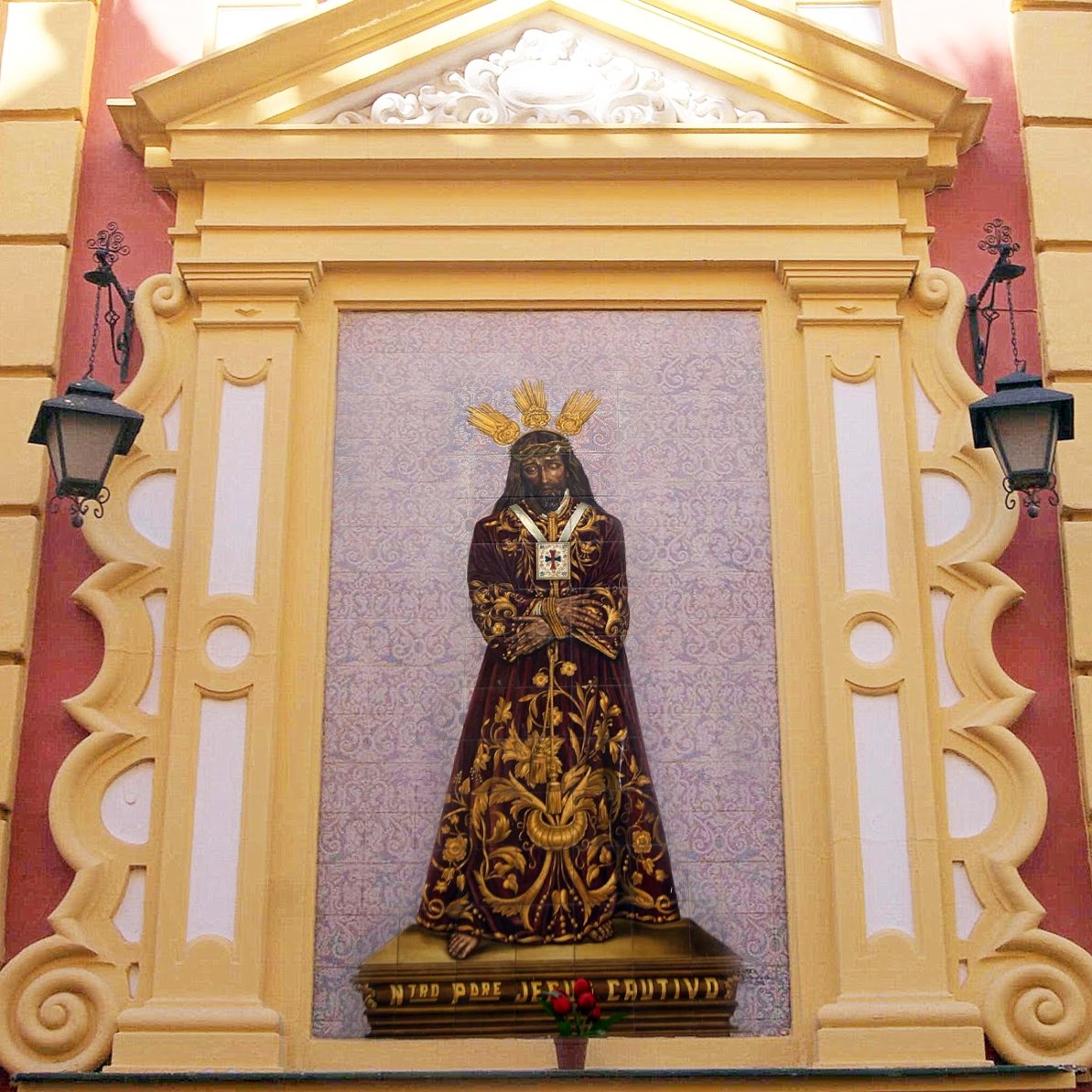
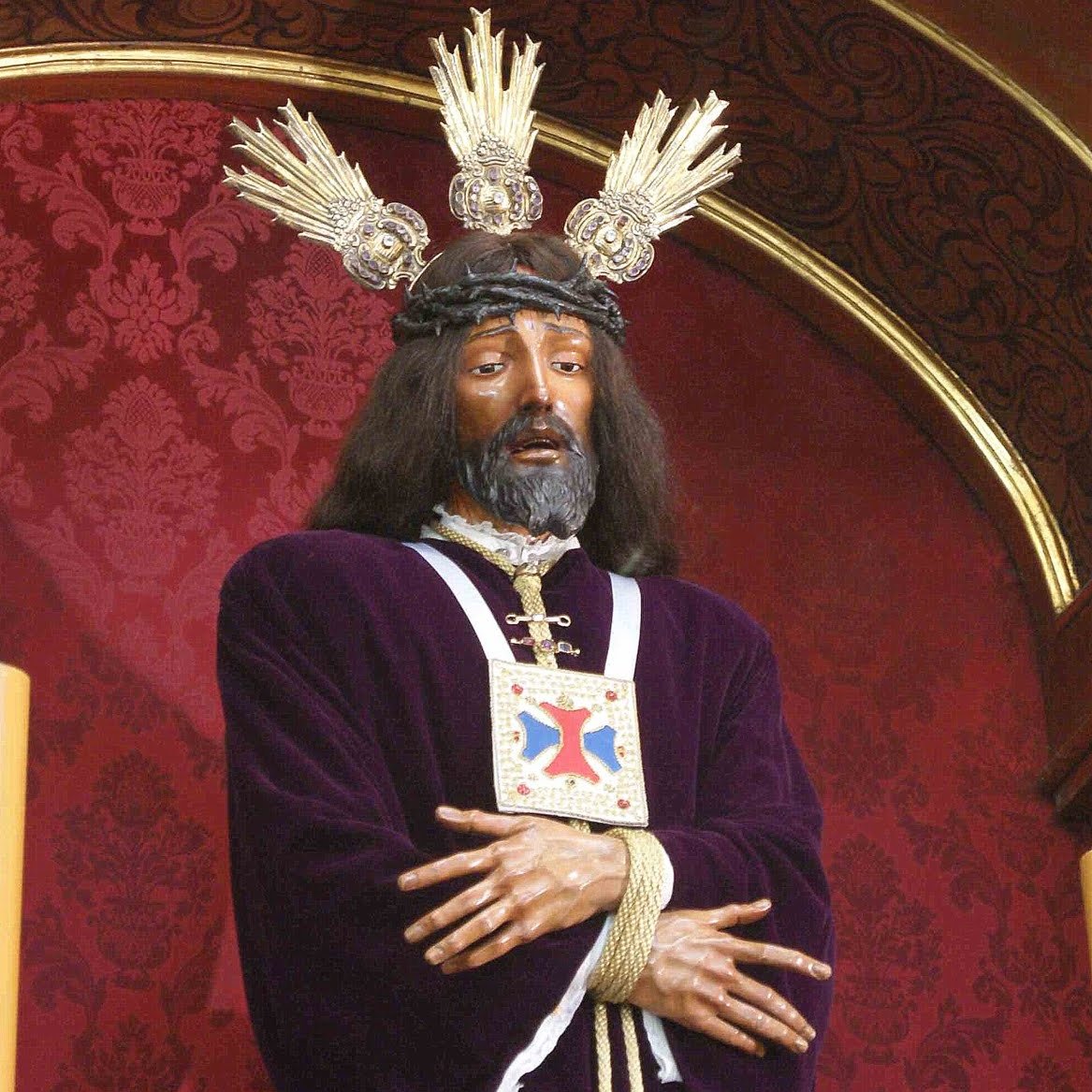
- At the left end of the transept is the Cautivo altarpiece, which houses the image of Nuestro Padre Jesús Cautivo y Rescatado, also called Medinaceli because it reproduces the iconography of the image found in Madrid with the same dedication. It is an anonymous image from the 18th century that represents Jesus just before starting the path to Calvary. It is a dress size that makes use of natural hair, a resource that was very common during the Baroque as a way of giving images greater realism and drama.
This iconography was greatly promoted by the order of the Trinitarians, who were dedicated to collecting alms for the rescue of Christian captives in Muslim territory. It was the monks of this order who brought devotion to Seville. The image was originally in the church of his convent, which was located next to the Plaza del Cristo in Burgos. When the convent disappeared during the confiscation, the carving went to the church of San Hermenegildo and from there it was moved to its current location at the beginning of the 20th century. Currently it has great devotion in the city, with numerous devotees approaching its altar every Friday, especially during the Fridays of Lent.
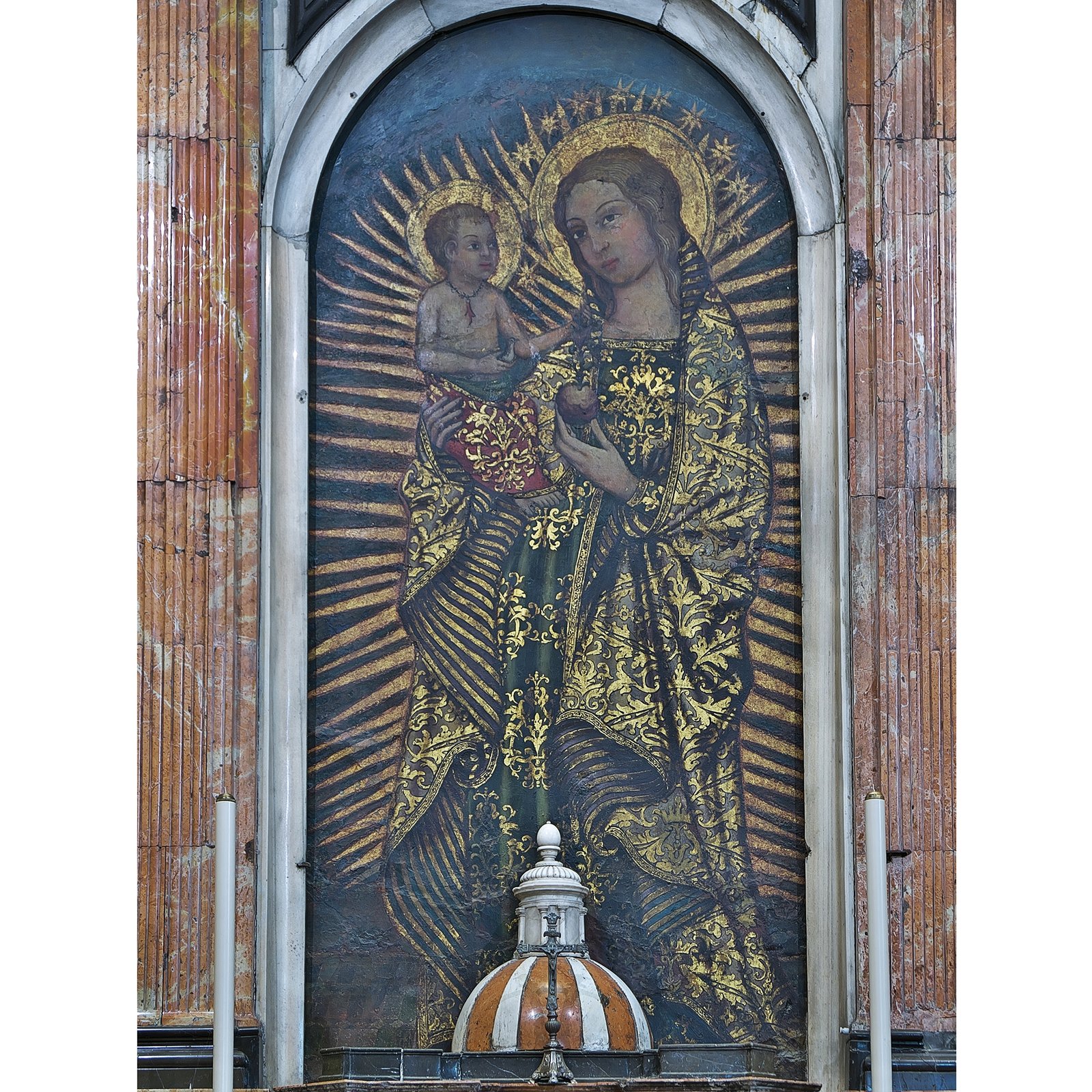
- At the head of the Gospel nave is the altarpiece of the Virgen del Coral. The central image is a very interesting representation of the Virgin and Child, by an anonymous author, but belonging to the so-called international style of the late 14th century. It would, therefore, be contemporary with the Virgen de la Antigua that is venerated in the Cathedral. José Francisco Haldón Reina makes an interesting description of the image on the parish website:
“It is a mural painting that follows the so-called international style, dating back to the last quarter of the 14th century. The dedication of the Coral is due to the fragment that hangs from the necklace that adorns the Child's neck. The red color of the coral appears here as a prefiguration of the Eucharist and the Passion of Christ. The Virgin is represented as "Hodegetria" (Bearer or Conductor). She is dressed in a purple tunic and mantle, decorated with golden lozenges, bands and plant motifs. The Virgin surrounds her head with a golden nimbus with stars. The head of the Child also has a golden nimbus. Both effigies are surrounded by golden glow. Mary carries the Child on her right arm, showing in her left hand a pomegranate, a symbol of the Church.







.jpg?uselang=es)