ISAAC BEN BARUCH ALBALIA

ISAAC BEN BARUCH ALBALIA

(1035-1094)

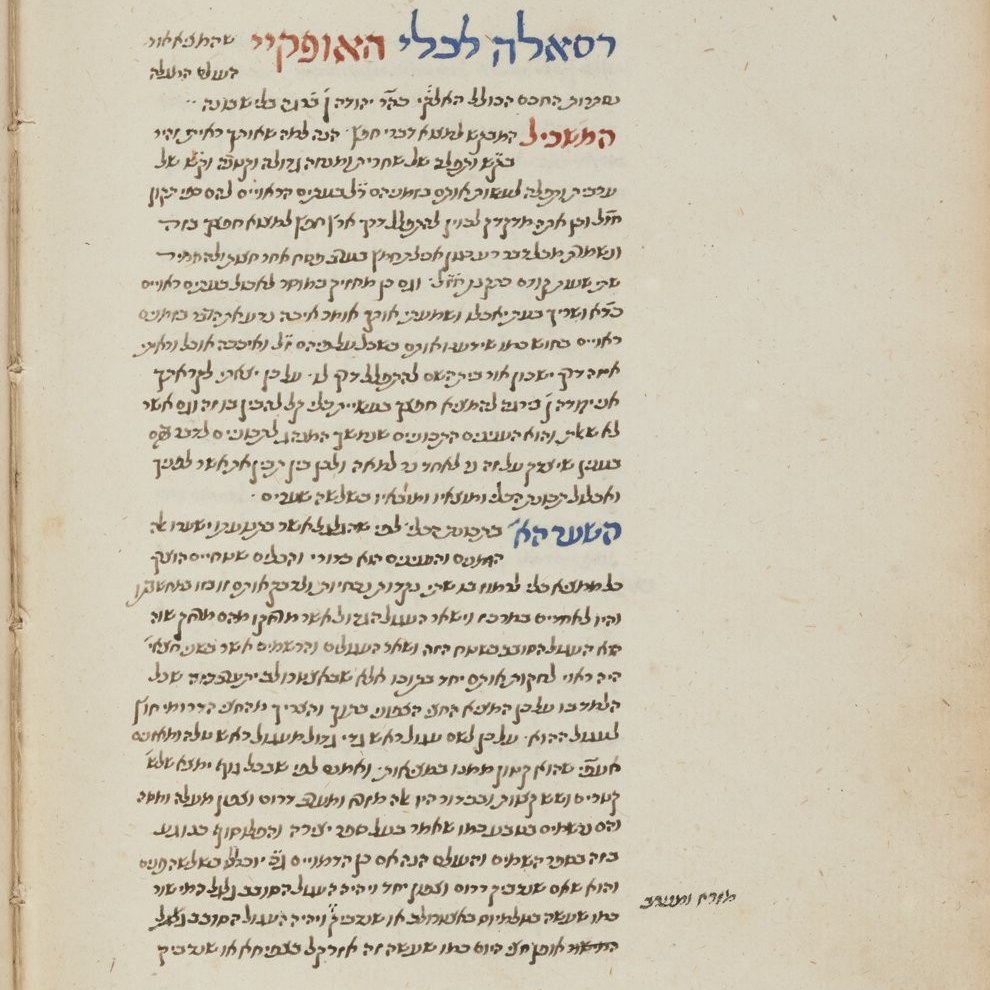
Astronomer and Talmudist who became part of the court of King Al-Mu'tamid of Seville as an astrologer. Isaac was born in Cordoba and, according to Ibn Daud, in his youth he had as his teacher the French scholar Rabbi Perigors. He also had a close relationship with Samuel ben Joseph ha-Nagid and with his son Jehoseph ben Samuel ha-Nagid, to whom he dedicated in 1065 his calendrical work Maḥberet Sod ha-Ibbur (“The Secret of Intercalation”). It is known that when Jehoseph died in 1066, Isaac spent large sums of money on rebuilding the family library that had been dispersed.

In 1069 Al-Mu'tamid, King of Seville, appointed him to his entourage as a court astrologer, and also rabbi and nasi (prince) of the Jews in his kingdom. R. Isaac used his influence at court to improve the status of the Jews in the kingdom. Isaac was renowned for his great scholarship, both in general and in Jewish studies.

At the age of 30, he began writing his “Kuppat ha-Rokhelim” (“The Spice-Sellers’ Basket”), a commentary on difficult passages in the Talmud, but did not complete it.

Two of Albalia’s responsa have been preserved:

- One on the laws of “ẓiẓit” in “Temim De’im” by Abraham b. David de Posquières (no. 224).

- One in Arabic in “Toratam shel Rishonim” (ed. by Ch. M. Horowitz, 2 (1881), 36–38).

JOSEPH IBN MIGASH

JOSEPH IBN MIGASH

(1077-1141)

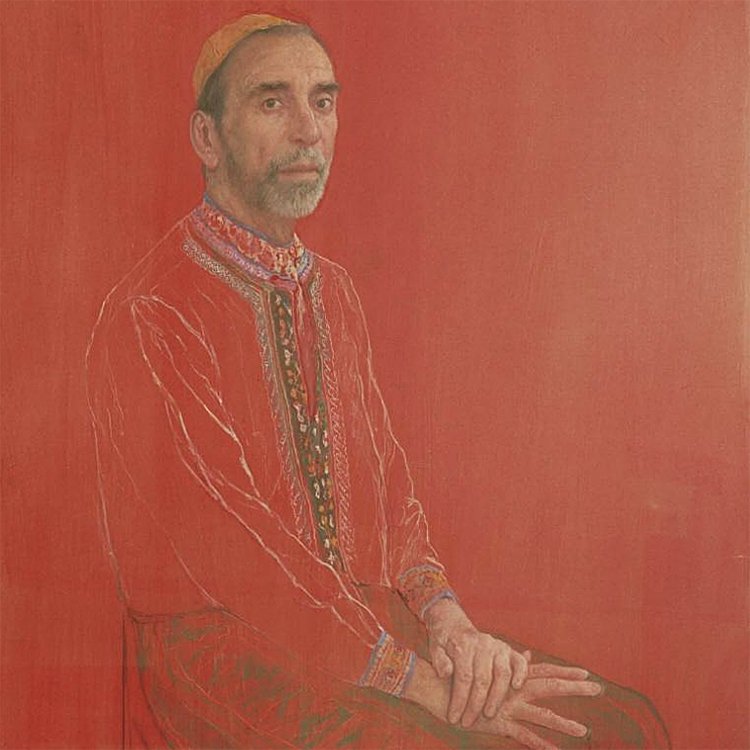
A rabbi and Talmudist born in Seville who became the head of the school of Lucena, a city that experienced a true splendour of Jewish culture between the 9th and 12th centuries. His family was from Granada, which is why some authors claim he was born in this city, but it is clear that Ibn Migas spent his childhood in Seville.

As a child, he began to show his inclination for the study of the Talmud and at the age of 12 he was sent to Lucena, where he was trained for 14 years. The rabbi who directed this academy, Isaac Alfasi, named him his successor in 1103, passing over his own son, which shows the worth of Ibn Migas. He was at the head of the study centre in Lucena for thirty-eight years, during which time he increased the fame of the school of Lucena and his own prestige. Among his students were personalities such as Maimun, the father of the famous Maimonides.

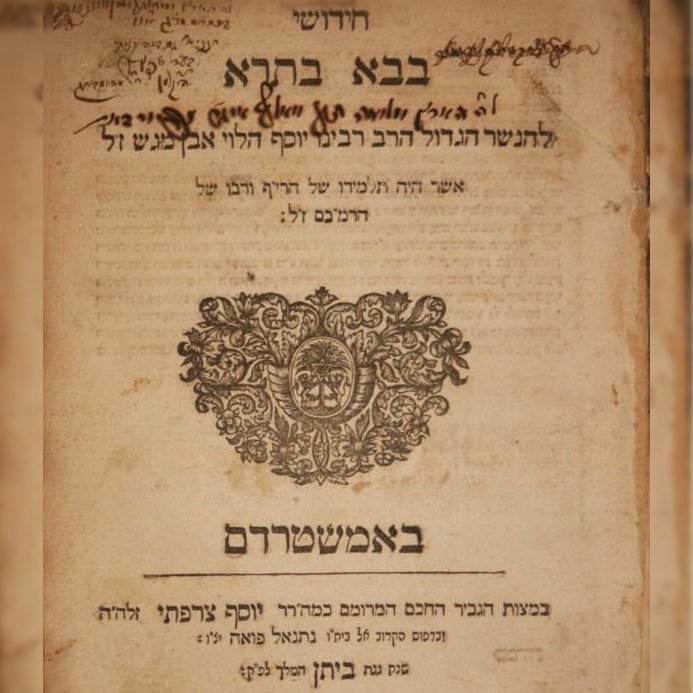
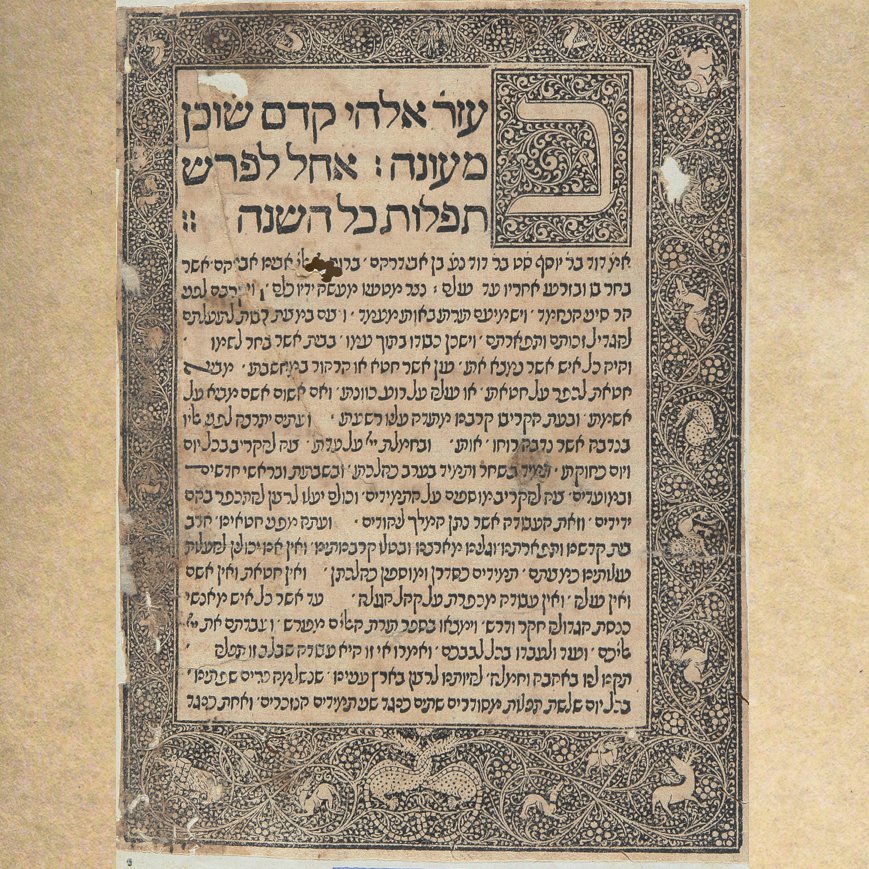
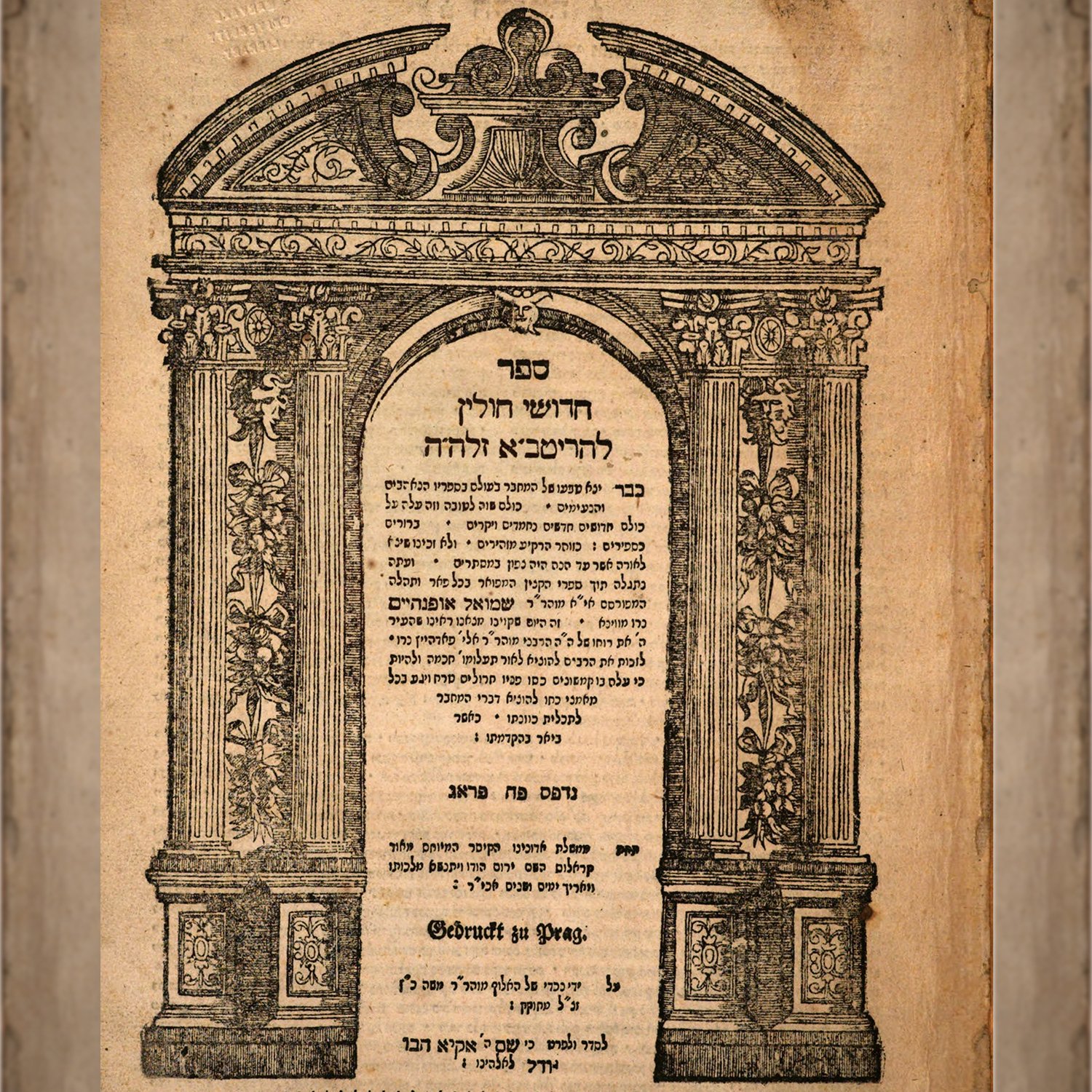
First edition of Joseph ibn Migash's commentary on the Bava Batra treatise (Amsterdam, 1702)

Among his works the following may be noted:

  • Responsa (Saloniki, 1791; Warsaw, 1870), two hundred and fourteen of which were collected by Joseph Elijah ha-Levi, partially translated from the Arabic and published from a poor manuscript. Many of his responsa are found in Bezaleel Ashkenazi's "Shiṭṭah Meḳubbeẓet" and in Azulai's "Birke Yosef"; and a few appear in Maimonides' collection of letters "Pe'er ha-Dor" (nos. 211 et seq.).
  • Commentaries on the Talmud (Menahem Meïri, "Bet ha-Beḥirah", in Neubauer, "M. J. C." ii. 228), of which the following have been preserved:

- Novellæ on Baba Batra, quoted among others by Zerahiah ha-Levi and by Solomon ben Adret

- Ḥiddushim on Shebu'ot, mentioned in the "Pe'er ha-Dor", No. 145 (first printed in Prague, 1809, in "Uryan Telitai"; together with other novels, ib. 1826).

Migash's work is characterized by an emphasis on clarity and intelligibility, sometimes giving two or more explanations of the same passage. He argued that it would be impossible to obtain religious decisions directly from the Talmud without using those of the Geonim ("Teshubot"). As an example of the fame he achieved, we can quote Maimonides, who in the introduction to his commentary on the Mishnah (Pococke, "Porta Mosis", p. 108), said of him:

The Talmudic erudition of this man astonishes everyone who understands his words and the depth of his speculative spirit; so much so that it could almost be said of him that there has never been an equal.

SUSANA BEN SUSON (SUSONA)

SUSANA BEN SUSÓN (LA SUSONA)

(15th century)

The woman popularly known as "la Susona" is probably the most famous figure of the old Jewish quarter among the Sevillians. She lived in the street that today bears her name at the end of the 15th century and was the daughter of Diego ben Susón.

We know that the events that made her famous occurred around 1481, when the members of the Inquisition sent to Seville were working hard to ensure that those Jews who adopted the Christian faith did so sincerely. Throughout the 15th century, a large part of the Sephardic Jews decided to convert to Christianity as a way of avoiding the terrible and growing conditions that the Mosaic faith brought to the peninsular kingdoms.

According to the most widespread version of the story, Susona's father was one of these "new Christians" who had changed religion more out of pragmatism than conviction. When the Inquisition began to order arrests and imprison suspected converts, fear grew among the members of this community, to the point that some of them considered organizing a revolt that would end the lives of the inquisitors. Apparently, Diego ben Susón was one of the ringleaders of this revolt.

From then on, the versions of the story differed greatly. We will stick here to the one told by Mario Méndez Bejarano in his "History of the Jewish Quarter of Seville" (1914):

Susan [Diego ben Susón] had a daughter of surprising beauty; she was called "the beautiful woman" and commonly called Susona; she denounced the plot to the inquisitors but it is most likely that she was not the one who informed on her, since she received in her house a Christian gallant who, in his religious zeal, must have reported to the Holy Office the confidences she shared with him. Whatever the case, the conspirators were surprised with weapons in Benedeva's house by a hundred men and were locked up in the dungeons of the Inquisition. The main conspirators: old Susan, the learned Abolafia, the venerable old man Benedeva and the rich Sauli and Torralba were burned on February 6, 1481. It is said that when Susan went to the stake, the rope she wore around her neck dragged along the ground. Maintaining his Andalusian charm until the last moment, he said to those who accompanied him: “Take this Tunisian cap off me.”

Reginaldo Romero, bishop of Tiberias, did everything possible to force Susana to profess, but the sensual pleasures of the Jewess were poorly suited to the discipline of the cloister and leaving the convent before professing she lived with various lovers, of increasingly lower status, to end up in the arms of a spice seller. In her will, the “beautiful Jewess” expressed the wish that her head be placed on the door of her house “where she had lived badly, as an example and punishment for her sins.”

According to tradition, Susana’s skull was displayed on the façade of her house for centuries. Over time, the place began to be called the “street of Death,” given the logical association between this concept and the skull. It was called that until 1845, when it was renamed to its current name, “street of the Susona". The exact location of the house and where the skull was displayed are unknown. In the "Historical Report of the Jewish Quarter of Seville" (José María de Espinosa, 1820) a manuscript is cited in which this reference appears:

His skull is on a wall, opposite Calle del Agua at the exit of the narrow passage that leads to the Alcázar where the water flows.
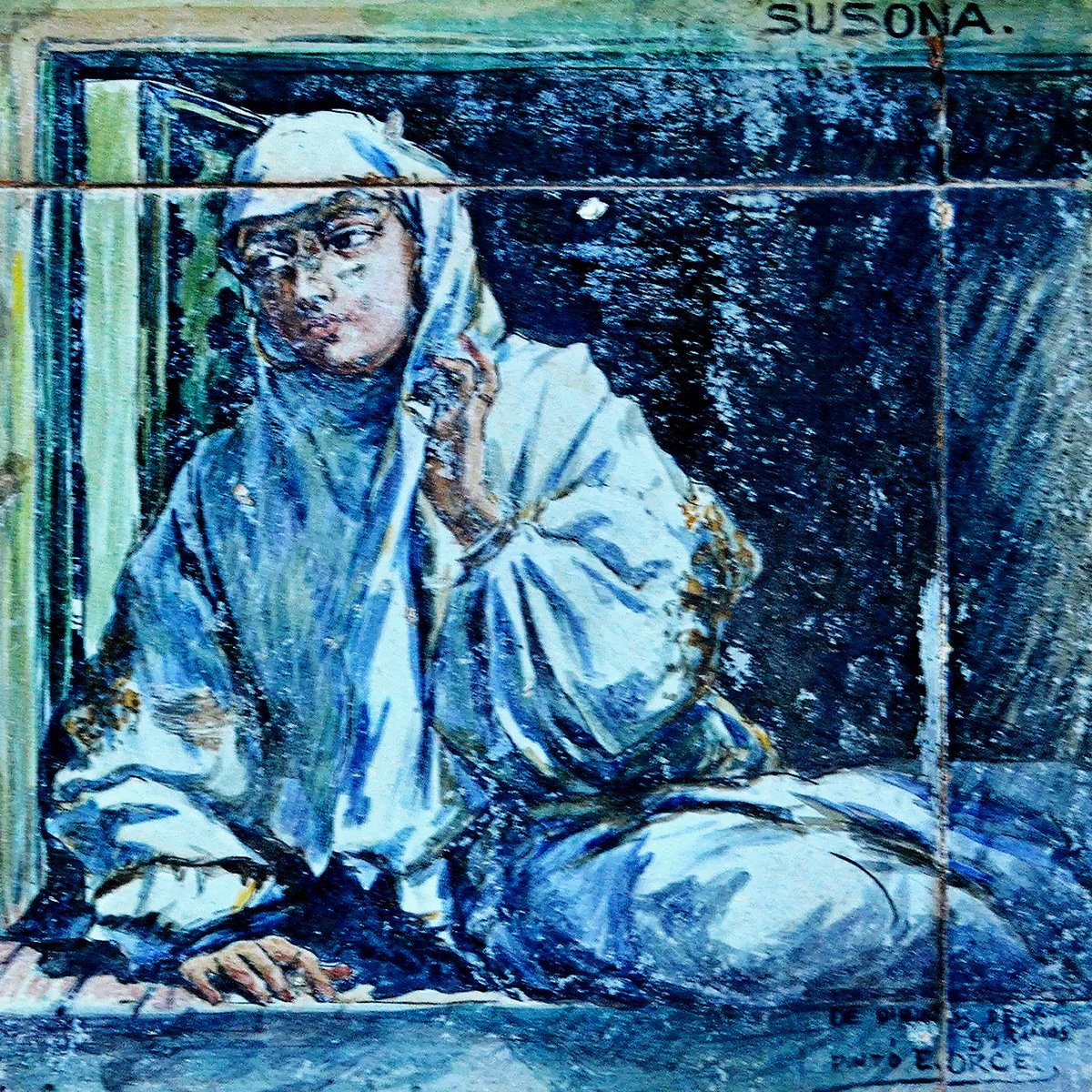
Representation of Susona in the ceramic decoration of the Mas y Prat roundabout in the María Luisa Park. It was made by Enrique Orce at the Manuel Ramos Rejano Factory, using a painting by José García Ramos as a model.

Tile on the façade of a house on Susona Street, marking the place where, according to tradition, the skull of the "beautiful woman" was displayed.

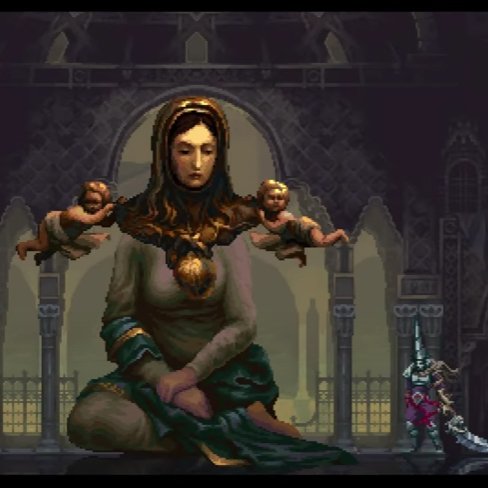
Image from the video game "Blasphemous II", by the developer The Game Kitchen, where you can see the character "Svsona, fermosa fembra".

The Santa Cruz neighbourhood was extensively renovated in the first decades of the 20th century, making it difficult to locate the scene of the events. In general, tradition places Susona's house at number 10 on her street, where a small tile can be seen that recalls the story.

In any case, the character of Susona is part of the popular heritage of Seville. Versions of her story can be found in essays about the city and novels. There is also an opera called "La Bella Susona", by the composer Alberto Carretero, and the story also appears in one of the chapters of the historical series "Isabel" (RTVE). The young Sevillian has even inspired one of the central characters in a video game. It is "Blasphemous II", by the developer The Game Kitchen. In this game, "Svsona, Fermosa Fembra" is one of the bosses to defeat.

MOSSE IBN ZARZAL

MOSSE IBN ZARZAL

(14th-15th century)

A doctor and poet born in Seville, a city where his father, also a doctor, had recently settled. His exact date of birth is unknown, but he lived between the 14th and 15th centuries. He achieved a great reputation as a doctor, and personally took care of the health of King Pedro I and, years later, of Enrique III.

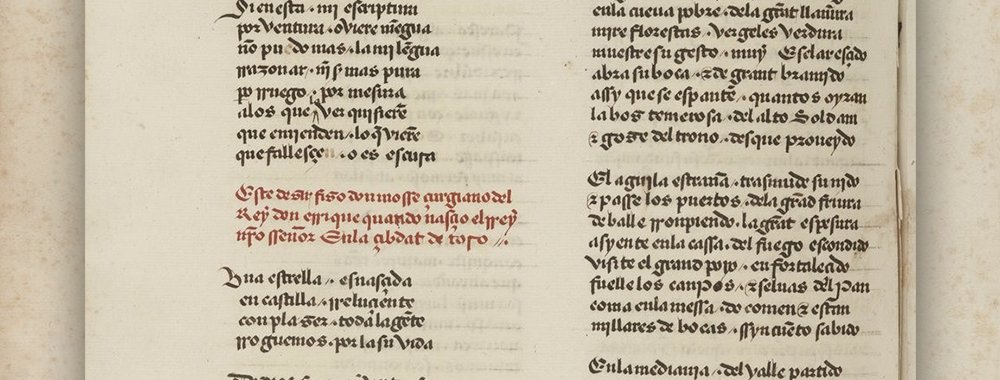
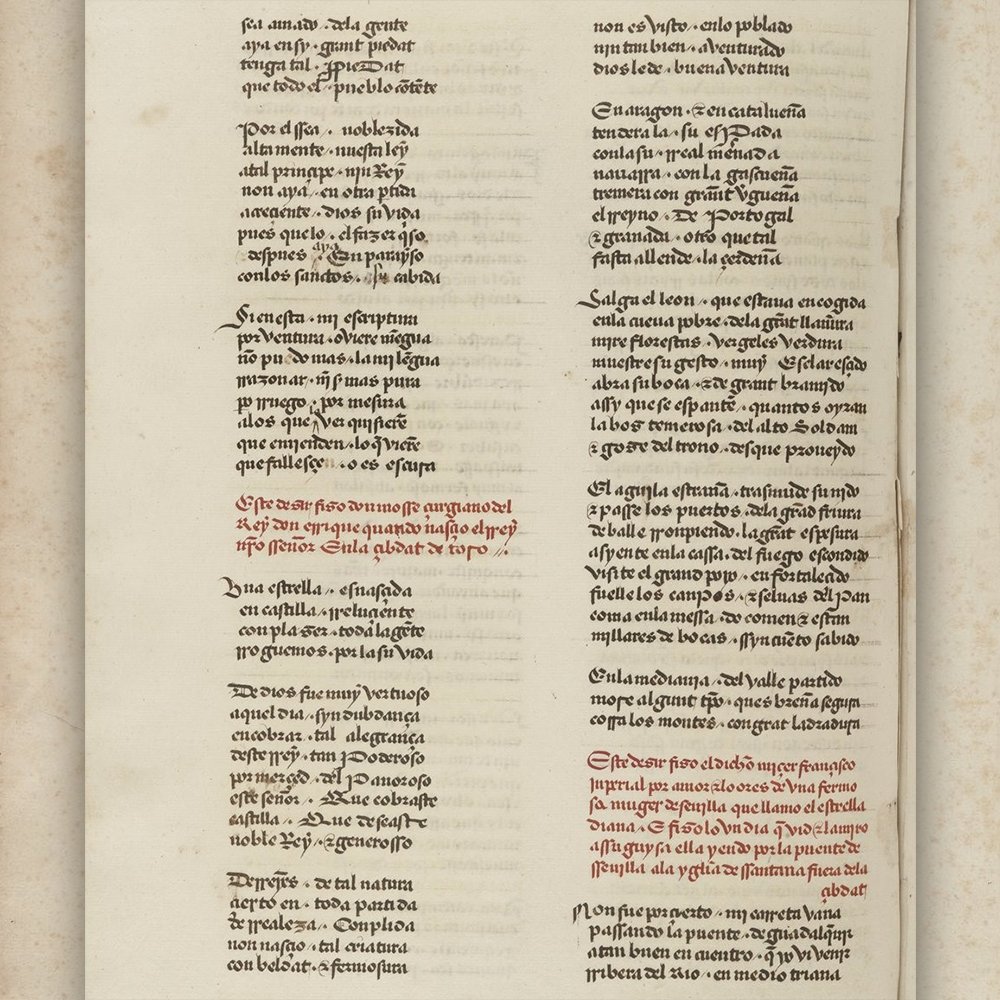
From his role as a poet, a poem that he composed in 1405 on the occasion of the crown prince, the future Juan II, has been preserved. It forms part of the famous collection of poems known as the "Cancionero de Baena". It is preceded by a short introduction that says: Este dezir fizo Don Mossé çurgiano del Rey don Enrique quando nasçio el Rey nuestro señor en la çibdat de Toro (This saying was made by Don Mossé, surgeon to King Enrique, when our lord the King was born in the city of Toro). We include the complete poem here:

Page containing the poem by Mosse ibn Zarzal, whose first verse is Una estrella es nascida (A star is born). It is found on folio 74.v of the "Cancionero de Baena", the original of which is preserved in the National Library of France.

Una estrella es nascida

en Castilla reluciente:

con placer toda la gente

roguemos por la su vida.

De Dios fué mui venturoso

aquel dia sin dubdanza

en cobrar tal alegranza

deste rei tan poderoso:

por merced del pavoroso

este gran señor cobraste,

Castilla, que deseaste

noble rei é generoso.

De reyes de tal natura

cïerto en toda partida,

de realeza complida

non nasció tal criatura.

Con beldad é fermosura

non es visto en lo poblado,

nin tan bien aventurado.

¡Dios le dé buena ventura!

N’ Aragon i Catalueña

tenderá la su espada,

con la su real mesnada:

Navarra con la Gascueña

tremerá con gran vergüeña

el reino de Portugal

é Granada otro que tal

fasta allende la Cerdeña.

A star is born

in shining Castile:

with joy all the people

let us pray for its life.

God was very fortunate

that day without doubt

in gaining such joy

from this powerful king:

by the mercy of the fearful

this great lord you gained,

Castile, that you desired

a noble and generous king.

From kings of such nature

true in every game,

of complete royalty

such a creature was not born.

With beauty and splendor

he is not seen in the populated areas,

nor so fortunate.

May God give him good fortune!

In Aragon and Catalonia

he will stretch his sword,

with his royal men:

Navarre with Gascony

will tremble with great shame

the kingdom of Portugal

and Granada another than that

far beyond Sardinia.

SALOMÓN BEN ABRAHAM

SALOMÓN BEN ABRAHAM

(14th century)

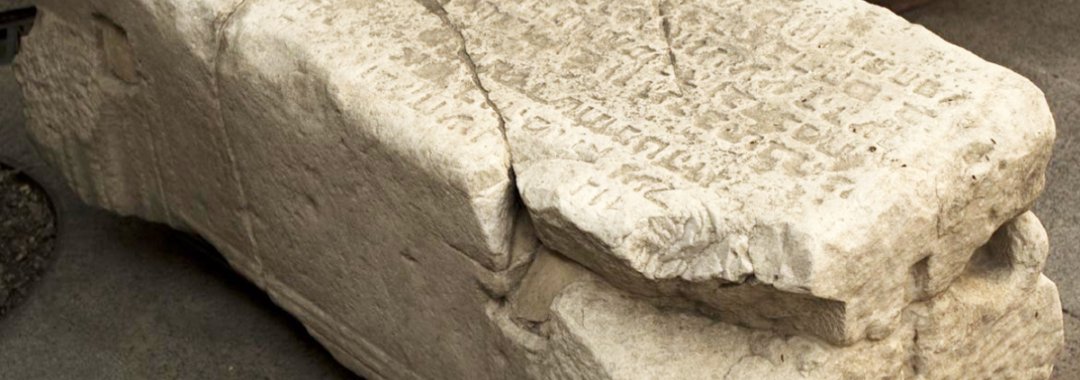
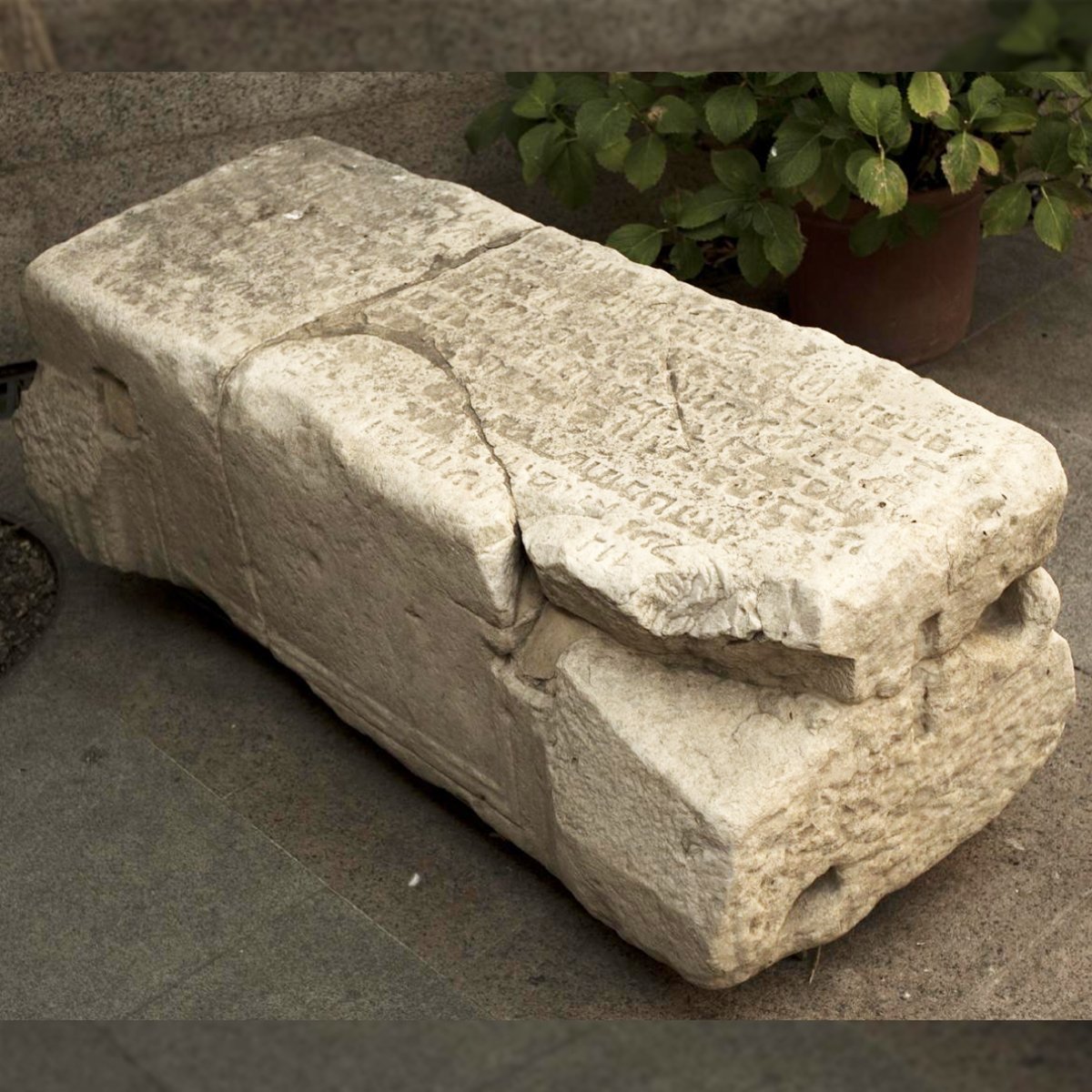
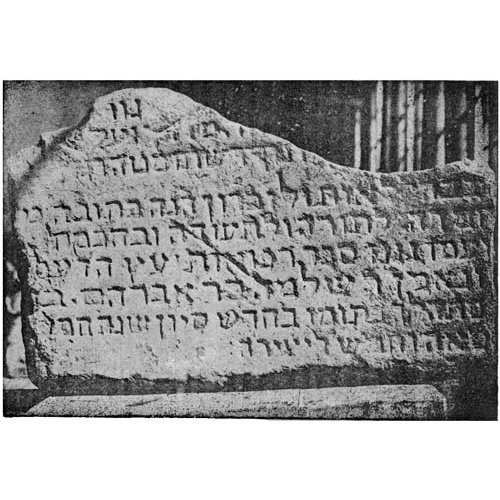
A Sevillian rabbi, astronomer and doctor whose existence is known to us through a tombstone preserved in the Sephardic Museum of Toledo. It is made using a white Roman cippus, currently broken into three pieces. It consists of a Hebrew inscription distributed in eight and a half lines in which R. Selomó, son of Abraham ben Yais, is remembered. Apparently, the tombstone was reused when the construction of the cathedral was undertaken in the 15th century.

Although the inscription is damaged in some of its parts, it has been possible to interpret it to a large extent. This is the transcription by Francisco Cantera Burgos:

Who sees in conspiracy? those who... against me/ the eye of... my fate was opened;/ because of... on my eyelids/ I... with enthusiasm?... my footwear./ Who crushes (tramples or vexes) a man.../ in the middle of his net he drew my foot. / This heap is a witness, and this pillar is a witness, as a sign and a reminder. It is written that here a museum of all precious objects concerning the Law and the Testimony was buried, and in the science of the stars he spoke wonders, and with him a book of medicine was hidden. Tree of knowledge, expert physician, pious, upright and truthful: R. Shelomo son of R. Abraham ben Ya`is - may he rest in glory - gathered his people, walking in his integrity, in the month of Sivan of the year five thousand one hundred and five of Creation.

The date (Sivan, 5105) is between May 3 and June 1, 1345. It should be noted that this epitaph is the only information we have about this character, since he is not mentioned in the rabbinical libraries nor does he appear in any other source. However, the quality and extent of his mortuary inscription is exceptional in the context of peninsular Judaism, which is why Rabbi Solomon deserves a mention when speaking of the Jewish quarter of Seville.

Rabbi Salomon's tombstone preserved in the Museo Sefardí de Toledo. The black and white image is taken from the article by Fidel Fita Colomé entitled "El cementerio hebreo de Sevilla. Epitafio de un rabino célebre"

FAMOUS INHABITANTS OF THE JEWISH QUARTER OF SEVILLE

In this website we have collected a selection of the most prominent inhabitants of the Sevillian Jewish quarter during the Middle Ages. The information we have about the members of the Jewish community in Seville is very scarce, both in the Islamic and Christian periods. The sources only refer to them indirectly, so an intense historiographical work is necessary just to try to reconstruct what daily life was like among the Jews during the Middle Ages and their relationship with the rest of the city's inhabitants.

Most of the names we can cite were linked to the administration, occupying various positions in the service of the Crown, which has allowed us to leave testimony of their existence or activity. Some others developed an intellectual work, mainly as Talmudists and scholars of sacred texts, doctors or astronomers. Many of their works were published in times after the expulsion of 1492 and in the context of the Sephardic communities of various North African and European cities. Thanks to these editions, their memory has been preserved and today we can include them in this selection of illustrious Sevillian Jews.
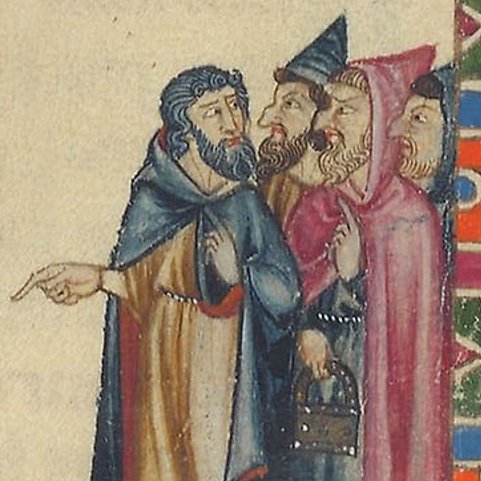
Group of Jews depicted in the "Cantigas de Santa María" by Alfonso X the Wise. The Codex in which the illustration is found is kept in the Library of the Monastery of El Escorial and was produced in Seville around 1282. Patrimonio Nacional.

JUDAH IBN VERGA

JUDAH IBN VERGA

(15th centurry) His name is also transcribed as Yehudah ibn Verga. He was a Jewish mathematician, astronomer and Kabbalist born in Seville. He is supposed to have been an ancestor or relative of Salomon ibn Verga, author of the “Shebeṭ ...
SAMUEL HA LEVI

SAMUEL HA LEVI

(14th century) Prominent Jewish financier and politician who became chief treasurer and member of the Royal Council during the reign of Pedro I. He was born in Toledo, a city to which he was always linked. However, Don Pedro’s court ...
YUÇAF OF ÉCIJA

YUÇAF OF ÉCIJA

(14th century) His name was Joseph ben Ephraim ha-Levi Benveniste, although he is known as Yuçaf or Jusaph de Écija because he was born in this city in the province of Seville at the end of the 13th century. He ...
DAVID ABUDARHAM

DAVID ABUDARHAM

(14th century) Also known as David ben Joseph, he was a “rishon” or chief rabbi who lived in Seville in the 14th century. He was best known for his commentary on the Siddur, the book of daily prayers of the ...
YOM TOV BEN ABRAHAM ISHBILI

YOM TOV BEN ABRAHAM ISHBILI

(c. 1250 – c. 1330) He was a prestigious Talmudist, jurist and treatise writer who lived between the 13th and 14th centuries. He was endowed with a clear and sharp mind, and is known to have been a student of ...
IBN SAHL AL-ISRA'ILI

IBN SAHL AL-ISRA’ILI

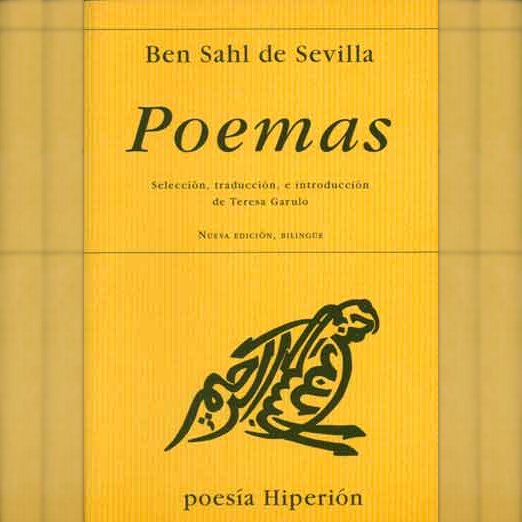
(c. 1206 – c. 1246) Also known as Ibn Sahl of Seville, he was a Sevillian poet of Jewish origin, greatly admired in his time and today one of the most outstanding figures of Andalusian poetry. Apparently his entire family ...
JOHANNES HISPALENSIS

JOHANNES HISPALENSIS

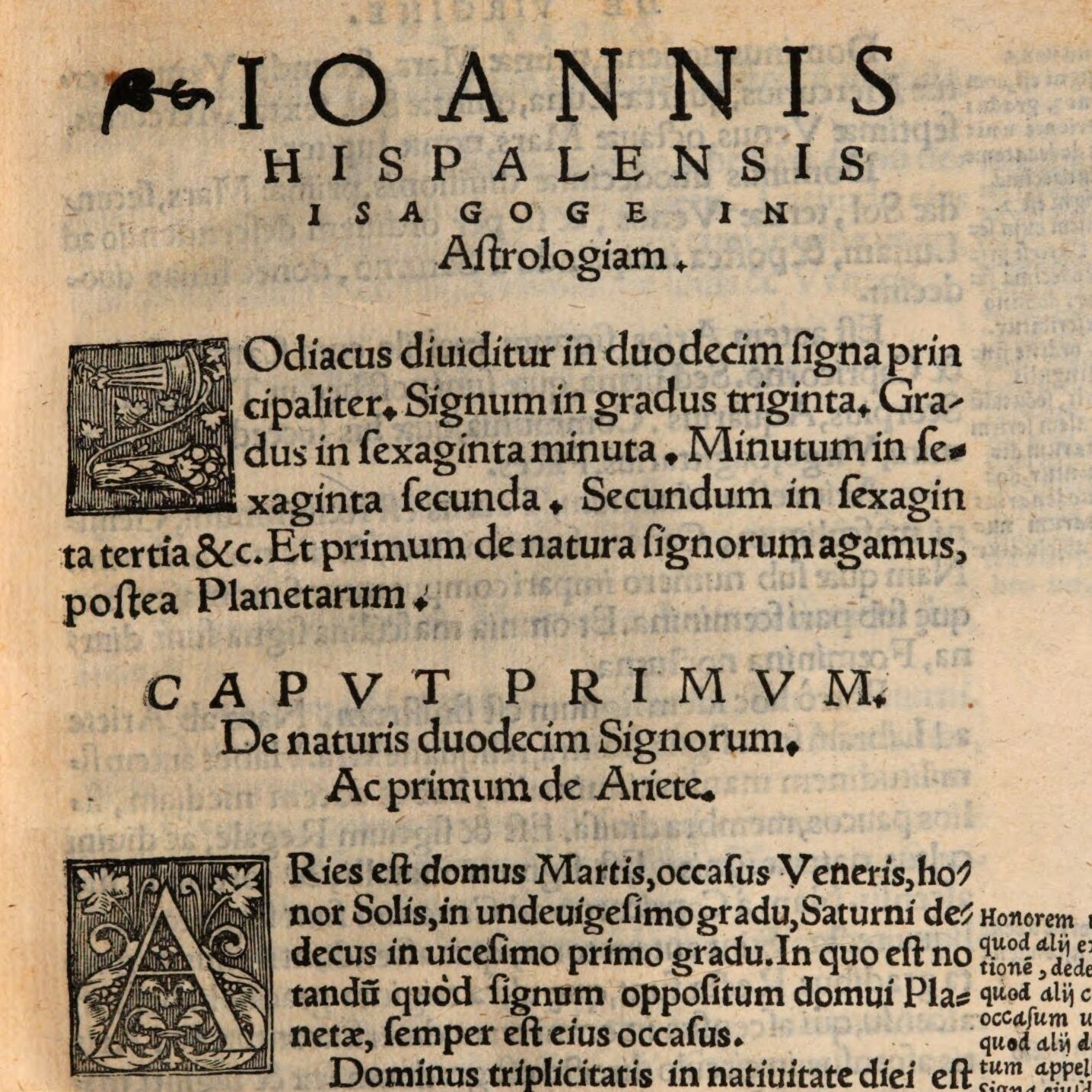
(12th century) Hispanicized as Juan Hispalense, he was a translator from Arabic who developed his career mainly between 1135 and 1153. He was a Jew converted to Christianity and his original name is unknown, although traditionally he has been given ...
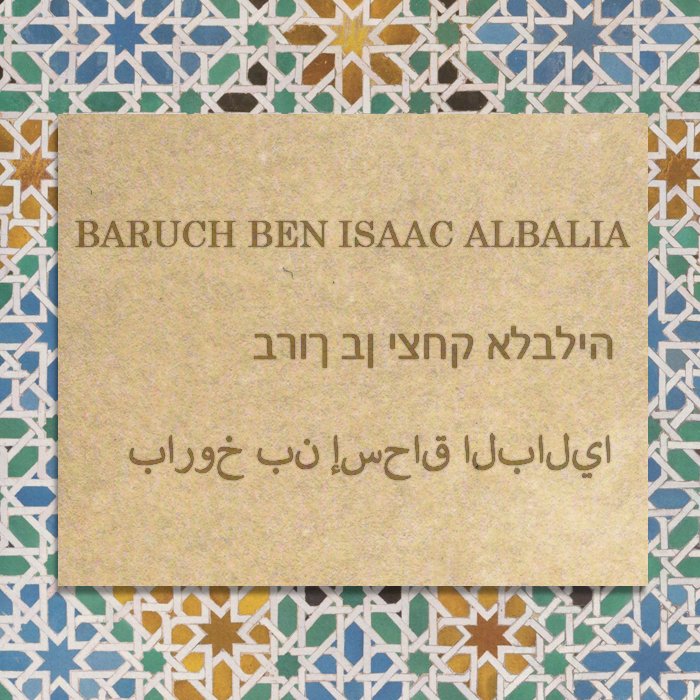
BARUCH BEN ISAAC ALBALIA

BARUCH BEN ISAAC ALBALIA

(1077-1126) Juez y director de una yeshivá (academia para el estudio de las escrituras) en Córdoba. Nació en Sevilla, hijo de Isaac Albalia. Cuando tenía solo 17 años, se trasladó a Lucena tras la muerte de su padre, siguiendo el ...
ISAAC BEN BARUCH ALBALIA

ISAAC BEN BARUCH ALBALIA

(1035-1094) Astronomer and Talmudist who became part of the court of King Al-Mu’tamid of Seville as an astrologer. Isaac was born in Córdoba and, according to Ibn Daud, in his youth he had as his teacher the French scholar Rabbi ...
JOSEPH IBN MIGASH

JOSEPH IBN MIGASH

(1077-1141) A rabbi and Talmudist born in Seville who became the head of the school of Lucena, a city that experienced a true splendour of Jewish culture between the 9th and 12th centuries. His family was from Granada, which is ...

JOSEPH PICHON

JOSEPH PICHON

(14th century)

His name is also transcribed as Yuçaf Picho. He was almojarife and chief accountant of the city and archbishopric of Seville. He was appointed in 1369 by Henry II of Castile, who highly esteemed him for his honesty and intelligence. But, following accusations brought by some rich coreligionists who had also been admitted to the court, Pichón was imprisoned by order of the king and sentenced to pay 40,000 doubloons. After paying this large sum within twenty days, he was released and reinstated in his position; in turn, he brought a serious accusation against his enemies, either in revenge or in self-justification.

Meanwhile, Henry had died and his son, John I, was his successor. Many rich and influential Jews had gathered from different parts of the country for the auction of the royal taxes in Burgos, where John's coronation took place. These Jews conspired against the life of Pichón, who was very popular with the Christians and had received considerable attention from the courtiers. It is not known whether he can be blamed in any degree for the extraordinary tax of 20,000 doubloons which Henry had imposed on the Jews of Toledo; but, be that as it may, some prominent Jews, representatives of various communities, went to the king on the day of the coronation and, explaining to him that there was among them a "malsin," that is, an informer and traitor who deserved death according to the laws of their religion, asked him to authorize the royal officers to execute the offender.

It is said that some of the king's henchmen, bribed by the Jews, induced Juan to give the order. The delegation then carried this order, together with a letter from several Jews who were the leaders of the community, to Fernán Martín, the king's executioner. The latter did not hesitate to carry out the royal order. On August 21, 1379, early in the morning, he went with Don Zulema (Salomon) and Don Zag (Isaac) to the residence of Pichón, who was still asleep. Pichón was awakened on the pretext that they were going to seize some of his mules; and, as soon as he appeared at the door, Fernán grabbed him and, without saying a word, beheaded him.

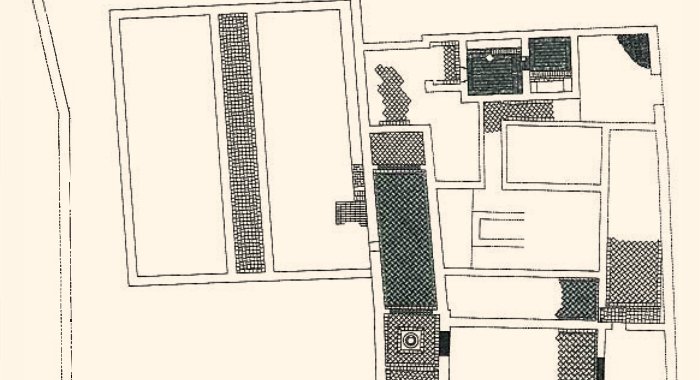
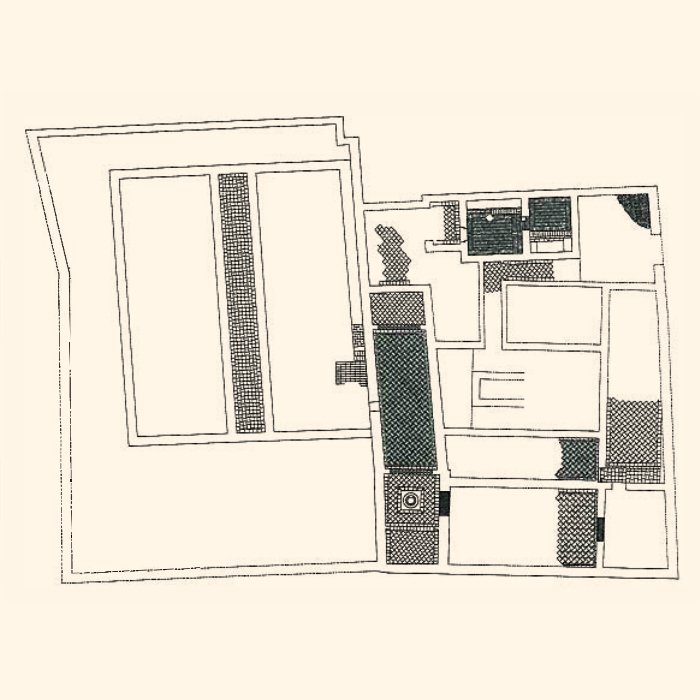
Plan of José Pichón's house in the Jewish quarter of Seville, according to the archaeological findings in the framework of the restoration of the Altamira palace. As we can find in "La restauración del palacio de Altamira" (Junta de Andalucía, 2005): The house built on plot C, with a surface area of ​​almost 1,000 m², was distributed on two parallel terraces with a difference in level of one metre between them, determining two areas differentiated by their use, each of 500 m². The highest one was used as a garden-orchard and the other as useful built surface. The entrance with a façade on the Dos Hermanas alley gave access to service areas, following at the back the noble rooms with the large open-air recreational space.

The execution of Pichon, whose name had been kept from the king, created an unpleasant sensation. The monarch was extremely angry at having been tricked into signing the death warrant of a respected and popular man who had faithfully served his father for many years. He had Zulema, Zag, and the chief rabbi of Burgos, who was in on the plot, beheaded; and Martin was to have suffered the same fate, but was saved by the intercession of some knights. He paid for his haste in the matter, however, by the loss of his right hand. As a consequence of Pichon's execution, the Cortes deprived the rabbis and the Jewish courts of the country of the right to decide criminal cases. The affair had the most disastrous consequences for the Jews of Spain, stimulating hatred of the population against them and contributing to the great massacre of 1391.

Joseph lived in Seville in a luxurious house that stood where the Altamira Palace is today, in the most central area of ​​the Seville Jewish quarter. During the archaeological excavation that took place at the end of the 20th century as part of the restoration of the palace, the structure of this house and its rich Mudejar decoration could be seen.

SAMUEL ABRAVANEL

SAMUEL ABRAVANEL - JUAN SÁNCHEZ DE SEVILLA

(14th century)

Samuel Abravanel was a Jewish financier and administrator whose date of birth is unknown but who developed his career in the second half of the 14th century. Although his place of birth is also uncertain, it is known that he was the son of Judah Abravanel, who held the position of chief almojarife during the time of Ferdinand IV of Castile. The anti-Jewish climate that broke out during the Castilian civil war between Pedro I and Enrique de Trastámara forced Samuel to adopt the Christian faith, taking the name of Juan Sánchez de Sevilla.

Samuel Abravanel was a Jewish financier and administrator whose date of birth is unknown but who developed his career in the second half of the 14th century. Although his place of birth is also uncertain, it is known that he was the son of Judah Abravanel, who held the position of chief almojarife during the time of Ferdinand IV of Castile. The anti-Jewish climate that broke out during the Castilian civil war between Pedro I and Enrique de Trastámara forced Samuel to adopt the Christian faith, taking the name Juan Sánchez de Sevilla.

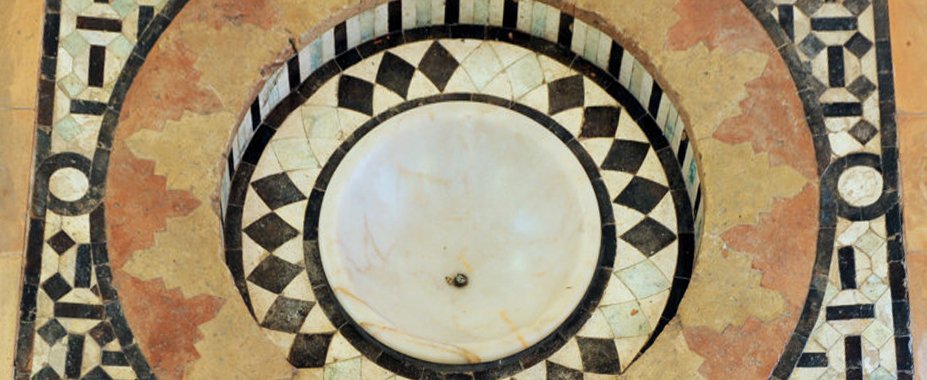
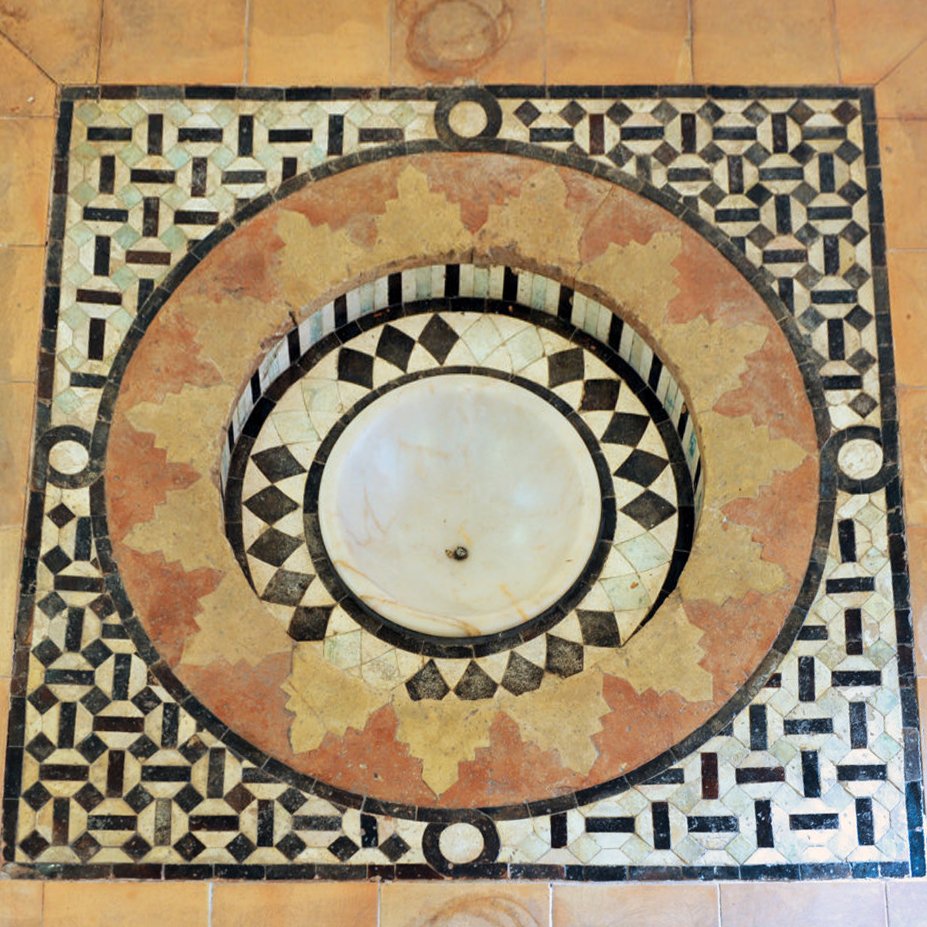
Fountain decorated with Mudejar tiling found in the archaeological excavation that took place in the Altamira Palace. It is believed to have belonged to the house where José Pichón and Samuel Abravanel lived successively.

Menahem b. Zerah wrote of him that he was intelligent, loved the wise, befriended them, was good to them, and was eager to study whenever the stress of time permitted. He and his family apparently later fled to Portugal, where they returned to Judaism and held important government posts. His son, Judah was in the financial service of Infante Ferdinand of Portugal.

JEWISH QUARTER OF SEVILLE

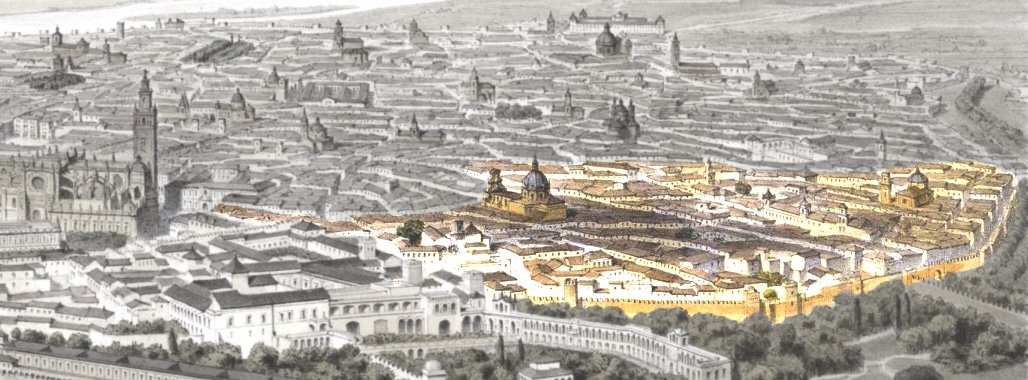
The Jewish quarter of Seville is the area where the city's Jewish community lived during the late Middle Ages. It extends over a large area in the south and southeast of the historic centre, which corresponds in general terms to the current neighbourhoods of Santa Cruz and San Bartolomé.

Although the presence of a Jewish community in Seville can be traced back to Roman times, the truth is that the decision to settle this population in the area that we know today as the Jewish quarter was taken after the Christian conquest of the city in 1248. It was not Fernando III, the king who was the architect of the conquest, who was in charge of this foundation, but his son and successor, Alfonso X the Wise, probably shortly after being crowned in 1252. We know that its initial inhabitants were the Jews who arrived in the city after it was taken by the Christians, since the religious intolerance of the Almohads had caused there to be no Jews or Christians living in Seville in the final days of Muslim domination.

King Alfonso ordered that the Jewish quarter be located in a prominent place in the city, next to the fortress and very close to the cathedral. It was surrounded by a wall of mud with various doors and shutters that were closed every day at nightfall. This circumstance was common in other Spanish Jewish quarters and was due both to the interest in limiting contact between Christians and Jews, and to the purpose of trying to avoid possible attacks in times of disorder or tumult. Only a fragment of this wall of about ten metres is preserved today, a testimony to those turbulent historical moments.

Approximate area of ​​the old Jewish quarter of Seville according to the aerial lithograph by Alfred Guesdon (c. 1854)

It is also known that they had at least three synagogues from the very beginning, since the king gave them the three old mosques that were in this area to be transformed and dedicated to the Hebrew cult. The three would end up being Christian churches after the expulsion of the Jews and only one of them remains today. This is Santa María la Blanca, a medieval jewel completely reformulated during the Baroque period that is located in the heart of the Santa Cruz neighborhood. Some authors have pointed out the possibility that the king granted them a fourth mosque, which would have been where the Madre de Dios convent is currently located, but this cannot be confirmed with certainty. Several accounts from the 14th century have also been preserved that speak of more than twenty synagogues in Seville, although they were certainly smaller and more modest places of prayer than those mentioned.

The headquarters of the aljama was also located in the Jewish quarter. This term was used to designate both the Jewish community residing in a city and the institutions through which it was organized. They had their own legal system known as “tacanot” and an institutional framework with political, cultural and religious functions. There was a chief rabbi, sometimes called “nasí” or prince, who was in charge of the highest representation of the community before the authorities and whose position depended on royal appointment. In addition, there were councils dedicated to specific issues, such as fiscal or religious matters. They were made up of judges or “dayanim”, who Christians also called rabbis.

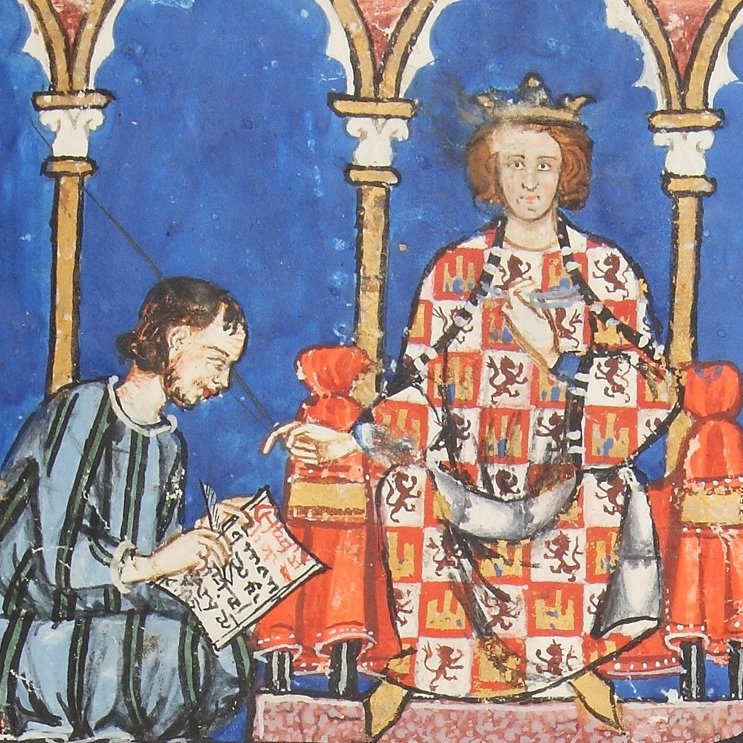
Image of King Alfonso X dictating to a scribe on folio 65 of the "Libro de los juegos de Ajedrez, Dados y Tablas". Sevilla, 1283.

The Seville aljama was the second largest in the kingdom, only after that of Toledo. With an area of ​​about 16 hectares, it had numerous productive spaces, such as shops, markets or slaughterhouses. There was also a group of rich Jews, dedicated to the money trade as bankers, lenders and landlords of royal and municipal taxes (...). Other typical professions, more or less lucrative, were those of doctor, tailor, weaver, silversmith, silkmaker, some merchants and craftsmen of various kinds (Ladero Quesada, “Historia de Sevilla. La ciudad medieval”).

To the east was the cemetery, outside the walled enclosure of the city and very close to the gate known as “Minjoar” or Carne. It was probably the largest Jewish necropolis in medieval Spain, with about four hundred tombs excavated in different archaeological campaigns to date. Most of the bodies were found buried in wooden coffins, with the burial site covered by a simple brick barrel-vaulted grave.

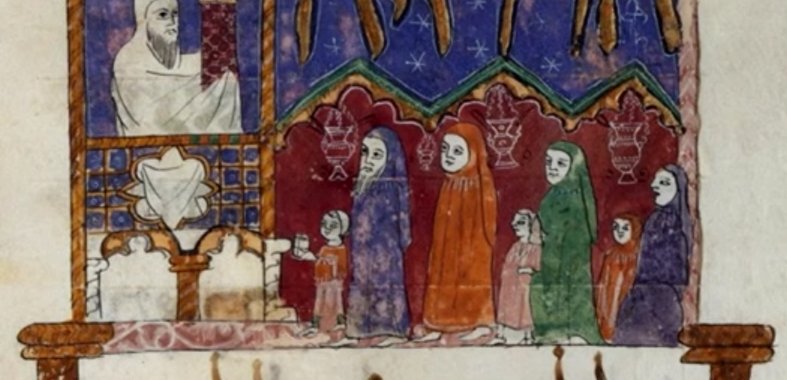
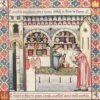
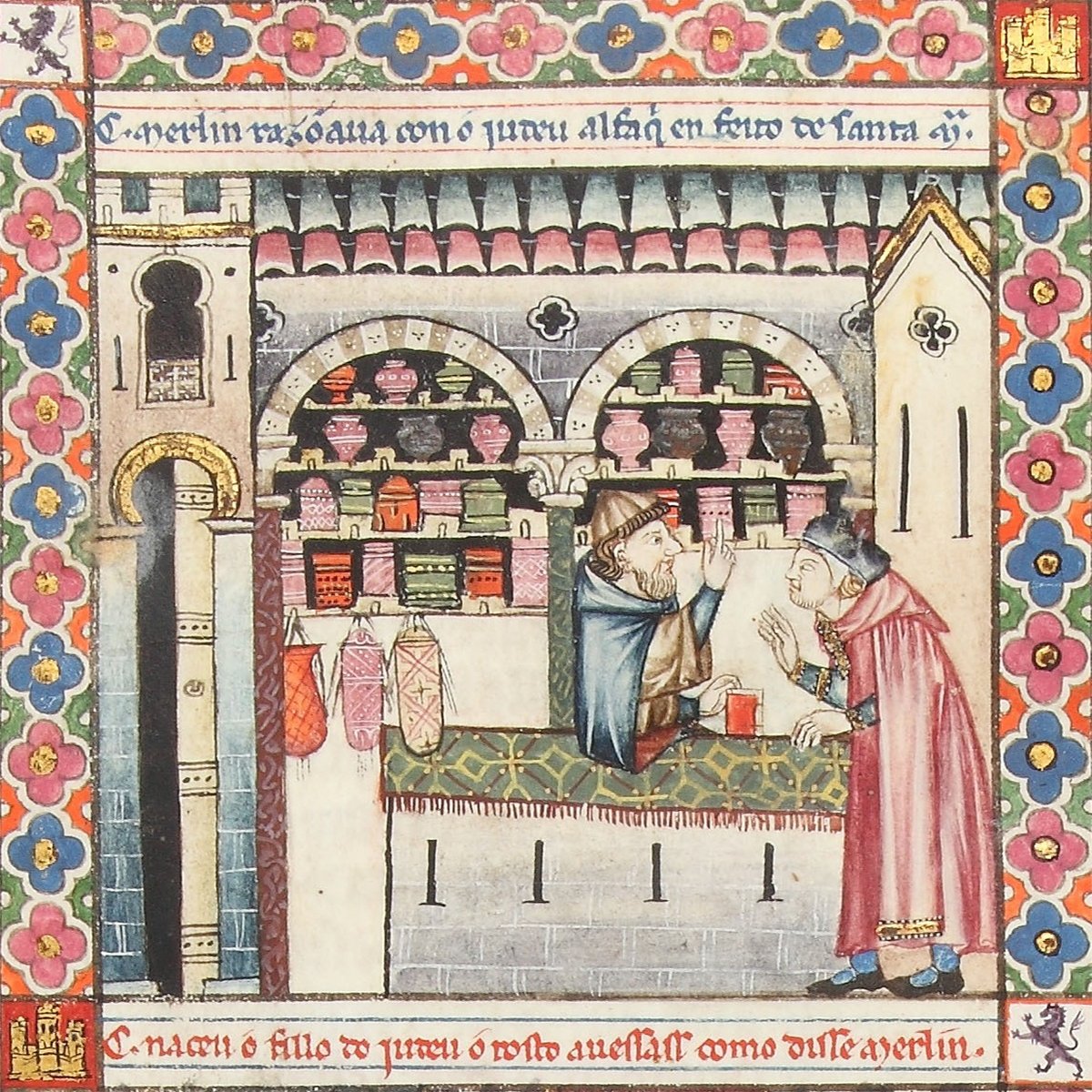
Scene from a Jewish pharmacy (c. 1285). Cántiga 108 (folio 155). Biblioteca del Monasterio de San Lorenzo de El Escorial

The fact that the Jews opted for this type of cemetery outside the city walls, as opposed to the burials in churches and their surroundings that were common among Christians, is of great importance. At times when the city was going through an epidemic crisis, the spread of the disease was usually faster among Christians than among Jews, which ended up arousing the suspicion of the majority community. They did not have the scientific knowledge that we have today and were unable to understand what was happening, attributing the contagions among Christians to bad practices on the part of the “deicidal people”.

The current appearance of the old Jewish quarter of Seville is far from the medieval one. It is true that the neighbourhood has preserved a good part of its medieval structure, with its characteristic narrow and angular streets and its irregular little squares. The adarves or dead-end streets are common, in an urban network of labyrinthine appearance. This is the trace of the Islamic city of Isbiliya, which still exists today in an atmosphere that echoes in cities such as Tangier and Marrakech. However, more than five centuries have passed since the Jews were forced into exile in 1492. Since then, the district has been inhabited by people from the most varied social and economic positions, who have gradually modified its appearance and generated the complex chronological mosaic that has survived to this day.

Narrow, angled streets are the most common in the old Jewish quarter, inherited from the urban planning of the Islamic city of Isbiliya.

In this process of change, a decisive moment was the first decades of the 20th century, when the city set its sights on what would be the Ibero-American Exposition of 1929. The local authorities counted on the support of the Government to organize a great international event that would serve to transform the urban landscape and infrastructure of Seville. Focusing on the Santa Cruz neighborhood, the idea was to completely renovate it and recreate the atmosphere of an "Andalusian village." It was then that its most iconic corners were designed, such as the Plaza de Doña Elvira, the Plaza de la Alianza or the Plaza de Santa Cruz. A romantic transformation of the Jewish quarter took place which, together with the medieval urban structure, is the basis of the picturesque and beautiful landscape that we can currently enjoy in the neighborhood.

If you are in Seville and want to learn about the scenes of Jewish history in our city, the best way to do so (and almost the only way) is through an official guide. It will take you to the most significant spaces of the old Jewish quarter, putting them in the context of the history of the Sephardic people. I myself have been showing the Jewish quarter for years to travelers from all over the world interested in history and art. And always in small groups, since at @sevillaxm2 we are committed to a model of tourism that respects the well-being of the inhabitants of the neighborhood.

On this same website you can check prices and book a tour, but if you have any questions, do not hesitate to contact us via the means you prefer.

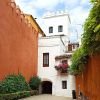
Agua Street is one of the most emblematic streets of the Jewish quarter, closed on one side by a section of the 12th century Islamic wall.

TOUR OF THE JEWISH QUARTER OF SEVILLE

1h 30m - Private groups of up to 10 people - Flexible start time

The ideal option to discover the most interesting corners of the Santa Cruz neighborhood in relation to the history of the Jewish community in the city. This tour covers some of the most beautiful squares and alleys in Seville, which serve as the setting for a journey through some of the most important episodes in our history.

Guide: Manuel Hellín, graduate in History and official tourist guide of Andalusia.

 
Jardín de las Delicias de Sevilla con el Pabellón de Argentina al fondo

JARDÍN DE LAS DELICIAS (GARDEN OF DELIGHTS)

The Garden of Earthly Delights is one of the oldest public gardens in Seville. It was called Arjona's Garden of Earthly Delights, since it was set up during the mandate of the Seville Mayor José Manuel de Arjona y Cubas, between 1825 and 1835.

They were made within the general remodeling process of the eastern bank of the river. With the same objective, the wall that linked the Torres del Oro and Torres de la Plata crossing the current Paseo Colón was demolished, and the Jardines de Cristina were created in front of the Palacio de San Telmo.

Since their creation they have undergone various modifications. Artistically, the most significant occurred around 1864, when a series of Italian sculptures from the 18th century were brought in. They came from the Archiepiscopal Palace of Umbrete, which had suffered a fire in 1862. Some of them can still be seen in the garden, but most of them were replaced by replicas in 2006, while the originals were returned to Umbrete. For the arrangement of the sculptures in the palace, the Portuguese-born sculptor Cayetano de Acosta made a series of pedestals that we can also see today in the Garden.

The Garden gained great prominence as a result of the celebration of the Ibero-American Exhibition of 1929, since it became one of the landscaped spaces around which the event was held. In fact, it lost part of its original dimensions when the pavilions of Argentina and Guatemala were arranged to the North and that of Morocco to the South, pavilions that fortunately have survived to this day.

[mapsmarker map="4"  lat="37.370967" lng="-5.989689" zoom="18" height="300" heightunit="px"]