In the Plaza de la Encarnación there is an original marble fountain from the 18th century, considered the oldest of those preserved in Seville. It is made up of a large circular section vessel, in the centre of which stands a baroque-shaped fountain-shaft. In the middle there are some sort of zoomorphic masks that pour out the water, probably representing the four mythical rivers that watered the original Paradise. Crowning the fountain, four little angels hold a four-sided shield on which there are inscriptions narrating the various events in the history of the monument.
-
- Fuente de la Encarnación *
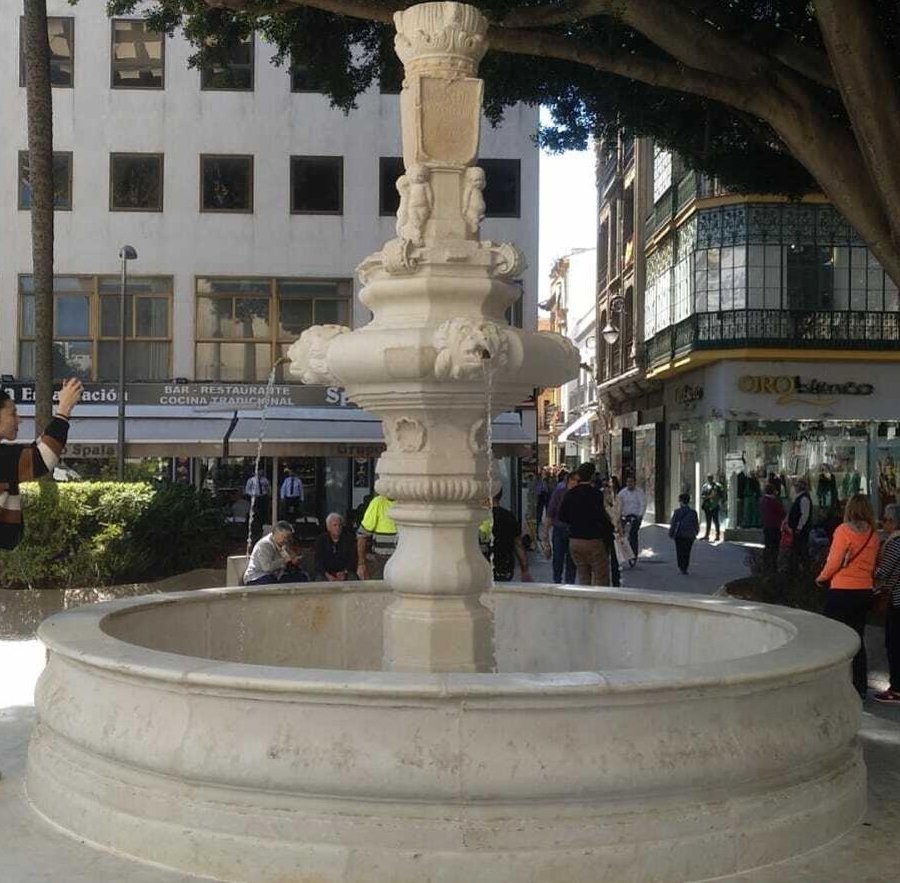
The square where it stands today was the site of the former Convent of the Augustinian nuns of the Encarnación since the end of the 16th century. The fountain was placed around 1720 in a small square at the entrance to this convent. It had a practical function, as it was one of the points through which the water that reached the city through the Caños de Carmona was dispensed.
In 1811, during the French occupation, the convent was demolished and, years later, it was decided to build a food market in the same place. The fountain then moved to a space next to the new market. A century later, around 1948, an urban remodelling of the area took place and the fountain was moved to its current location.
The fountain was built in the Baroque style, but, as it has come down to us, it includes some neoclassical elements, probably added in a restoration in 1861.