CHURCH OF SAINT SEBATIAN

The church of San Sebastián is a Gothic-Mudejar temple originally built between the 15th and 16th centuries as a hermitage on the outskirts of the city. It has undergone profound transformations throughout its history, especially during the 19th and 20th centuries, in relation to the appearance of the Porvenir neighbourhood around it. It has a rectangular floor plan divided into three naves by pointed arches. The area of ​​the presbytery and the sacramental chapel stand out from the floor plan, at the head of the Epistle nave. The church is the headquarters of the Hermandad de la Paz, which processes on Palm Sunday.
History

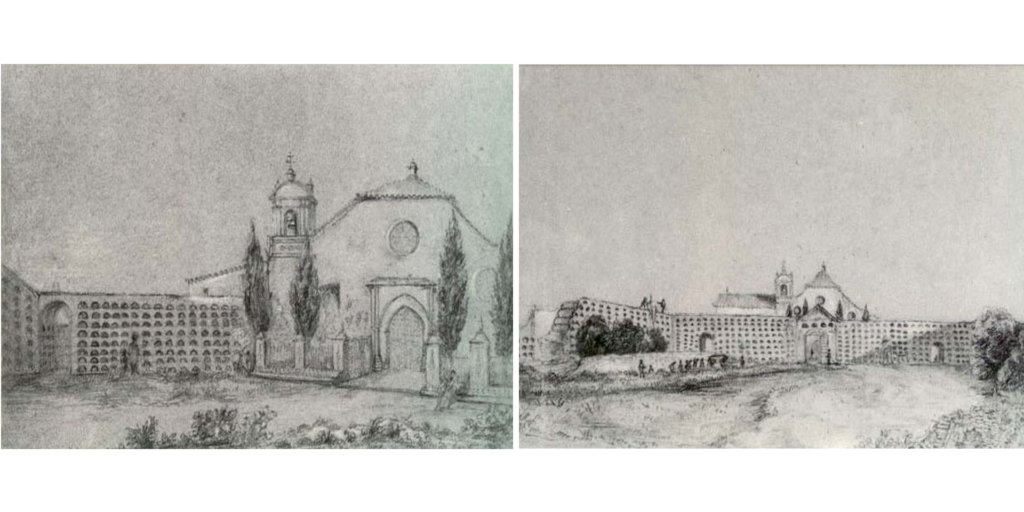
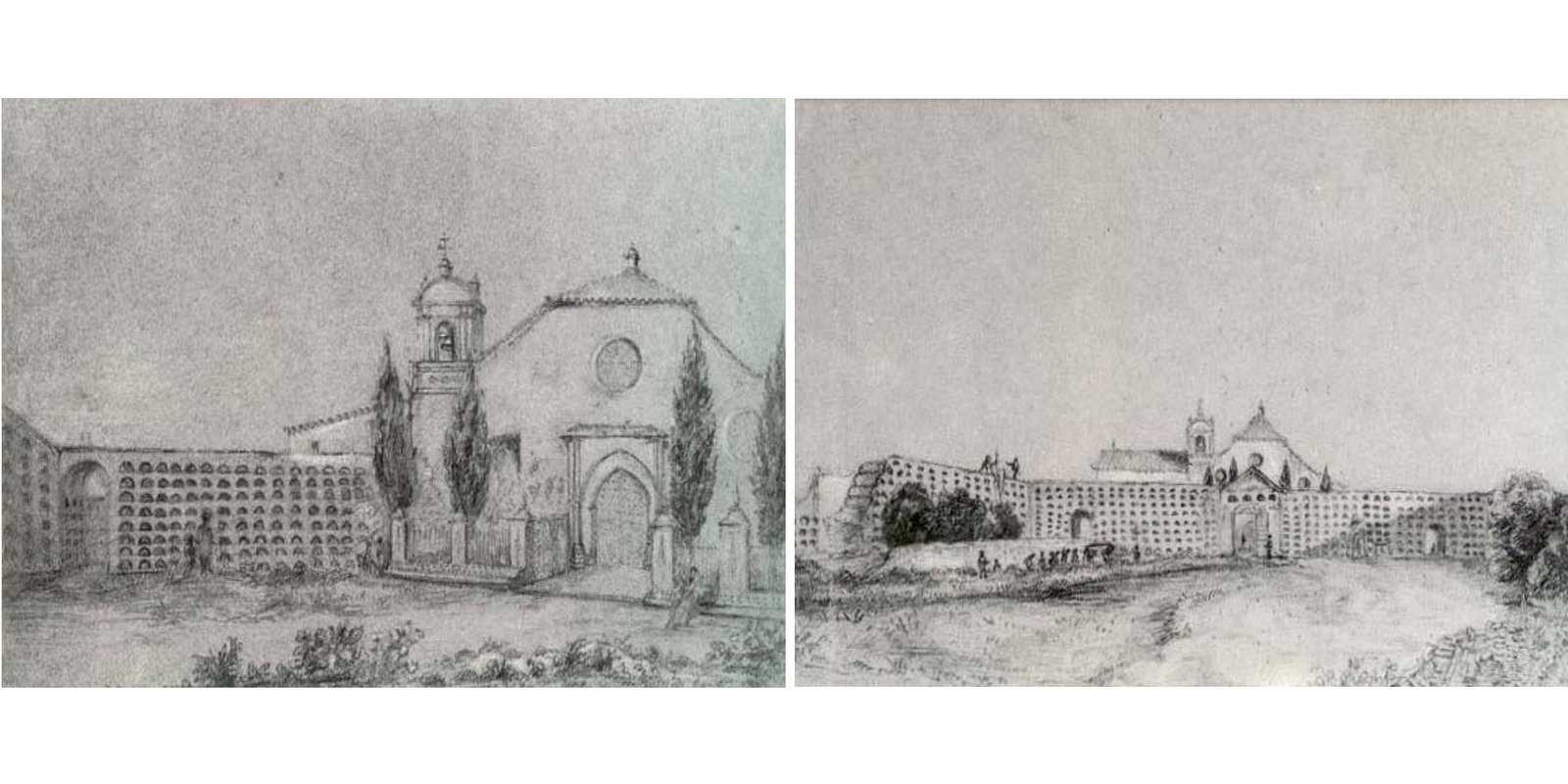
The origin of the church is a hermitage that was built on this site at the end of the Middle Ages in honour of San Sebastián, a saint who was asked for intercession in the event of epidemics. In the 19th century, the first cemetery outside the city walls was built near the hermitage. It should be remembered that for most of our history, burials took place in churches or in their surrounding areas, with the consequent health problems that this practice entailed. There are two drawings by the English traveller Richard Ford made in 1831 in which the cemetery and the primitive hermitage appear. The cemetery of San Sebastián lost importance after the construction of the municipal cemetery of San Fernando in 1852 and ten years later its demolition would begin, as recalled by an inscription at the foot of a cross that is currently located in front of the church as a commemorative monument. After the cemetery disappeared, a reform of the old hermitage was undertaken. It was probably at this time, in the mid-19th century, when the current presbytery was added, since it is known that there was originally a Gothic style one and the current one is covered by a hemispherical dome in the Baroque style.

From the beginning of the 20th century, with the preparations for the Ibero-American Exhibition of 1929, the creation of the Porvenir neighbourhood in the area of ​​the old hermitage was accelerated, with the result that the temple was reformed several times, as it gained importance as an auxiliary to the parish of San Bernardo.

In 1939 the Hermandad de la Paz was founded with headquarters in this church, which entailed new reforms, such as the opening of the south doorway for the exit of the floats or the construction of the brotherhood house, built under the direction of Rafael Arévalo y Carrasco in 1941. In 1956 the church was definitively established as a parish and has come down to our days consolidated as the centre of religious life in the neighbourhood.

Outside

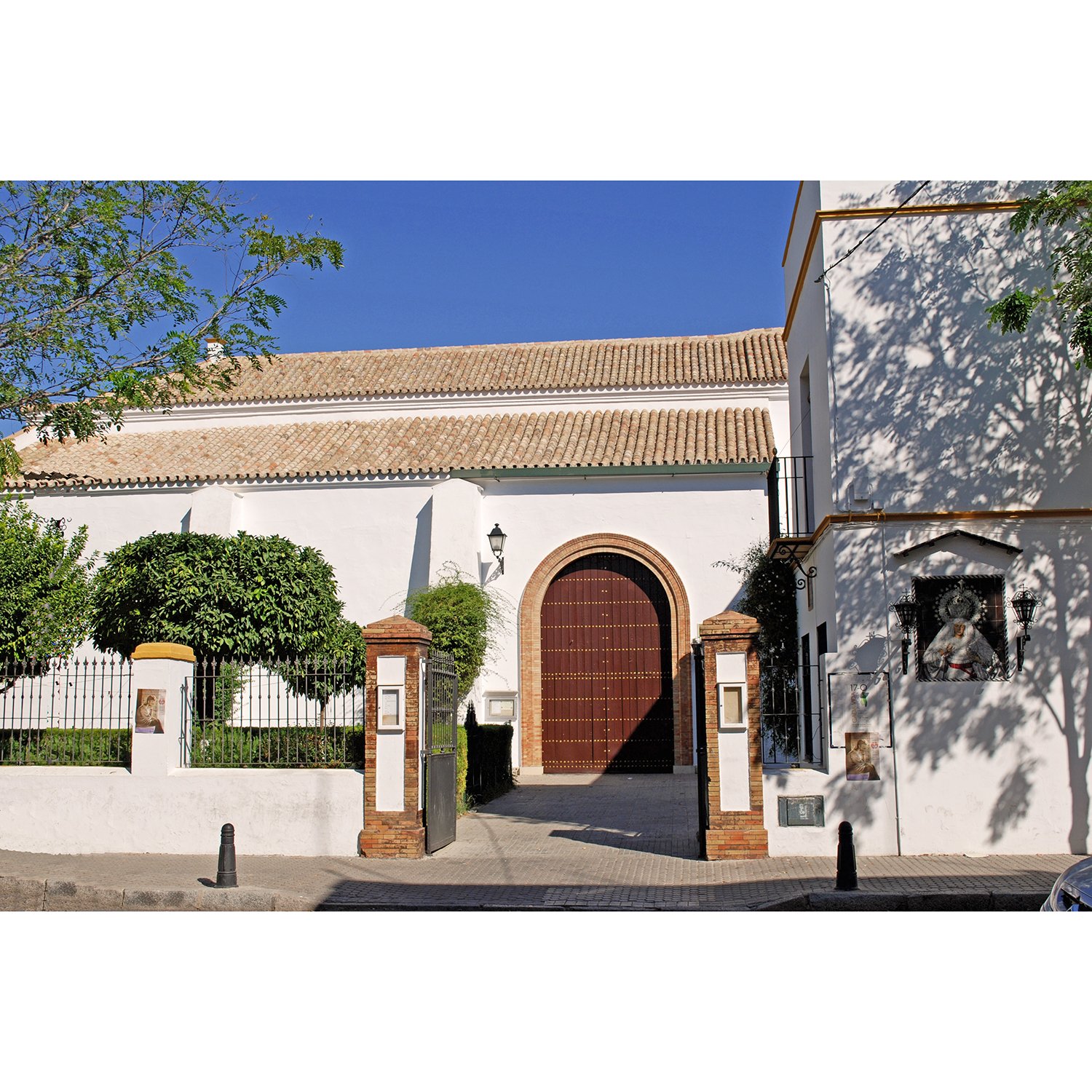
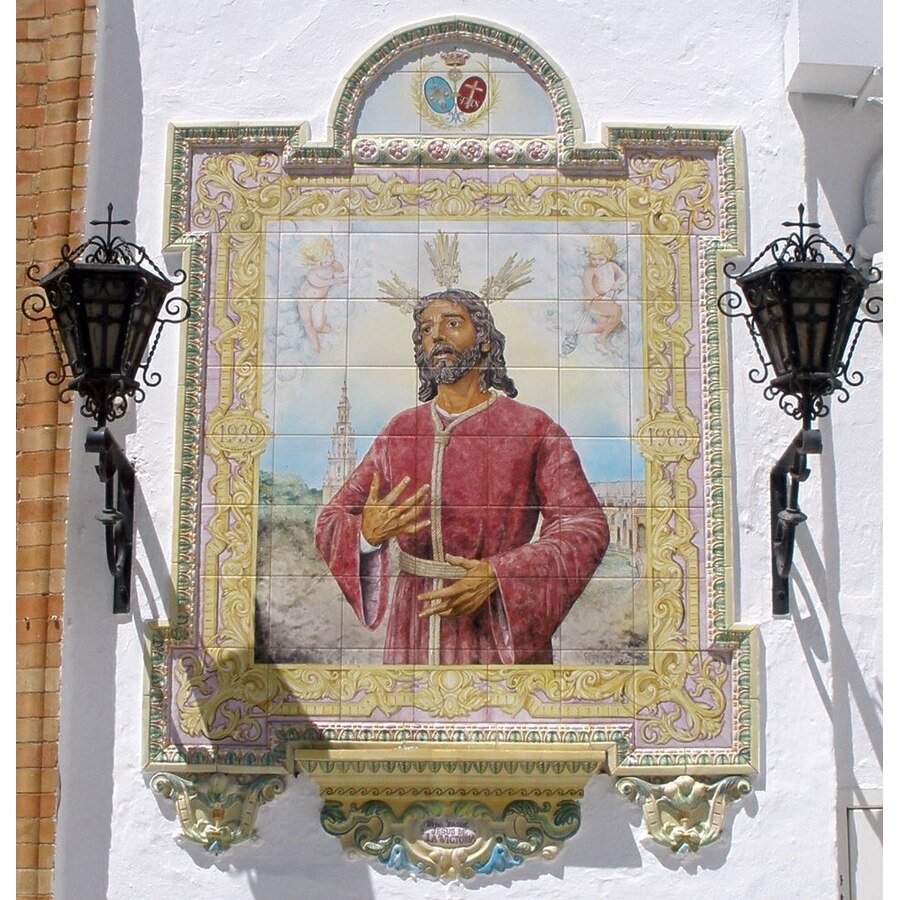
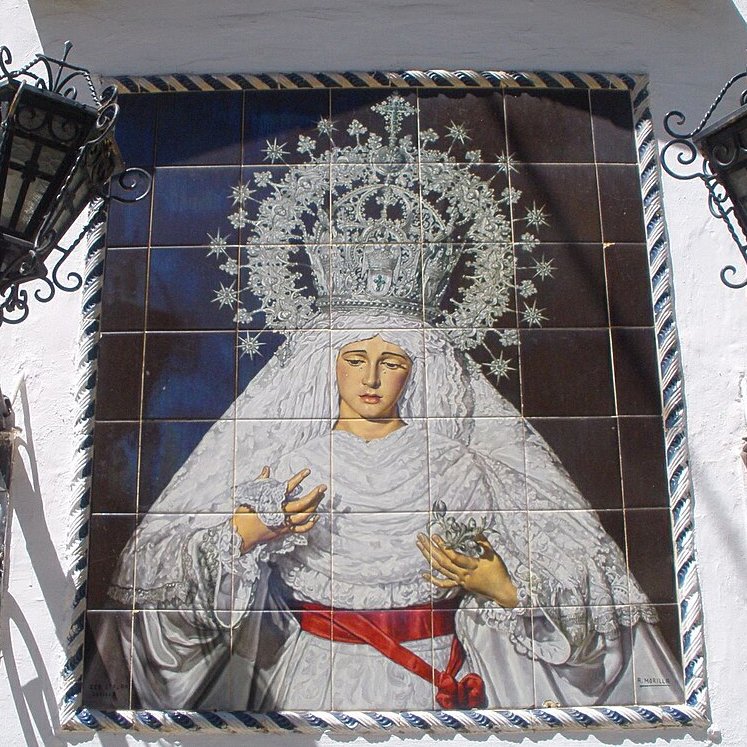
On the outside, the church is surrounded by annex buildings, with only the south and east façades remaining free. On the south side, the buttresses supporting the walls can be seen and it has a simple doorway in the area closest to the head. It was opened in 1940 to allow passage through and is made up of a simple semicircular arch framed by a moulding of exposed brick. To the right of the door is a beautiful ceramic altarpiece with the Christ of Victory, made by Alfonso Magüesín de la Rosa in 1989. In the background there is a landscape in which the silhouette of the Plaza de España can be distinguished. The ceramic altarpiece dedicated to the Virgin is very close, next to the entrance to the fenced area around the church. It was made by Antonio Morilla Galea in 1977 and it highlights the beautiful contrast between the whiteness of the figure of the Virgin and the black background.

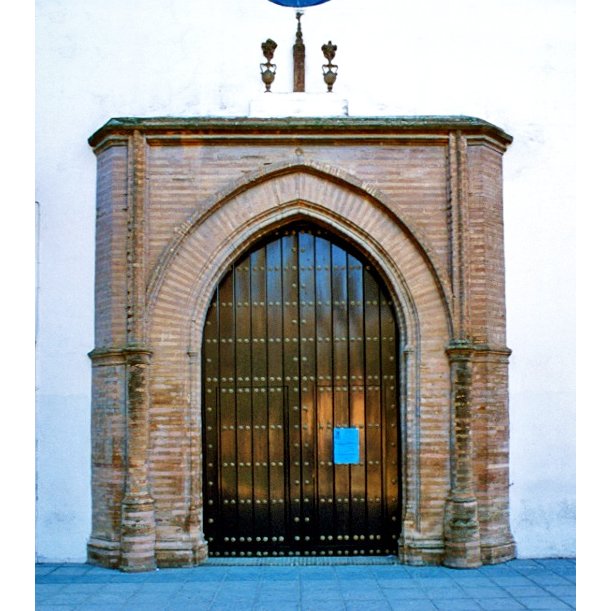
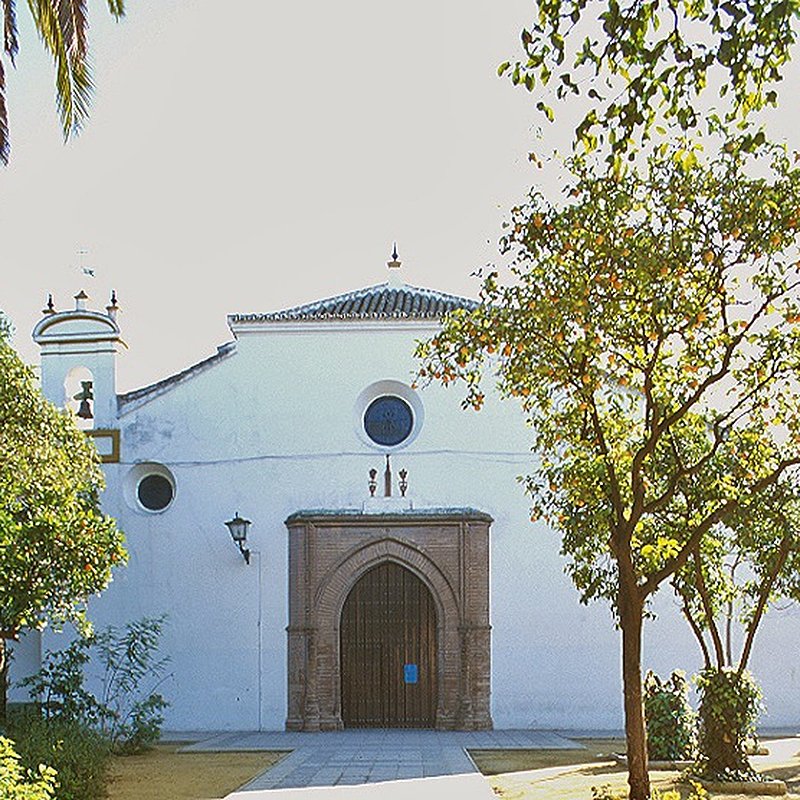
The main façade is the one facing east, at the foot of the church. In its centre we find a magnificent Mudejar doorway, probably built in the 15th century. It is formed by a pointed arch, framed by a structure that stands out from the rest of the façade, built from rows of bricks in alternating colours. It is very beautiful despite its simplicity and is clearly related to other similar doors that we find in Seville, such as that of the church of the convent of Santa Paula or that of the chapel of Santa María de Jesús. Above the door we find the coat of arms of the Cathedral, the Giralda between two jars of lilies, a symbol of the patronage of the cathedral chapter. This emblem does not appear in Richard Ford's drawing of 1831, so it must have been added later.

At the top of the façade there are three oculi, one in the centre and two on the sides, which serve to illuminate each of the naves. On the left stands a simple bell gable, with a single bell and topped with a curved pediment.

Interior

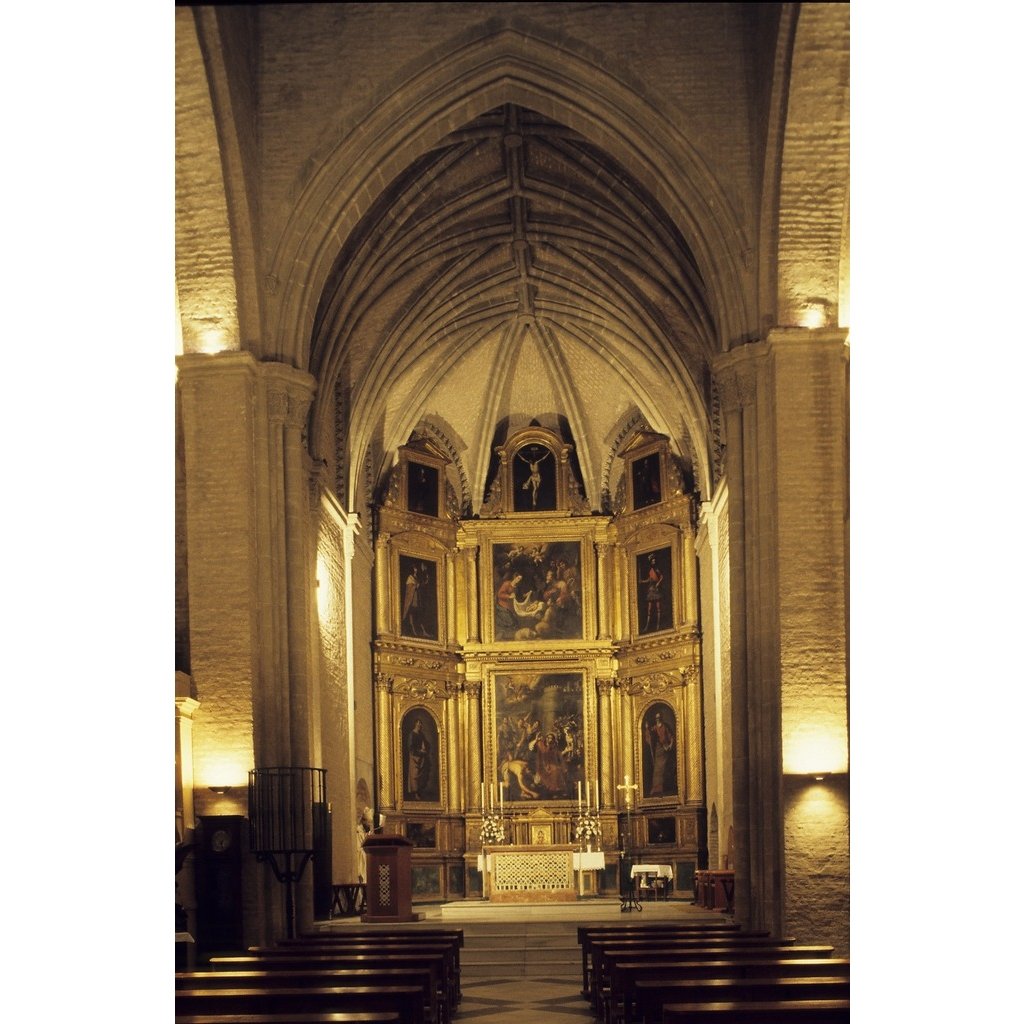
Inside, the space is divided into three naves, with the central one wider and higher than the side ones. Large pointed arches resting on cruciform pillars separate the naves. Another large pointed arch separates the central nave from the presbytery, like a triumphal arch. Most of the walls are plastered in white, with the area of ​​the pillars imitating ashlar and leaving the brickwork on the arches exposed. A 20th-century tiled plinth with geometric shapes runs throughout the interior. The roof is covered by wooden coffered ceilings in the neo-Mudejar style, with a pair and knuckle in the central nave and hanging in the side ones.
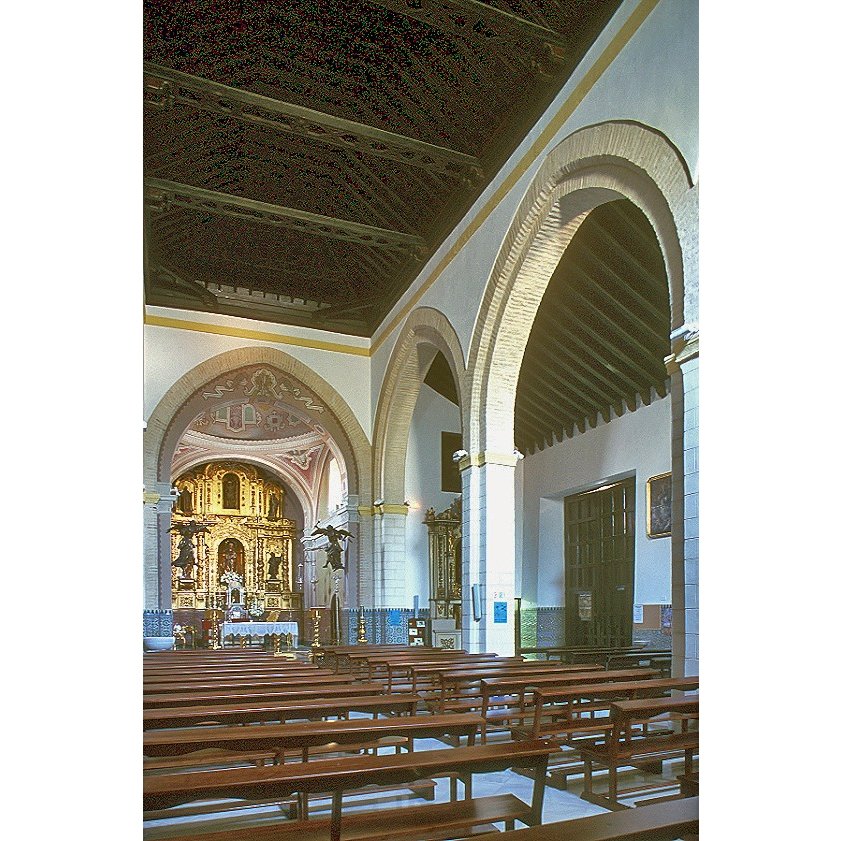
From the rectangular space formed by the naves, three spaces stand out at the head. The presbytery is located in the centre, the sacristy at the head of the right nave and the chapel occupied by the Brotherhood of Peace at the head of the Gospel nave.

The presbytery is a quadrangular space covered by a hemispherical dome on pendentives that is not visible from the outside of the temple. In all probability, it was originally covered by a pointed vault, as occurs in most of the Gothic-Mudejar churches in the city. The current dome must have been built during the reforms undertaken in the 19th century. The walls are decorated with contemporary paintings with geometric motifs, plants, fake architecture and angels. The pendentives follow the tradition of serving as a support to accommodate the Evangelists, who are represented by their symbols.

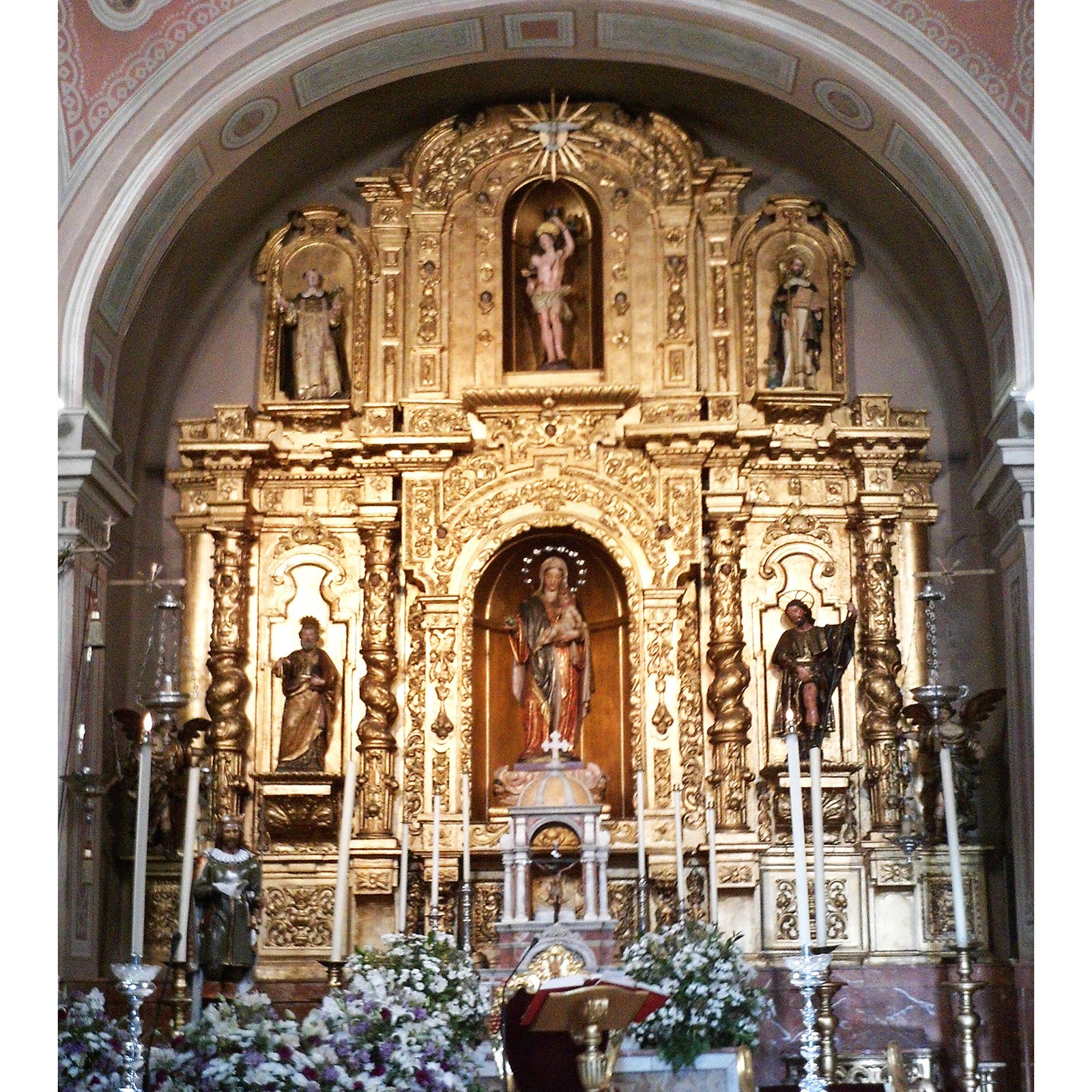
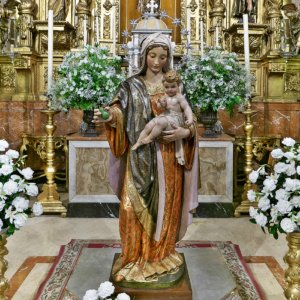
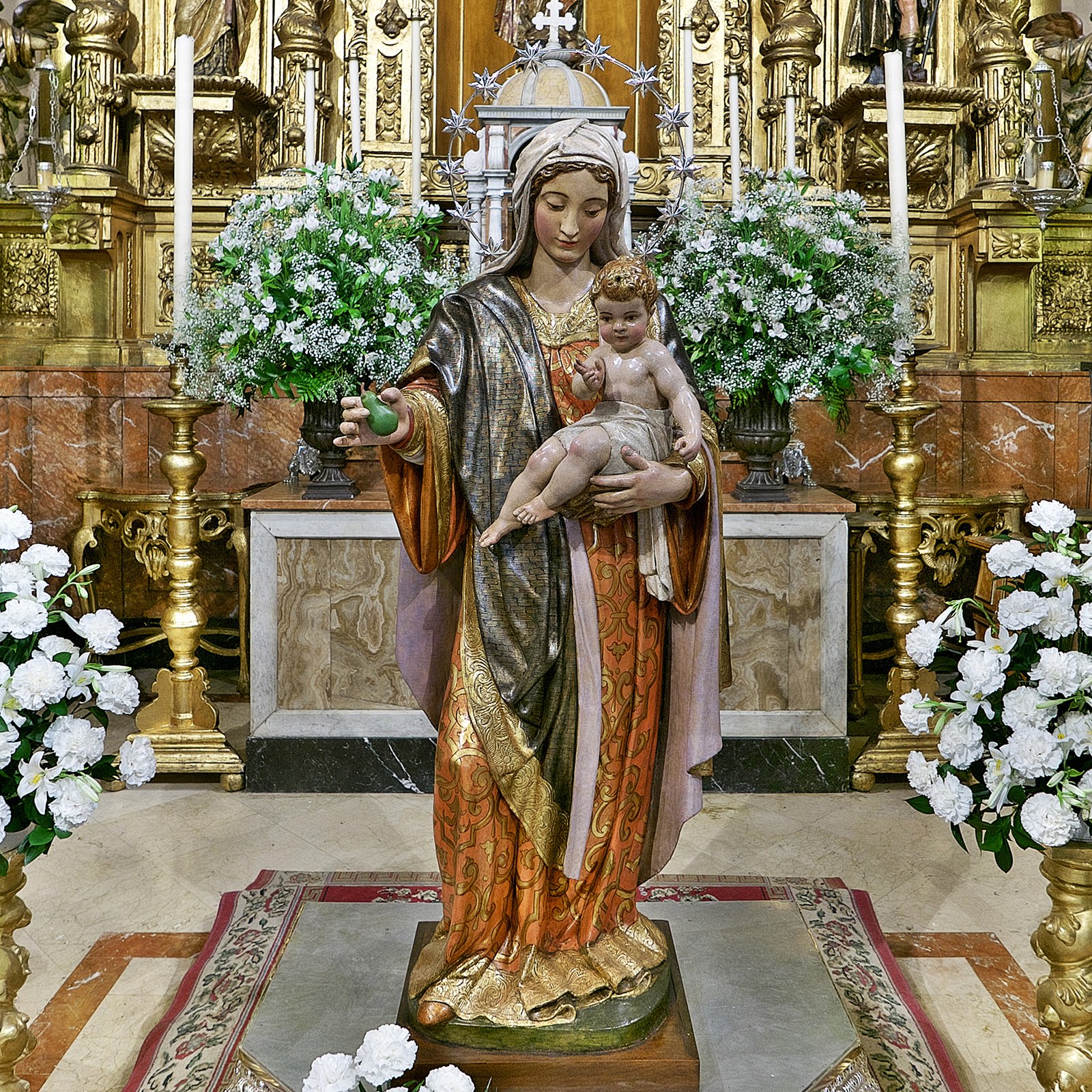
The altarpiece is in neo-baroque style, made in the 20th century. It is divided into three sections and two horizontal bodies. In the main niche we find a magnificent sculpture of the Virgin and Child, known as the Virgin of the Meadow. It was made by Jerónimo Hernández around 1577 and is an outstanding example of Renaissance sculpture in the city. The Child Jesus appears blessing with a sweet gesture while the Virgin holds a pear in her right hand. It should be remembered that this image acted as patron and protector of market gardeners and country people in this area of ​​Seville.

On the side streets are the sculptures of San Pedro and San Roque. In the centre of the second body is San Sebastián, the patron saint of the temple, flanked by San Jacinto and Santo Domingo de Guzmán. All the sculptures seem to be original from the 18th century, although they were probably re-painted later.

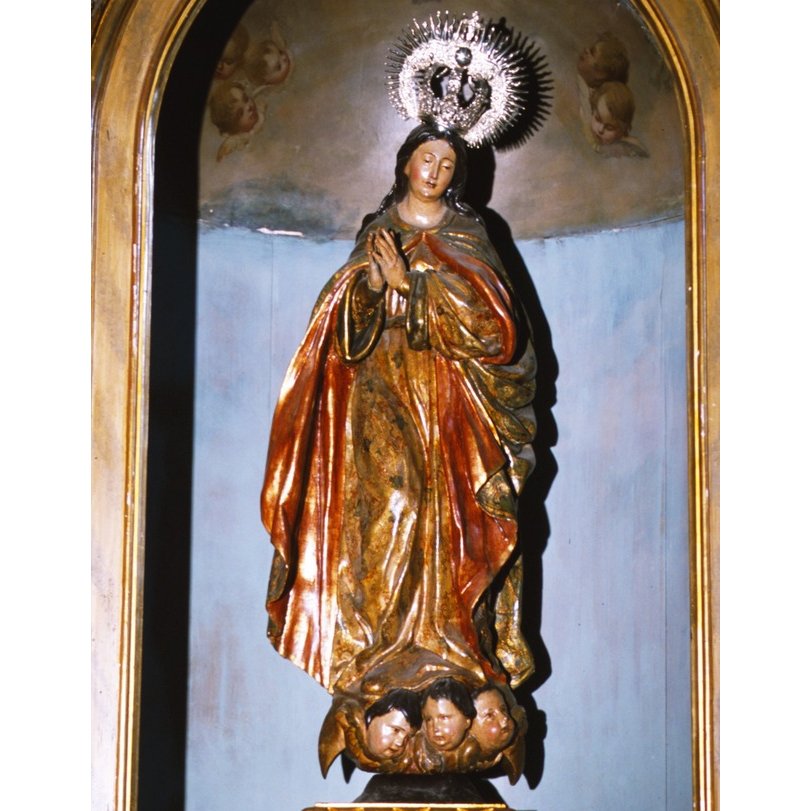
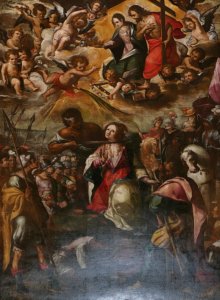
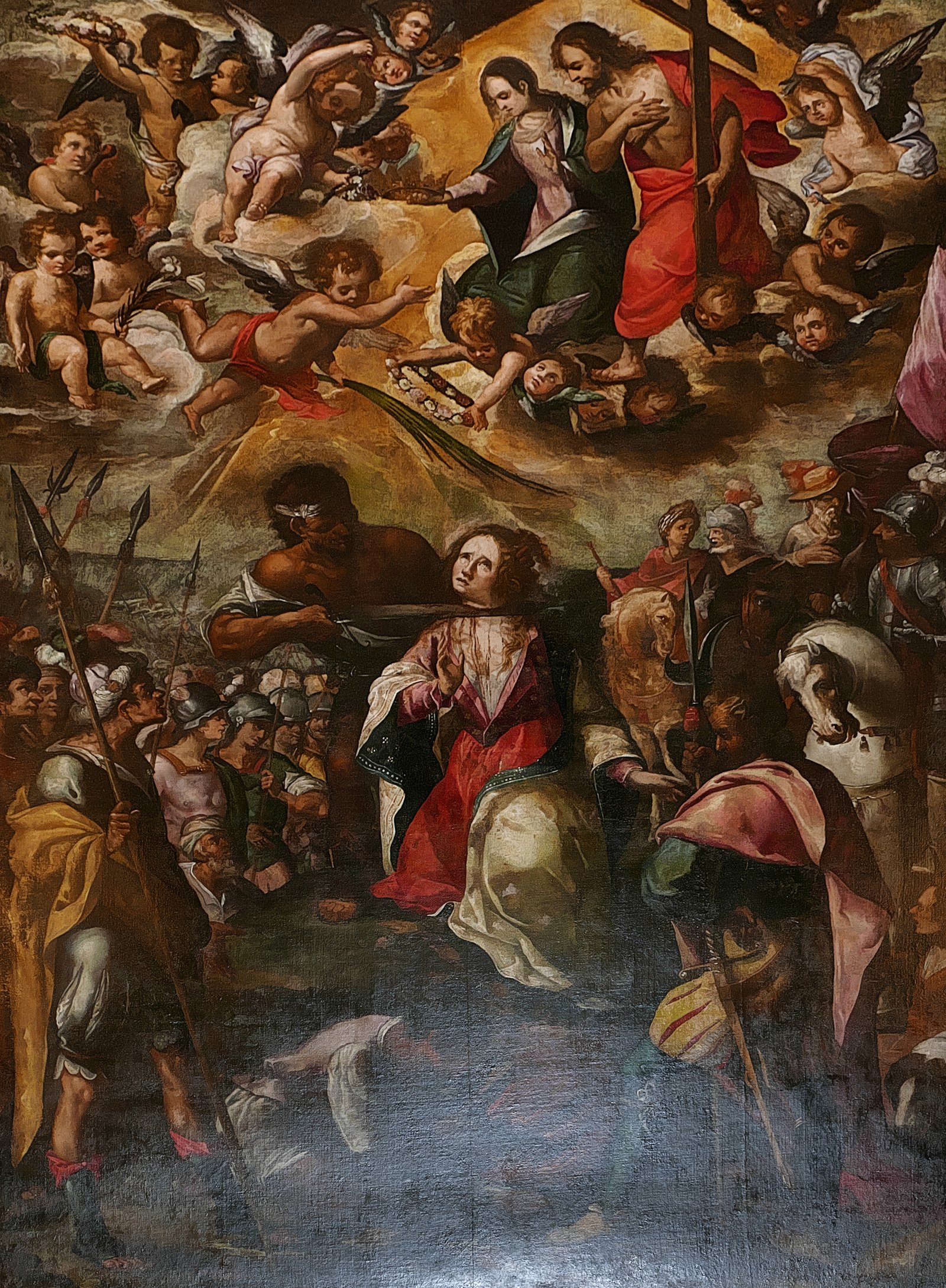
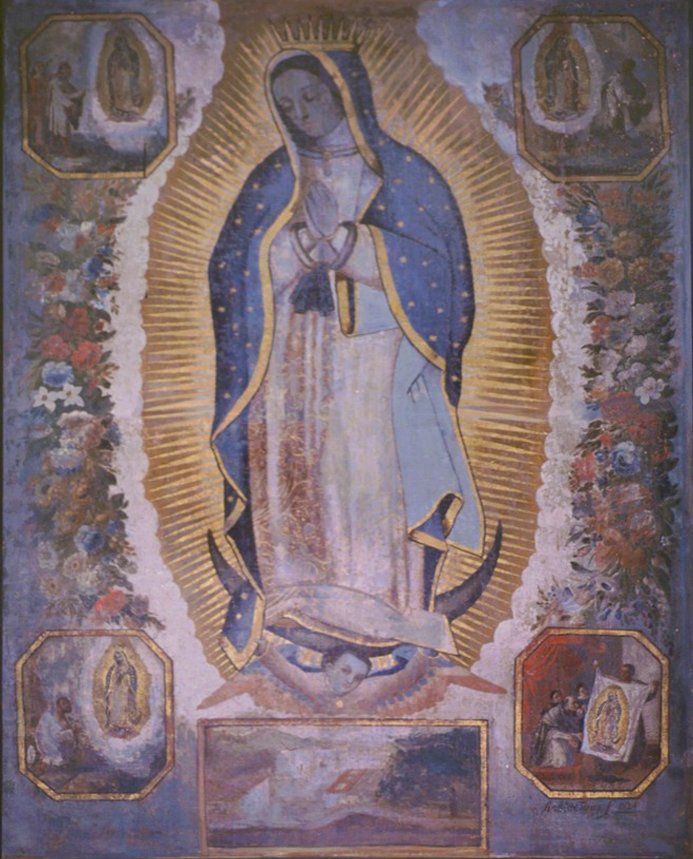
Other sculptures and paintings are displayed on the walls of the naves. One of the most notable is a carving of the Immaculate Conception from the 18th century, which presides over a stucco altarpiece in neoclassical style. There are also some carvings from the 20th century, such as the Sacred Heart, which presides over a neo-Baroque altarpiece. Among the paintings, we find several copies of originals by Murillo and some other Baroque paintings, such as the "Martyrdom of Saint Lucy" (Francisco Varela, c. 1637), the "Annunciation" or the "Marriage of the Virgin". From the same period there are representations of various saints, such as Saint Lawrence, Saint Agnes or Saint Sebastian, and an interesting "Virgin of Guadalupe", a copy of the Mexican original made by Antonio Torres in 1740.

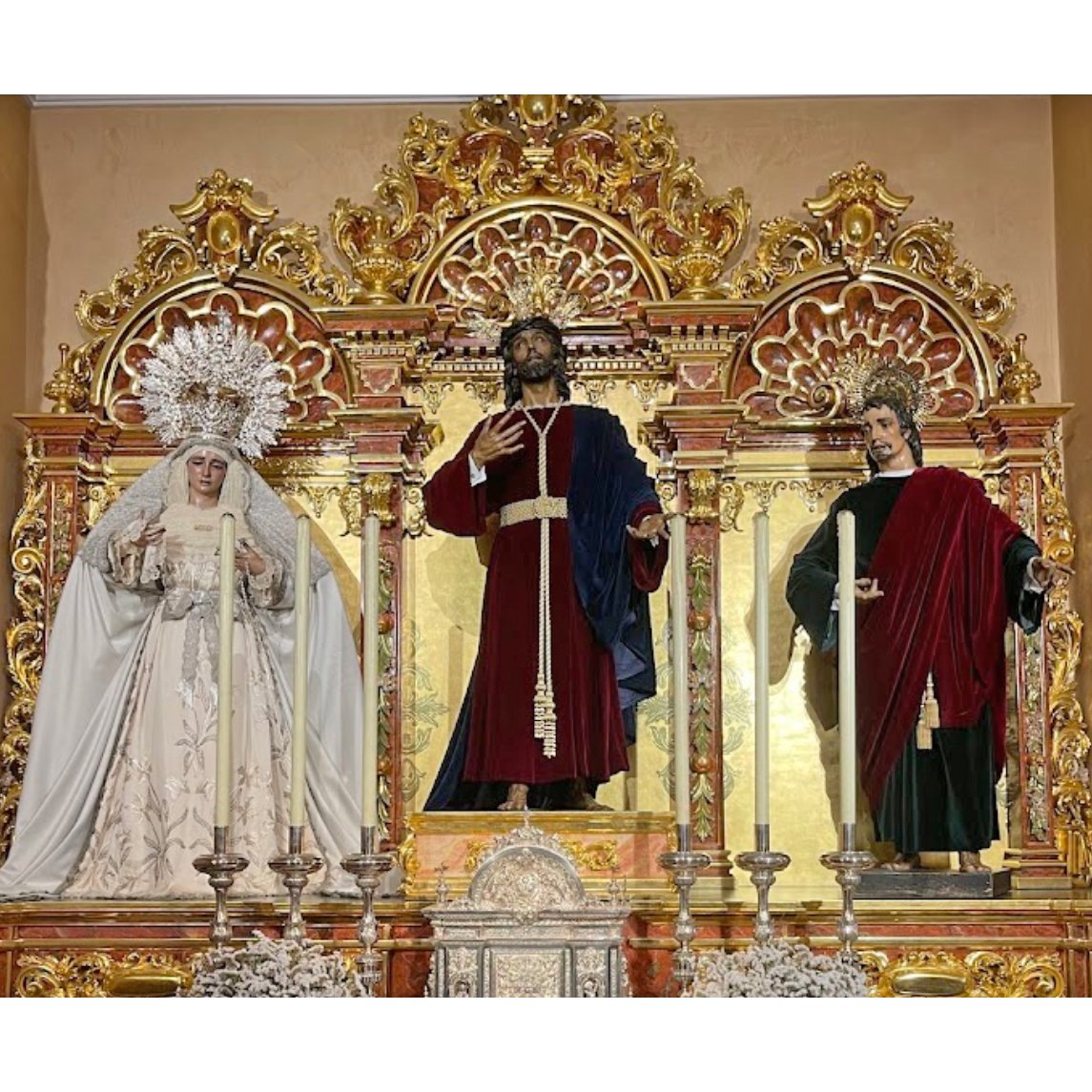
As we said, at the head of the left nave is the sacramental chapel, where the titular images of the Hermandad de la Paz are worshipped. The chapel is covered by a groin vault with a lantern in the centre and presided over by a neo-baroque altarpiece. In the centre we find Nuestro Padre Jesús de la Victoria, a sculpture made by Antonio Illanes Rodríguez in 1940. It forms part of a float in which Jesus is seen taking the cross to carry it on the way to Calvary, although when it is in its chapel the image is logically shown without the cross. On the left is the image of María Santísima de la Paz, made in 1939 also by Antonio Illanes, who is said to have been inspired for the face of the image by the facial features of his wife, Isabel Salcedo. When it comes to the procession, the image stands out for the white and silver tones of its float, both in the canopy and in the figure of the Virgin herself. This whiteness is a clear sign of the devotion to Peace and creates a very unique and iconic image during Holy Week in Seville. The same artist also made the sculpture of Saint John that occupies the niche on the right of the altarpiece.
CHURCH OF SAN ESTEBAN

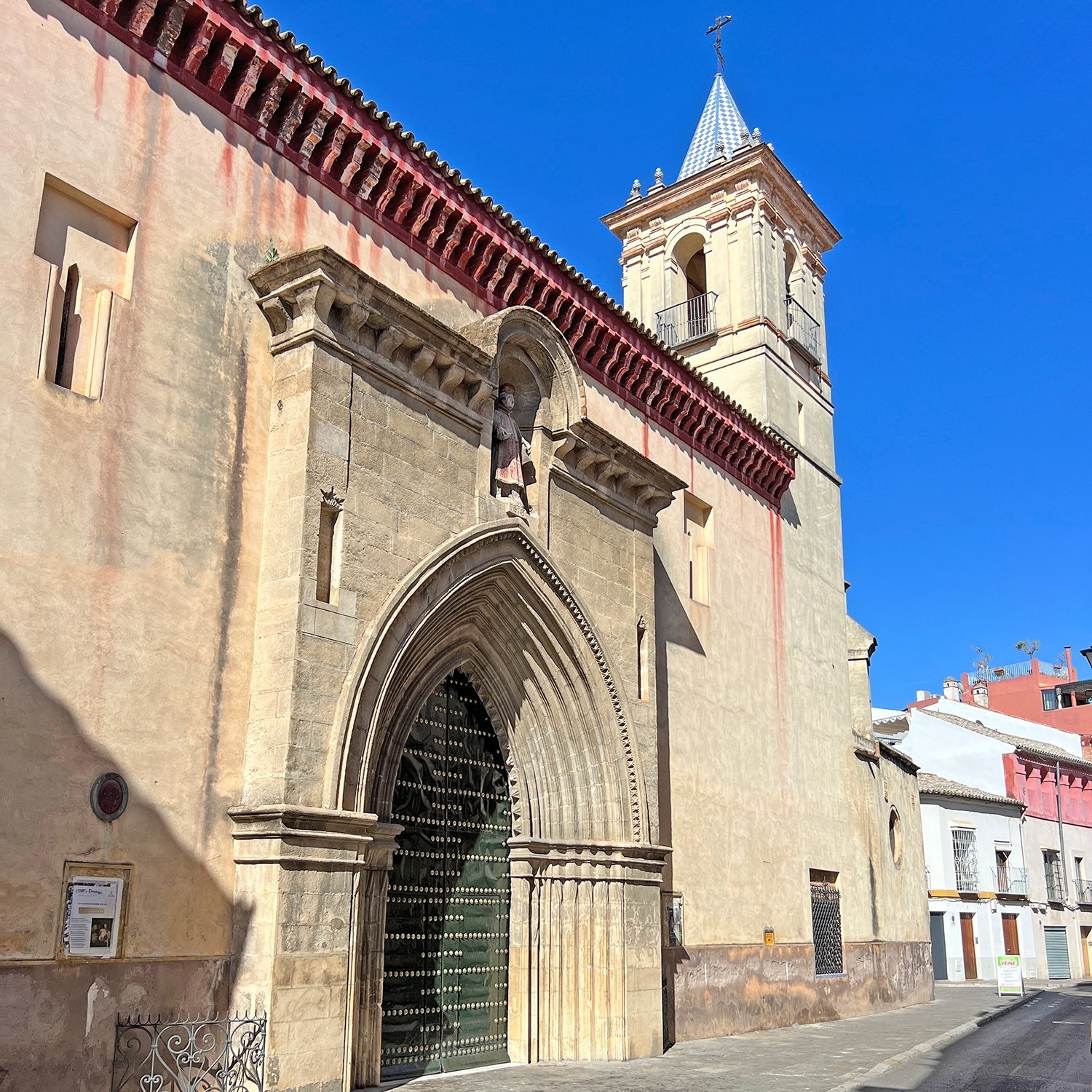
The church of San Esteban is located in the Alfalfa neighborhood, which has historically been the main access axis to the city from the East. It is a Mudejar Gothic temple built in the second half of the 14th century, although its exterior façades are somewhat later. As time went by, other reforms and extensions came, such as the construction of the tower, which dates back to the 17th century.

DESCRIPTION

It is a temple with three naves of irregular size, since the central one is larger than the lateral ones and among the lateral ones, the one on the right is narrower than the one on the left. It has a rectangular plan from which the deep irregular head that houses the presbytery stands out. Also standing out from the floor plan are the chapel of Christ of Health and Good Voyage, on the right side wall, and the sacramental chapel, next to the left nave.


Exterior

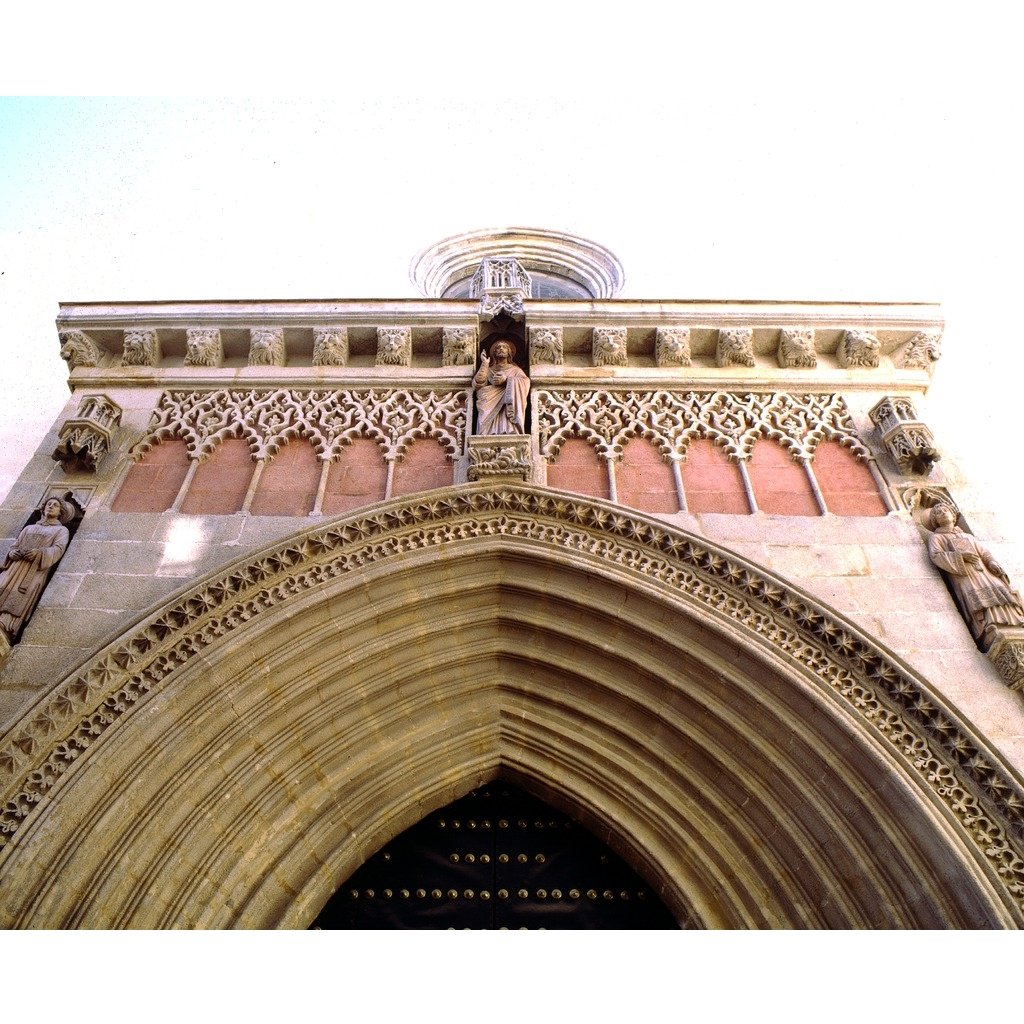
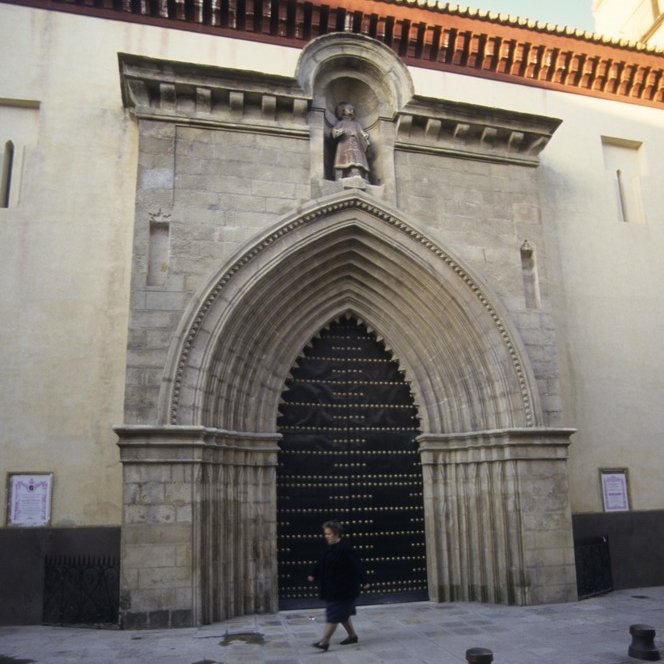
Outside, the church with two doors. The main one opens at the foot of the church towards Medinaceli Street and is a beautiful example of Sevillian Mudejar Gothic doorways. It dates back to the early 15th century and is considered one of the highest quality in this group. The opening is a flared pointed arch, with an archivolt formed by eight arches of decreasing size. On the fascias you can admire a delicate plant decoration, in which fig and vine leaves seem to be distinguished. The outer limit of the archivolt is decorated with the classic diamond points, also a very characteristic element of Sevillian Gothic.

Above the door is a beautiful frieze formed by a series of columns that support an archway decorated with the traditional sebka, of such deep tradition in the city at least since Almohad times. A little higher, sixteen corbels in the shape of a lion's head support the upper cornice.

On both sides of the façade, above the impost line, there are two small columns with capitals decorated again with lion heads. On the one on the right we find San Lorenzo, holding the grill symbol of his martyrdom. To the left is Saint Stephen, the titular saint of the temple, dressed in his deacon's dalmatic. Finally, on the top of the arch is a representation of Christ as Savior. The three small sculptures are arranged under canopies, an extremely common element in Gothic architecture.

On the left side, towards San Esteban Street, a second doorway opens, very similar in its structure to the previous one, but simpler in its decoration. Above the top of the archivolt there is a niche in which we find again the saint to whom the church is dedicated, this time in a sculpture dated by an inscription in 1618, being, therefore, much later than the door itself.

A characteristic of this cover that is well known in the Sevillian brotherhood world is that the diamond points decorate the archivolt not only on the outside but also on the inside. This circumstance makes it difficult and adds excitement to the exit from the canopy passage of the Virgen de los Desamparados every Holy Tuesday.

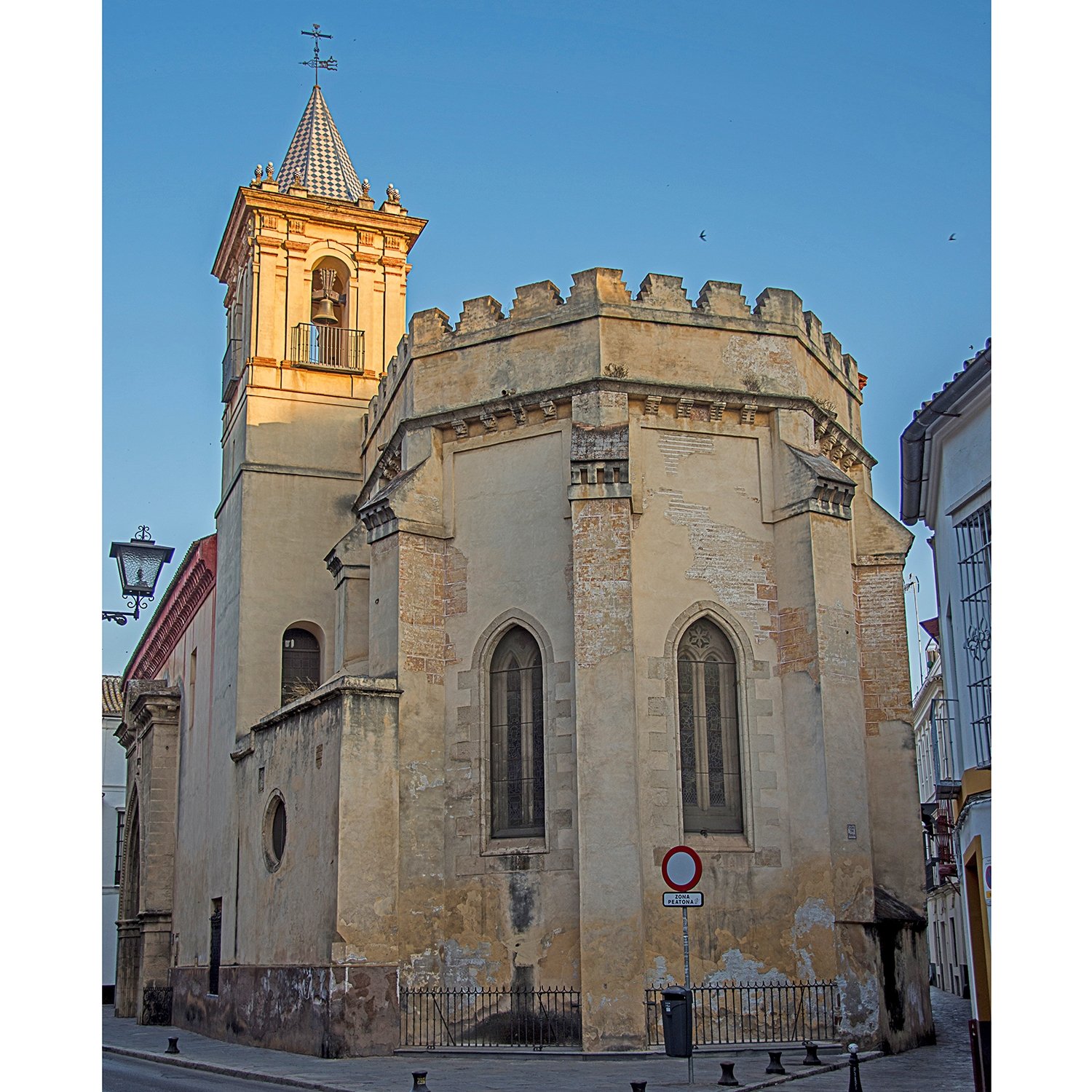
Also on the outside, the robust apse at the head of the temple stands out. It is supported by six enormous buttresses between which elongated Gothic windows open. At the top it is crowned by stepped battlements, very common in Seville since the Middle Ages.

Next to the apse is the bell tower, a simple square structure added in the 18th century. The last body has neoclassical decoration, with pilasters framing the semicircular openings that house the bells. The set is completed by a hexagonal spire decorated with blue and white tiles.

Inside

Once inside the temple, the first thing that catches your attention is that the walls lack any type of plastering or coating, so the brick, which was the basic material in the construction of the church, is visible everywhere.

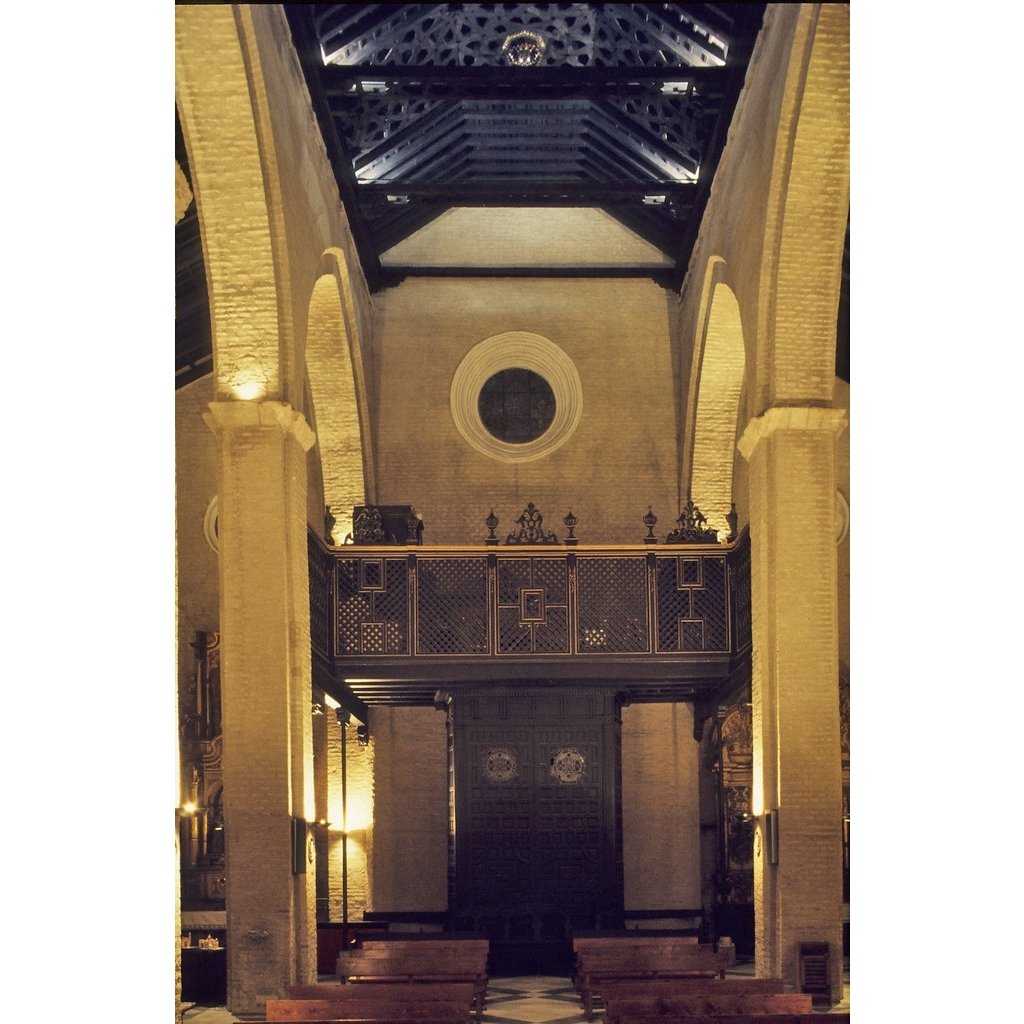
The naves are divided by graceful pointed arches supported by cruciform pillars. In the central nave they support an interesting three-panel Mudejar coffered ceiling, probably from the 15th century. On the other hand, the side naves are covered with hanging vaults.

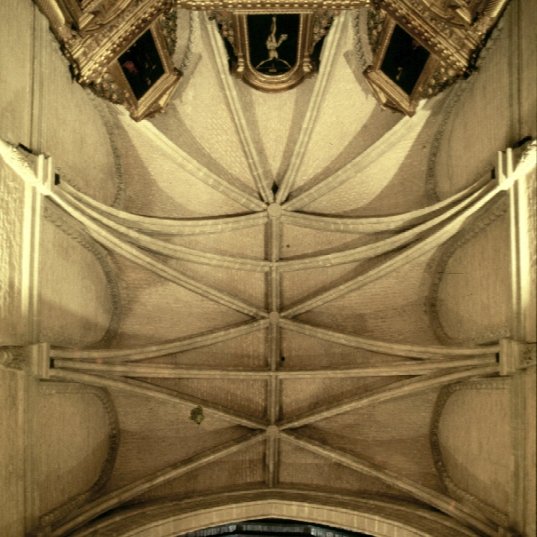
The presbytery area is unique as it is covered with a stone vault with Gothic ribs. This differentiation of covering systems was very common in the churches of the time and even in those of later centuries.

At the foot of the church, above the entrance gate, there is a high choir made up of a structure made entirely of wood.

Main Altarpiece

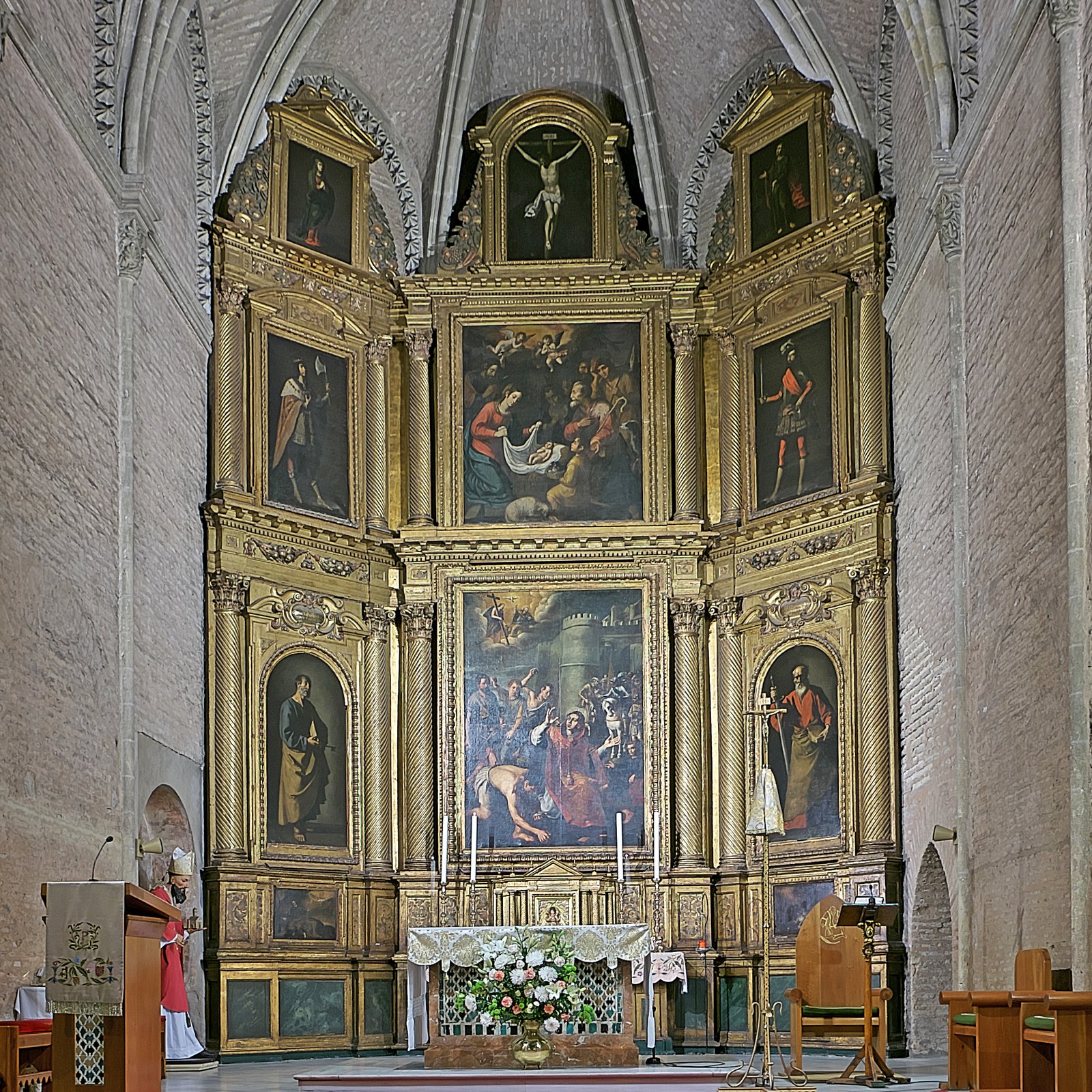
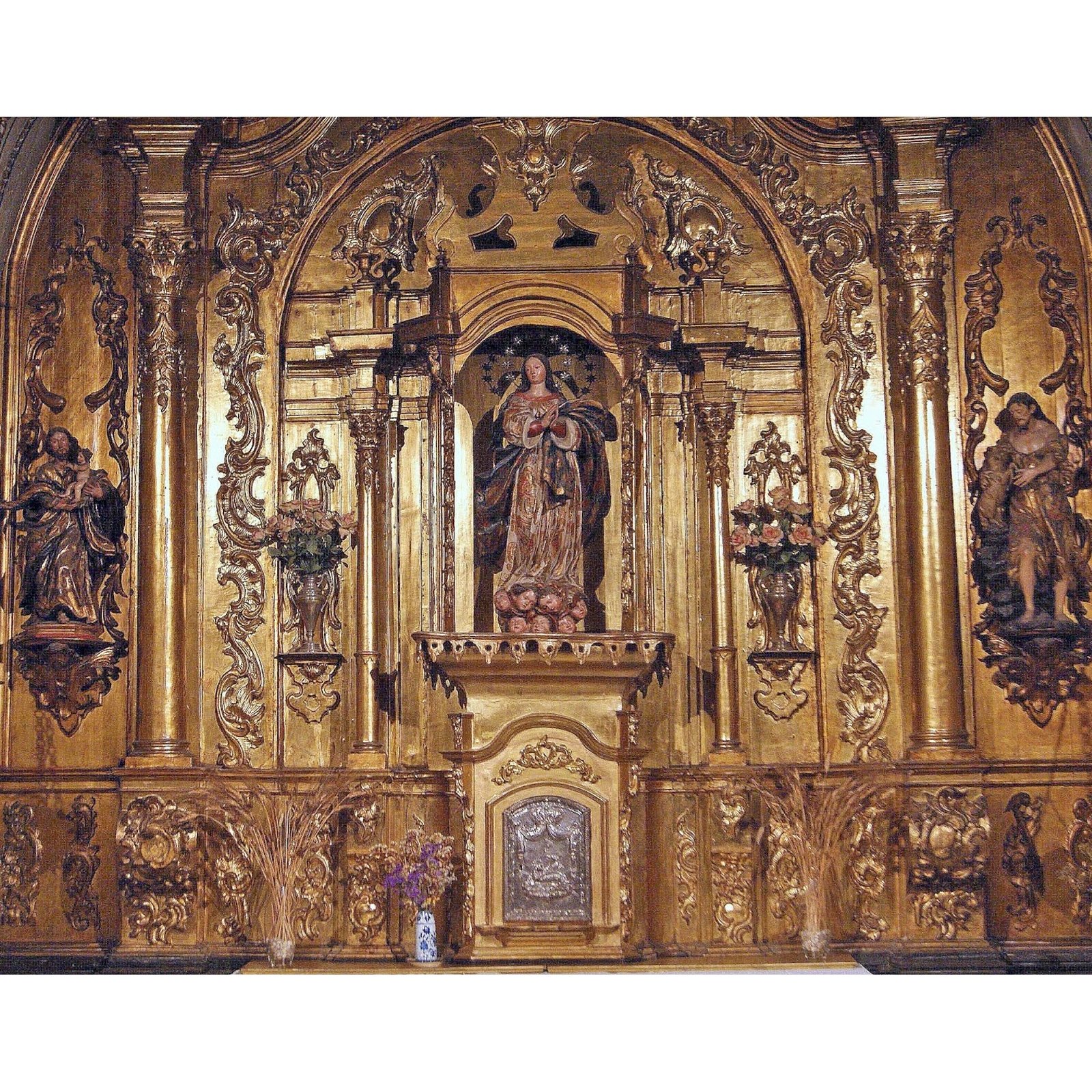
It is a baroque altarpiece commissioned from Luis de Figueroa in 1629. It has two sections and an attic, divided into three streets. It has the particularity that it is completely decorated with paintings and not with sculptures, as is usually the case in Seville.

The paintings on the central street are attributed to the brothers Miguel and Francisco Polanco. From bottom to top we find: “The stoning of the protomartyr Saint Stephen”, “The adoration of the shepherds” and a “Crucified Christ”.

The paintings in the side streets are by Francisco de Zurbarán, an Extremaduran painter who developed his career in Seville and who is one of the greatest exponents of baroque painting in Spain. On the left street, from bottom to top, are San Pedro, San Hermenegildo and La Dolorosa. On the street on the right, San Pablo, San Fernando and San Juan Evangelista.

On the bench there are two other paintings, smaller in size, whose authorship is not clear. On the left is “The Vision of the Impure Animals of Saint Peter” and on the right “The Conversion of Saint Paul.”

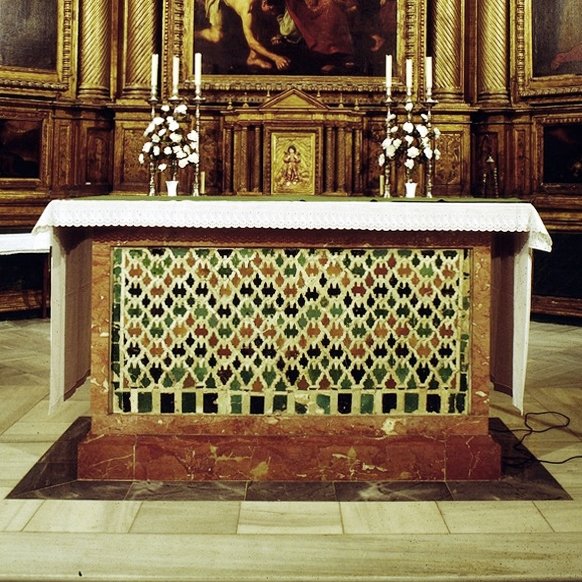
In the presbytery area, the altar can also be highlighted, since its front part is decorated with Mudejar tiling that was found in the church. It presents geometric decoration with the classic “sebka” as a motif.

Taking a tour of the rest of the church, from an artistic point of view, the following elements can be highlighted:

On the right or Epistle wall:

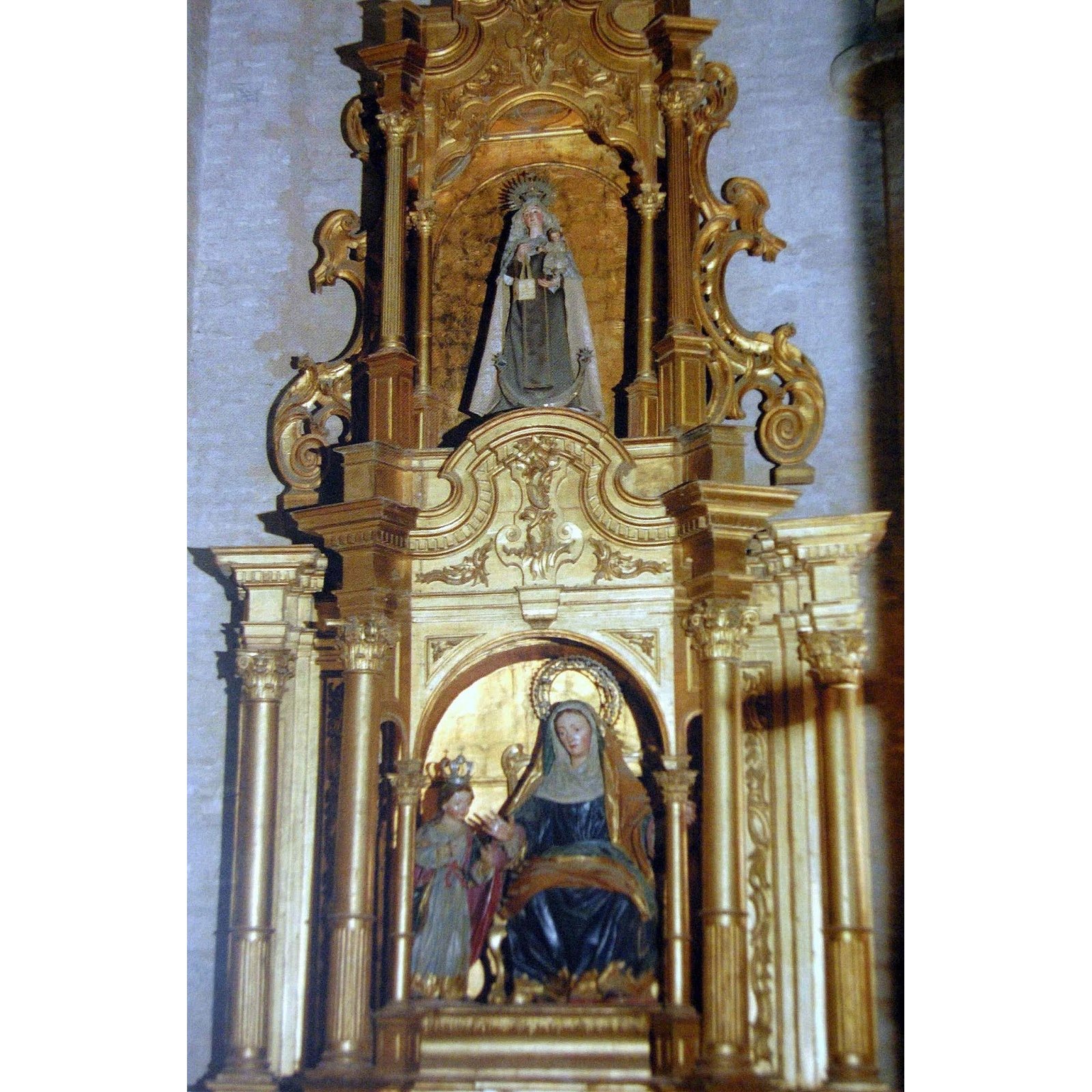
- At the foot there is a small altarpiece dedicated to “Saint Anne teaching the Virgin to read”, an anonymous group from the 19th century. In the attic there is a small dressable image of the Virgin of Carmen.

- Nearby is a 17th century painting reproducing the Virgin of Antigua, an original from the 14th century that is preserved in the Cathedral. This type of paintings, made at different times, are frequently found in Sevillian churches, a reflection of the great popular devotion that the Virgin of Antigua always aroused in the city.

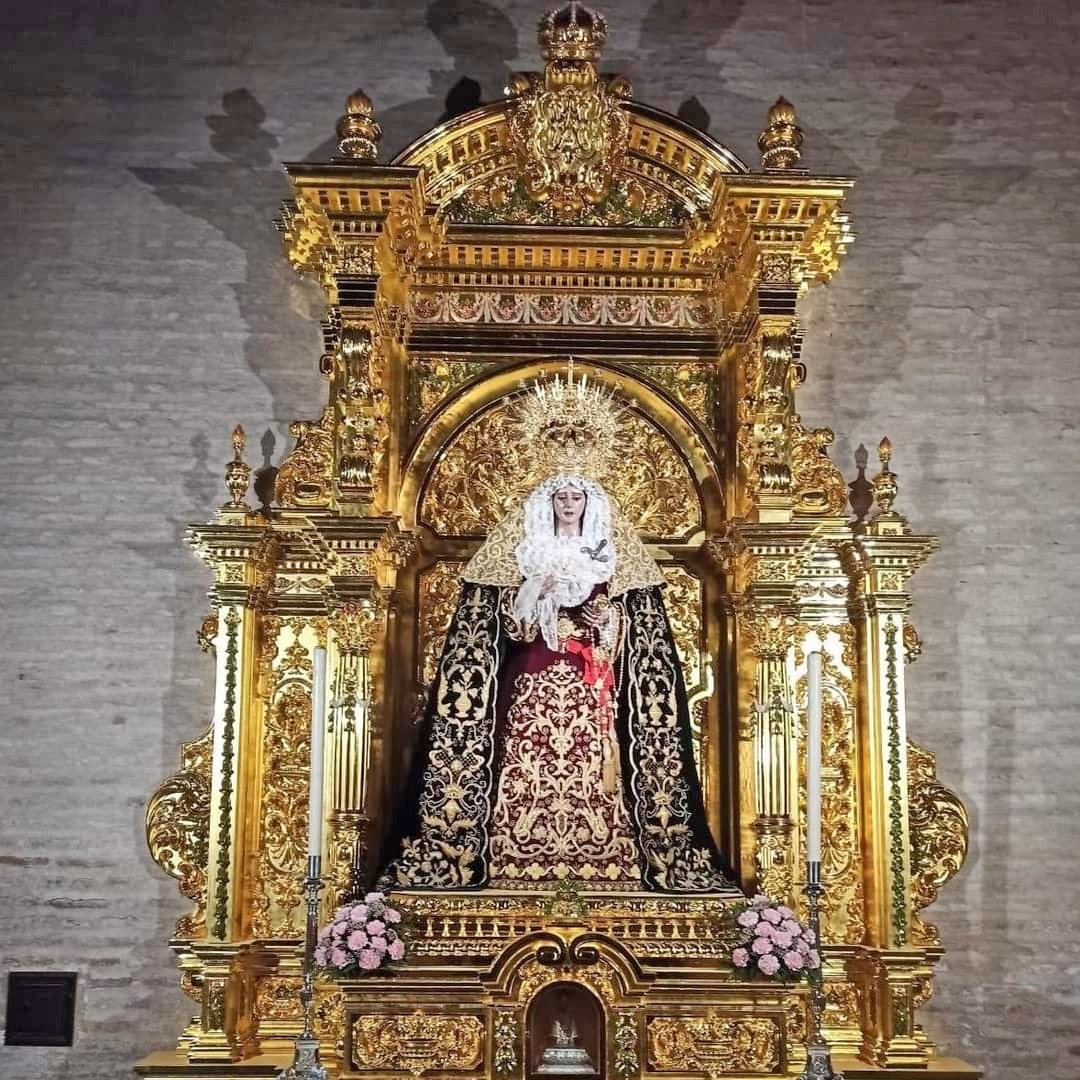
- Altarpiece of the Virgin of the Forsaken, a beautiful painful dress made in 1923 by Manuel Galiano, who is head of the Brotherhood of San Esteban. The altarpiece is in the neo-baroque style and was unveiled in 2022, carved by Pedro Benítez Carrión and gilded by Enrique Castellanos.

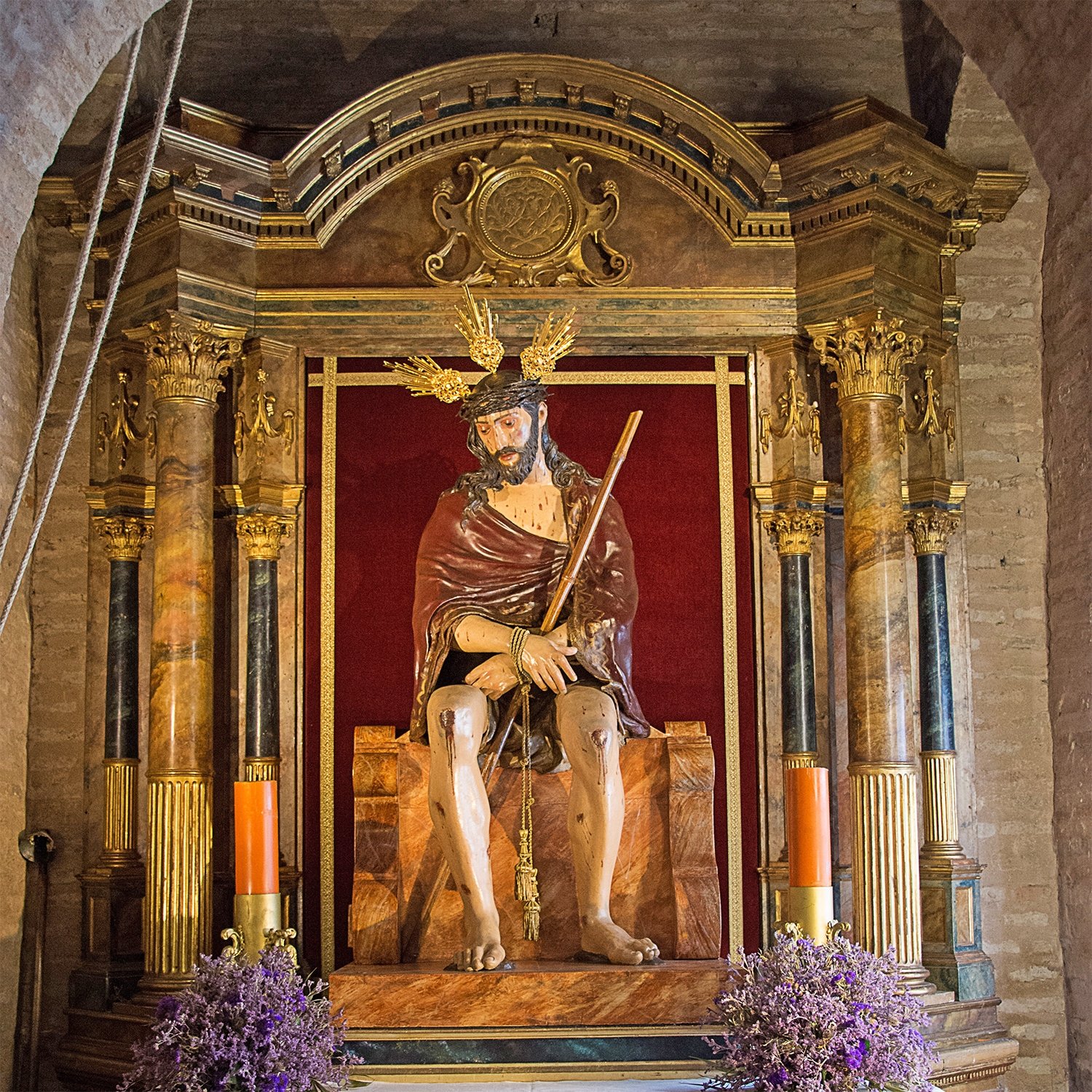
- Chapel of Christ of Health and Good Voyage, located at the head of the Epistle nave. It is a small chapel with a square floor plan, covered by a groin vault. A small altarpiece houses the image of Christ, which has been worshiped in this place since at least the 18th century. The Lord appears seated with the characteristic attributes of an Ecce Homo: crown of thorns, purple mantle and reed as a royal scepter. The work is composed of an original bust in baked clay from the 16th century, to which the body in polychrome wood was added in the 18th century.

On the outside of the chapel a small window opens, so that Christ can be seen from the street, a circumstance that is related to the dedication of Christ. It must be taken into account that the church is located next to the axis of Águilas and San Esteban streets, which was the most direct way to leave the city heading east, to eastern Andalusia. Apparently, it was common for travelers to stop for a few moments to pray before Christ, requesting his protection during their travels. This is why “Health and Good Voyage” was thought of when the dedication of the image was decided, when the brotherhood of San Esteban was founded around it in 1926.

In the Gospel nave (left):

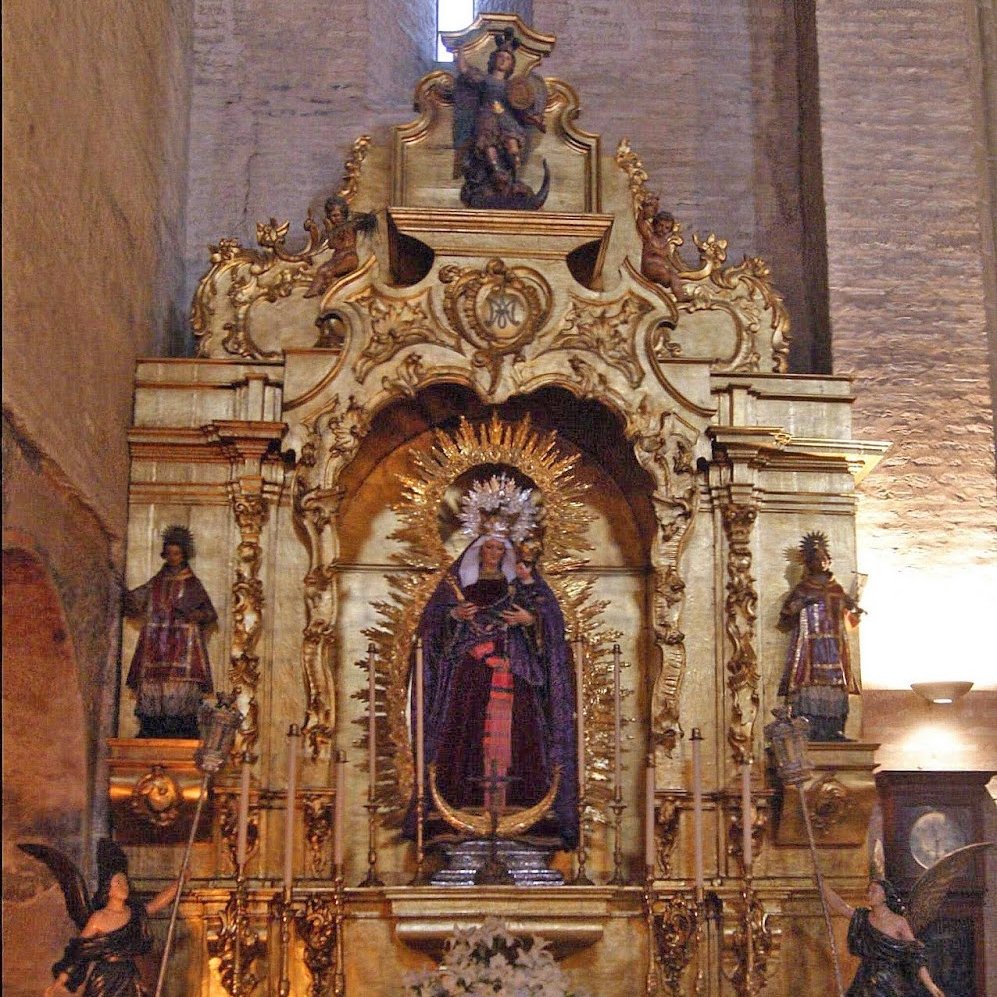
- In the head of the left nave is the neo-baroque altarpiece with the image of Our Lady of Light, an anonymous dress carving from the 18th century, which is the owner of its own brotherhood. In the side streets are San Lorenzo and San Esteban, while in the attic we find “Saint Michael killing the dragon”.

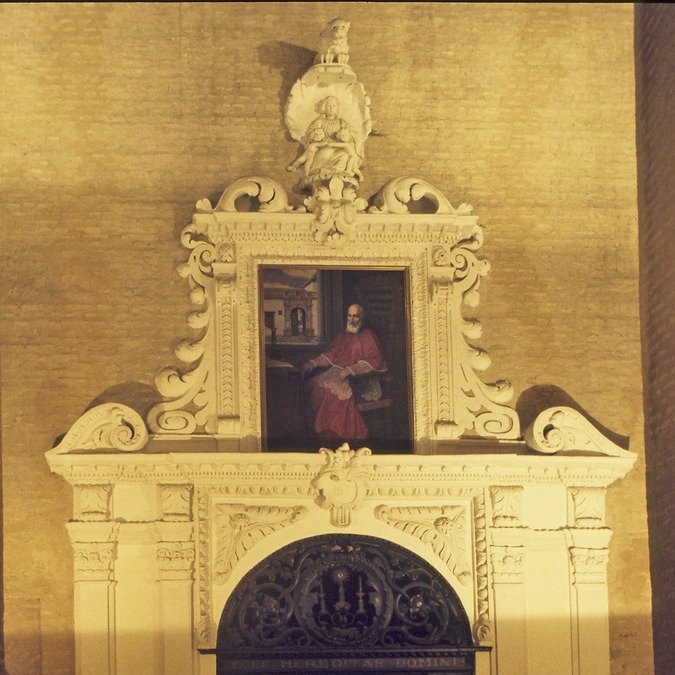
- Sacramental chapel, located next to the left or Gospel nave. It is accessed through a door guarded by a wooden grill from the second half of the 17th century. This type of bars were quite common, but their conservation is obviously much more problematic than in the case of metal ones. The entrance is framed by a neo-baroque doorway, with a niche above the opening in which is located a canvas representing San Pedro de Ribera, born in the parish of this parish. It was made by the Sevillian painter Alfonso Grosso around 1960.

Inside, the chapel has a square floor plan and is covered by a lowered dome, set on pendentives. The exuberant pictorial and plasterwork decoration stands out, similar in style to those that can be found in Santa María la Blanca, which is why its authorship has been linked to the Borja brothers. Also very striking is the splendid tiled plinth, dating from the 18th century and on which some curious geometric motifs are arranged. It is a quite notable specimen in the context of Sevillian tile work.

The altarpiece of the chapel houses an Immaculate Conception in its central niche, while we can find Saint Joseph and Saint John the Baptist on the sides. The altarpiece and carvings are also from the 17th century.

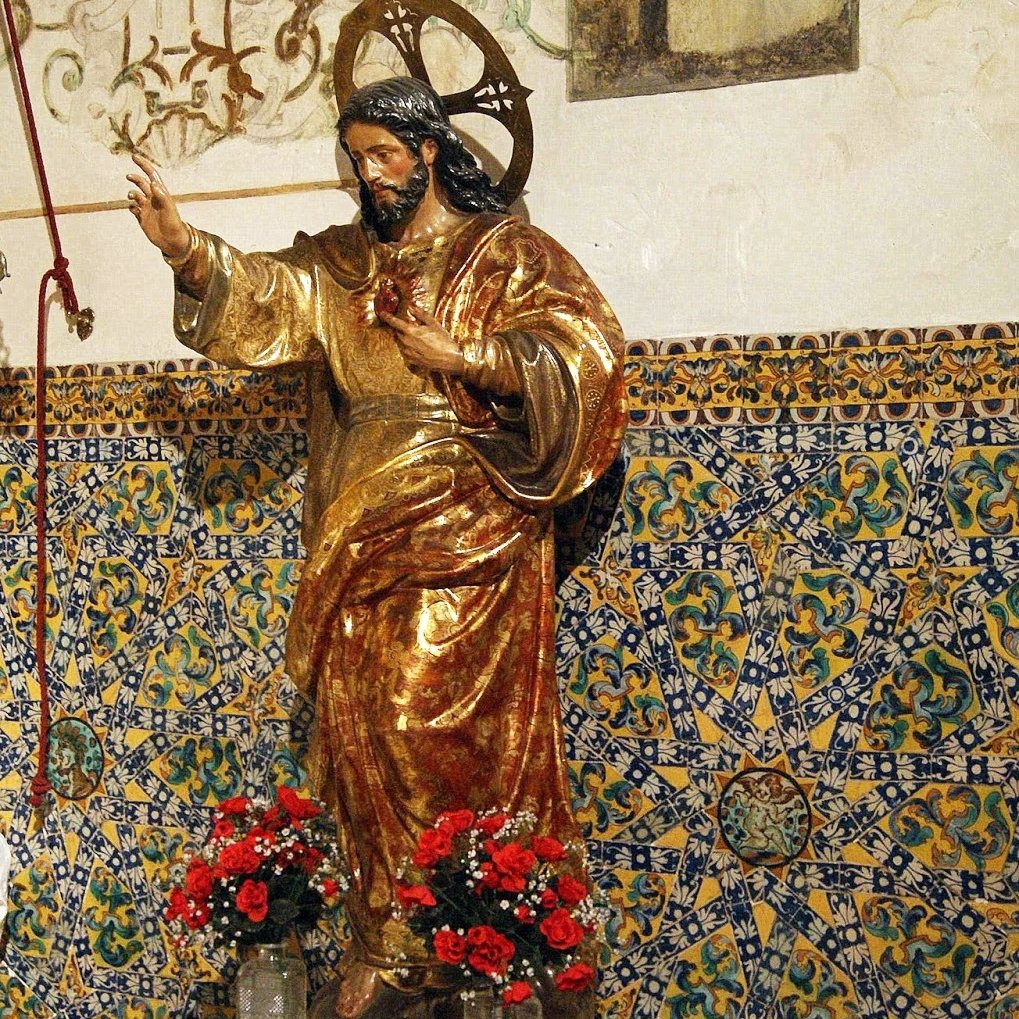
On one side of the chapel there is a small polychrome wooden sculpture of the Sacred Heart of Jesus. Apparently it is a work from the youth of Sebastián Santos Rojas, one of the most notable image makers of the 20th century in Seville.

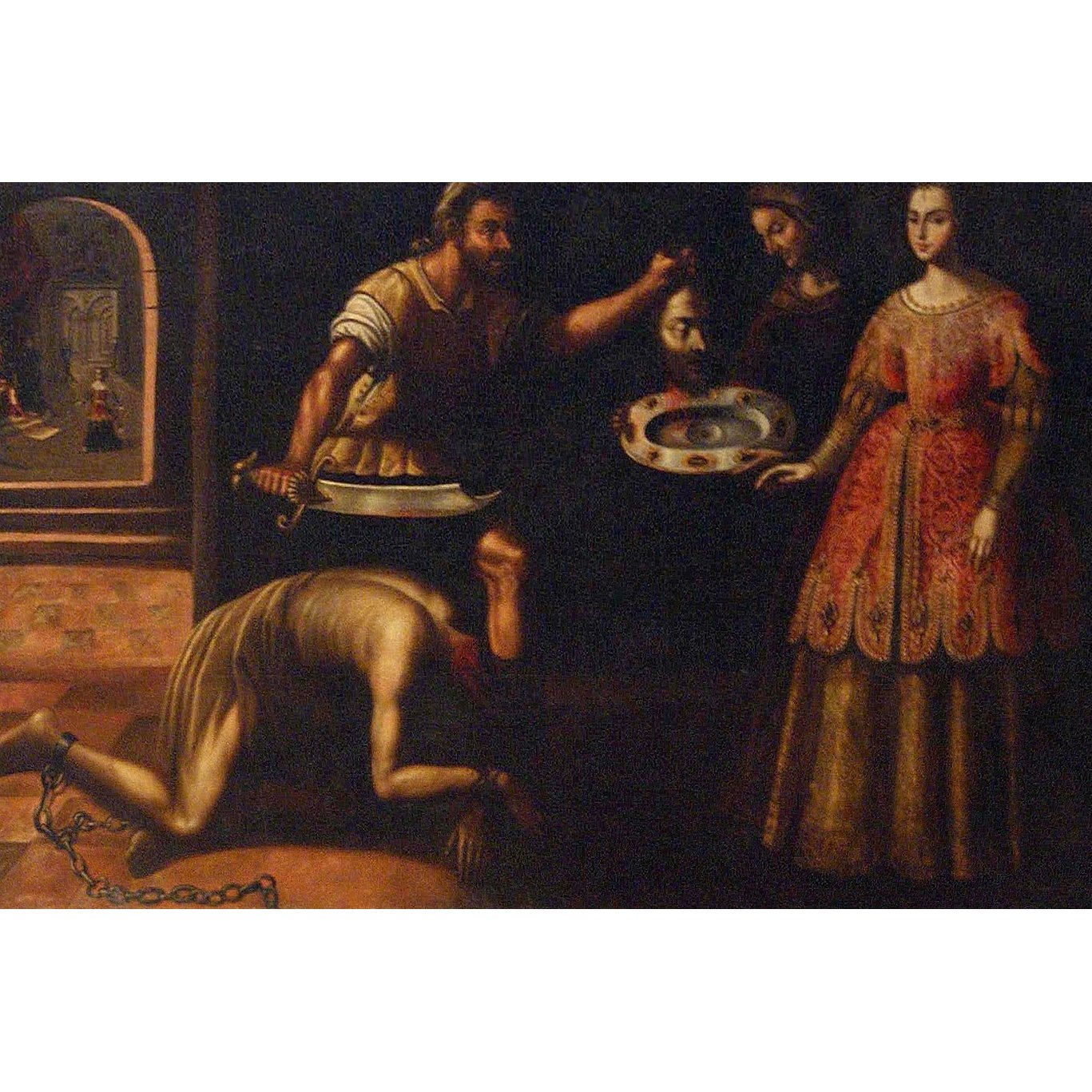
- On the wall next to the access to the chapel you can see a canvas with “The Beheading of Saint John the Baptist”, it is from the 17th century and by an anonymous author, although its possible Italian origin has been noted.

- Finally, at the foot of the nave, there is a Rococo altarpiece from around 1780 dedicated to Saint Joseph, who is represented with the Child in the central niche. He is accompanied by Saint Anthony of Padua and Saint Bartholomew in the side streets, and Saint Blaise in the attic.

CATHEDRAL OF SEVILLE

The Cathedral of Seville is probably the most emblematic monument of the city. Unesco declared it a World Heritage Site in 1987, along with the Alcázar and the Archivo de Indias. It is considered the largest Gothic temple in the world.

Most of its work was done in the late Gothic style during the 15th century, although it retains elements of the 12th-century Almohad mosque on which it sits, such as the Patio de los Naranjos or the Giralda. In addition, in the 16th century the Royal Chapel, the Chapter House and the Greater Sacristy were added in the Renaissance style. Later, during the Baroque period and practically up to the present day, various elements of the cathedral would be added and remodeled, until it became a true compendium of the history of art in the city.

Its floor plan is one of the hall calls, with a flat head and five naves, the central one being taller and wider than the rest. It has numerous side chapels located between the buttresses.

The supports are enormous pillars with a rhomboid section, made of brick and masonry and covered with ashlars. Rib vaults sit on them, so characteristic of Gothic. They are sexpartite in the chapels, quadripartite in the naves, and those corresponding to the transept, in the central part of the temple, are star-shaped.

On the side chapels and on the main axes there is a narrow gallery in the form of a clerestory.

Its construction was approved by the cathedral chapter in 1401. Legend has it that the project would be inspired by the phrase "Let's make a church so beautiful and so great that those who see it carved will consider us crazy" and according to the capitular act of that day the new work should be "one such and so good, that there is no other like it."

In detail: Cathedral of Seville

1. Giralda, 2. Puerta de Palos, 3. Capilla Real,

4. Puerta de Campanillas, 5. Sala Capitular, 6. Sacristía Mayor,

7. Sacristía de los Cálices, 8. Puerta del Príncipe,

9. Sepulcro de Cristóbal Colón, 10. Altar Mayor, 11. Coro,

12. Puerta de San Miguel, 13. Puerta de la Asunción,

14. Puerta del Bautismo, 15. Parroquia del Sagrario,

16. Puerta del Perdón, 17. Patio de los Naranjos.

MORE ABOUT THE CATHEDRAL:

Tumba de Cristóbal Colón, Catedral de Sevilla

THE LAST VOYAGE OF COLUMBUS

Christopher Columbus is one of the most famous characters in the history of mankind. It is true that in the last century the almost epic narrative of his achievements has been nuanced, giving way to a more critical view of the figure of the admiral ...
Santas Justa y Rufina en la Puerta del Bautismo

THE SAINTS JUSTA AND RUFINA IN THE DOOR OF THE BAPTISM

Seville Cathedral is a splendid display of the history of art in the city. It ranges from the Almohad style of the 12th century in which the original mosque was built, and which is visible above all in the first sections of the Giralda, to ...
Portada del Perdón de la catedral de Sevilla

‘CLEANSING OF THE TEMPLE’ AT THE PUERTA DEL PERDÓN

The Puerta del Perdón of the Cathedral of Seville and its surroundings constitute an enclave of great artistic and aesthetic value in which it is possible to read about some of the most significant episodes in the history of the city. To begin with, it ...
GATES OF THE CATHEDRAL OF SEVILLE

GATES OF THE CATHEDRAL OF SEVILLE

The Cathedral has numerous portals towards the exterior:– On the west side, three on the façade at the foot, towards the Avenida de la Constitución, called Baptism, Asunción and San Miguel.– Two on both sides of the transept, called de la Concepción and San Cristóbal ...
Puerta de la Asunción de la Catedral de Sevilla

THE DOOR OF THE ASSUMPTION IN THE CATHEDRAL OF SEVILLE

The Puerta de la Asunción, on Avenida de la Constitución, is the main entrance to the Cathedral of Seville. However, its completion was not addressed until well into the 19th century, at the initiative of Cardinal Cienfuegos Jovellanos. In a first phase, between 1827 and ...
Dibujo de la giralda de Sevilla con detalle del campanario de Hernán Ruiz

THE GIRALDA OF SEVILLE

It measures about 100 meters high, making it the tallest cathedral tower in Spain and was for centuries the tallest building in the country. The lower two thirds of the tower are from the Islamic period, Almohad from the 12th century. It began to be ...

HOUSE OF EL REY MORO

The House of the Moorish King is a construction dating from the fifteenth century, which makes it one of the oldest houses that we can find in Seville. It is currently the headquarters of the Blas Infante Foundation.

Virtually nothing is known about the history of this house, so we do not know where the nickname by which it is known comes from. The researcher Celestino López Martínez pointed out in his day that it could refer to the 'King of Niebla and the Algarve D. Abenmafor, in the mid-13th century'. However, no remains can be found in the house from before the 15th century, so the most widespread hypothesis today is that the Mudejar, 'arabesque' decoration of the house caused the neighbors to spontaneously identify it as Casa del Moro. .

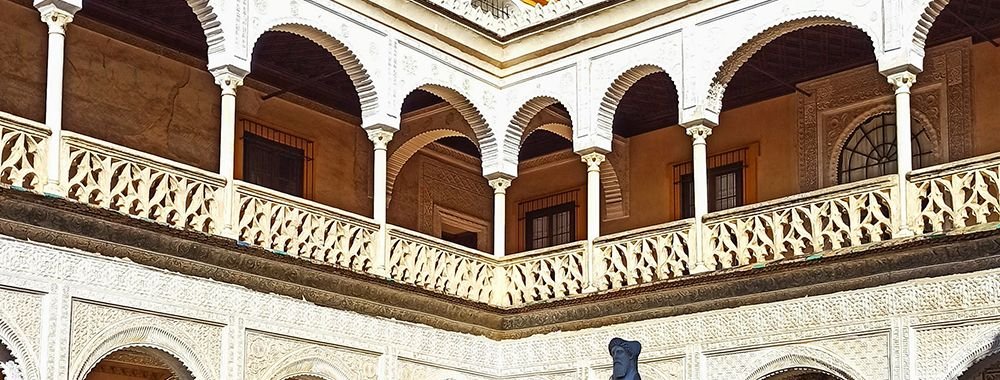
The house has a rectangular floor plan, with a main façade facing Sol street and a lateral one through which the orchard was originally accessed. The rooms are distributed around a patio, which is the best preserved and most interesting space. It is porticoed on two of its sides on the ground floor and on three on the top. The arches are made of exposed brick, peralted on the ground floor and lowered on the top, and rest on brick pillars. It should be noted that originally most of the houses of the Mudejar tradition in Seville used to use this type of pillars, but very few have reached our days. This is because, with the arrival of Renaissance taste in the city, most of these brick pillars were replaced by marble columns, often brought directly from Italy. In addition, the pillars of this house are especially interesting because they adopt a great variety of sections, including on the upper floor some of the 'Solomonic' type, with the body twisted in a spiral.

[mapsmarker map="2"  lat="37.396136" lng="-5.984053" zoom="18" height="300" heightunit="px"]

Patio principal con Jano bifronte

HOUSE OF PILATOS

The Casa de Pilatos is one of the most outstanding examples of 16th century civil architecture in Andalusia, constituting a beautiful synthesis of Italian Renaissance art and the Sevillian Mudejar style.

CC BY-SA 4.0

Its construction began at the end of the 15th century by the Mayor of Andalusia Pedro Enríquez and his wife, Catalina de Ribera, although the bulk of its work was undertaken in the time of their son, Fadrique Enríquez de Ribera, first Marquis of Rate.

He carried out a pilgrimage to the Holy Land in 1518, touring a large part of Italy both on his way out and on his return, a fact that would greatly mark the physiognomy of the palace. He was able to admire great works of the Italian Renaissance in cities like Venice, Milan, Rome or Genoa. In this last city he would commission the sculptor Antonio María Aprile, the magnificent portal that constitutes the main access to his palace. It is made of white marble and reproduces the shape of a Roman triumphal arch, with Corinthian pilasters framing a semicircular arch. In the spandrels there are two classic medallions with the effigies of Julius Caesar and Trajan, both closely linked to the city. On the frieze, between the family coats of arms, there is a large inscription with metal characters inserted in marble, alluding to the construction of the palace and this doorway.

The façade is topped by a Gothic-style cresting, which apparently comes from a previous palace that the family owned in Bornos. In the central part of this balustrade, there are three pillars, each one with a Jerusalem cross and the inscription "4 DAYS OF AUGUST 1519. ENTERED HIERUSALEM", alluding to Don Fadrique's pilgrimage to the Holy Land.

From this pilgrimage, which apparently deeply marked the Marquis of Tarifa, most likely comes the name Casa de Pilatos by which the palace is generally known. For a long time the legend existed that the marquis had reproduced in his home the traces of the palace of the Roman praetorian Pontius Pilate in Jerusalem and that this is where the name would come from. In fact, the portico that faces outwards on the first floor next to this façade is sometimes referred to as the “Ecce Homo” balcony, since it would supposedly reproduce the space where Jesus was shown to the people in the famous Biblical passage.

The slightest formal and stylistic analysis of the palace makes it clear that this theory is nothing more than a legend. What does seem more probable is the relationship of the popular name of the palace with the famous Via Crucis that starts from it and that reaches the Cruz del Campo temple, which is still preserved in the current Luis Montoto street.

According to tradition, the Marquis of Tarifa, on his pilgrimage to Jerusalem, would have measured the exact distance that went from the praetorium palace where Jesus was tried to Mount Calvary where he was crucified. This distance would coincide with the one between the façade of the palace and the aforementioned temple.

The niche with a cross that is to the left of the main portal, made in the 17th century with colorful marbles of different colors, alludes to this circumstance. This cross would mark the first station of the aforementioned Way of the Cross, as can be read in the inscriptions that appear on the sides.

Inside, the space of the palace is articulated around a series of patios and gardens, generating a very complex layout.

The peculiar stylistic diversity of this space, which harmoniously brings together Gothic, Mudejar, Renaissance and Romantic elements, is the product of successive interventions on a rectangular courtyard, centered on the chapel and porticoed only on its short sides, built at the end of the s. XV by Pedro Enríquez and Catalina de Ribera. His son Fadrique, the pilgrim to Jerusalem, began his Renaissance transformation: he enlarged its dimensions making it quadriform, opened galleries on its four sides, replaced the brick pillars with Genoese columns and placed in its center the marble fountain also acquired in Genoa. Fadrique was inherited in 1539 by his nephew Per Afán, who, in addition to enriching its corners with the four main pieces of his sculpture collection (see no. 4), arranged around it a gallery of busts of ancient characters that, as a historical mirror, it reinforces the idea of continuity between the founding of Rome and the new empire of Carlos V. Already in the s. In the XIX century, novelties to the romantic taste are introduced, such as the opening of an access in its center, the replacement of the clay floor by marble and the placement of new pseudo-Nazarite mullioned windows.

The central and most emblematic element of the palace is the central patio. It has a marked Renaissance air, despite the profuse Mudejar decoration and the presence of Gothic elements. This is due to the profuse use of marble in columns and flooring, and the splendid collection of Roman pieces on display in the courtyard. For example, in each of the corners there are four Roman female sculptures, all original from the 1st and 2nd centuries. They represent Pallas Pacifera, Pallas as a warrior, Copa Syrisca and Faustina the Less deified as Fortuna. In the center of the patio, a marble fountain with a bust of Jano Bifronte, also original from the 1st century. In addition, the patio walls are crossed by a series of niches in which a magnificent collection of busts of original emperors is exhibited. one of the best private collections that exist of this matter.

These works are just a part of the magnificent sculptural collection that can be admired on a visit to the palace. The main nucleus of the complex was made up of Per Afán de Ribera, 1st Duke of Alcalá, mainly with works from the Viceroyalty of Naples, where he even financed excavations. The pieces have been exhibited in various rooms of the palace and many of them next to the so-called Jardín Chico, one of the two beautiful garden spaces that flank the palace.
The interior rooms generally adopt names related to the aforementioned identification of the palace with the house of Pilatos. In this way, we have the Praetorium Hall, the Chapel of the Flagellation or the Pilate's Cabinet.

The Salón del Praetorio, between the main patio and the Jardín Chico, preserves all its original elements from the 16th century, including the magnificent wooden coffered ceiling and the tile covering on the basin and edge of the walls.

The Chapel of the Flagellation, located on one side of the main patio, is considered the oldest room in the palace, built in a Mudejar Gothic style. In its center is a column, which tradition identifies with the one used in the flagellation of Jesus and hence the name of the chapel. On the altar there is a paleo-Christian sculpture from the 4th century that represents Jesus as the Good Shepherd. Perhaps this is the oldest image of Jesus among those that can be seen in Seville.

The Pilatos Cabinet, located under the tower, has a square plan and an octagonal fountain in its center, elements that relate it to the 'qubbas' of Mudejar architecture. It is covered by an imposing wooden coffered ceiling. It is made of "street and rope" lacework made up of ten-sided wheels that have a ten-pointed star as their center, forming a composition that symbolically alludes to the celestial vault.

For its part, the upper floor was ordered to be built by Fadrique Enríquez de Ribera in the 16th century and was decorated with a series of illustrious characters from Antiquity and with an allegorical composition on the Triumph of the Four Seasons. Later, Francisco Pacheco, Velázquez's father-in-law, painted the ceilings with a series of mythological themes. Currently, a series of pieces from the Medinaceli collection are exhibited in these spaces, which include not only furniture and tapestries, but also paintings by artists such as Goya, Lucas Jordán or Carreño Miranda.

In detail: The Renaissance Gate of the Casa Pilatos


[foogallery id="8531"]

[mapsmarker map="2"  lat="37.389996" lng="-5.987222" zoom="18" height="300" heightunit="px"]