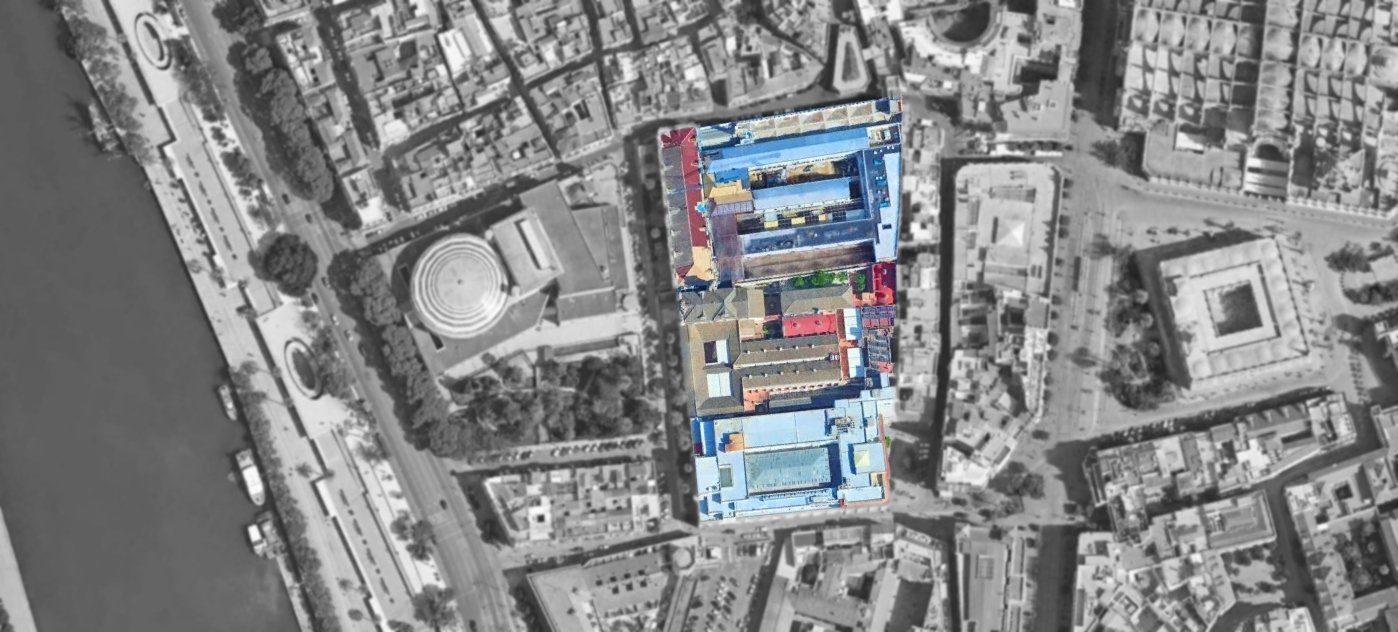
The Royal Shipyards were a large shipyard built in the port area of Seville by order of Alfonso X the Wise (1252), becoming the most important naval base in the history of the Crown of Castile. Today, only a few of its original ships remain, immersed in a comprehensive rehabilitation process to be used for cultural and museum purposes. The author of the project is the Sevillian architect Guillermo Vázquez Consuegra.
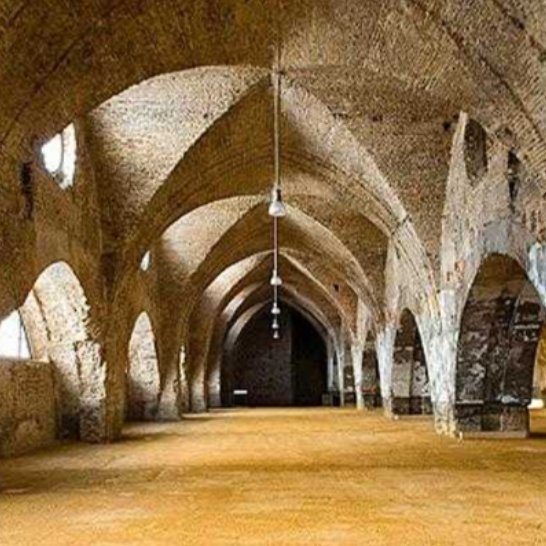
The original building occupied a large area of around two hectares and was made up of seventeen naves, separated by lines of monumental arches on pillars, all made of brick. These served not only to support the roof but also to channel the water collected by the ceilings, like aqueducts.
“The arches are slightly pointed and the pillars are rectangular in section, measuring 2.50 m by 1.80 m, spanning 8.5 m, with a height up to the base of the arches of 5 m. Each row of these pillars rests on a continuous footing foundation, the foundation of which is reached at 2 m below the original ground level.”
On its eastern side, the construction rested on the outer wall of Seville, while on the southern side it rested on part of the section of wall that joined the Alcázar and the Torre del Oro. This type of wall, built to join a main fortification with an external point, is known as coracha.
The ships were arranged perpendicular to the river, to facilitate the entry and exit of ships from it.
Throughout history, as the shipyards of Seville lost importance, a good number of its ships were used for other purposes:
- Around 1580 the Customs Office was installed in ships 13, 14 and 15, starting from Dos de Mayo Street towards Santander Street.
- In the mid-17th century, ships 8 to 12 were demolished to build the Hospital de la Caridad, following the designs of Sánchez Falconete and Leonardo de Figueroa.
- During several phases throughout the 18th century, the remaining part of the building underwent a major renovation to house the Artillery Workshop, used for the manufacture and repair of weapons and ammunition. In 1762, a major renovation began, including the construction of the current façade facing Calle Temprado, following an academicist layout.
- In 1945, the five remaining naves to the south were demolished, including those that had been transformed into customs in the 16th century, to build the current building of the Treasury Delegation.
-

- Manzana de la ciudad que estuvo ocupada por las Reales Atarazanas