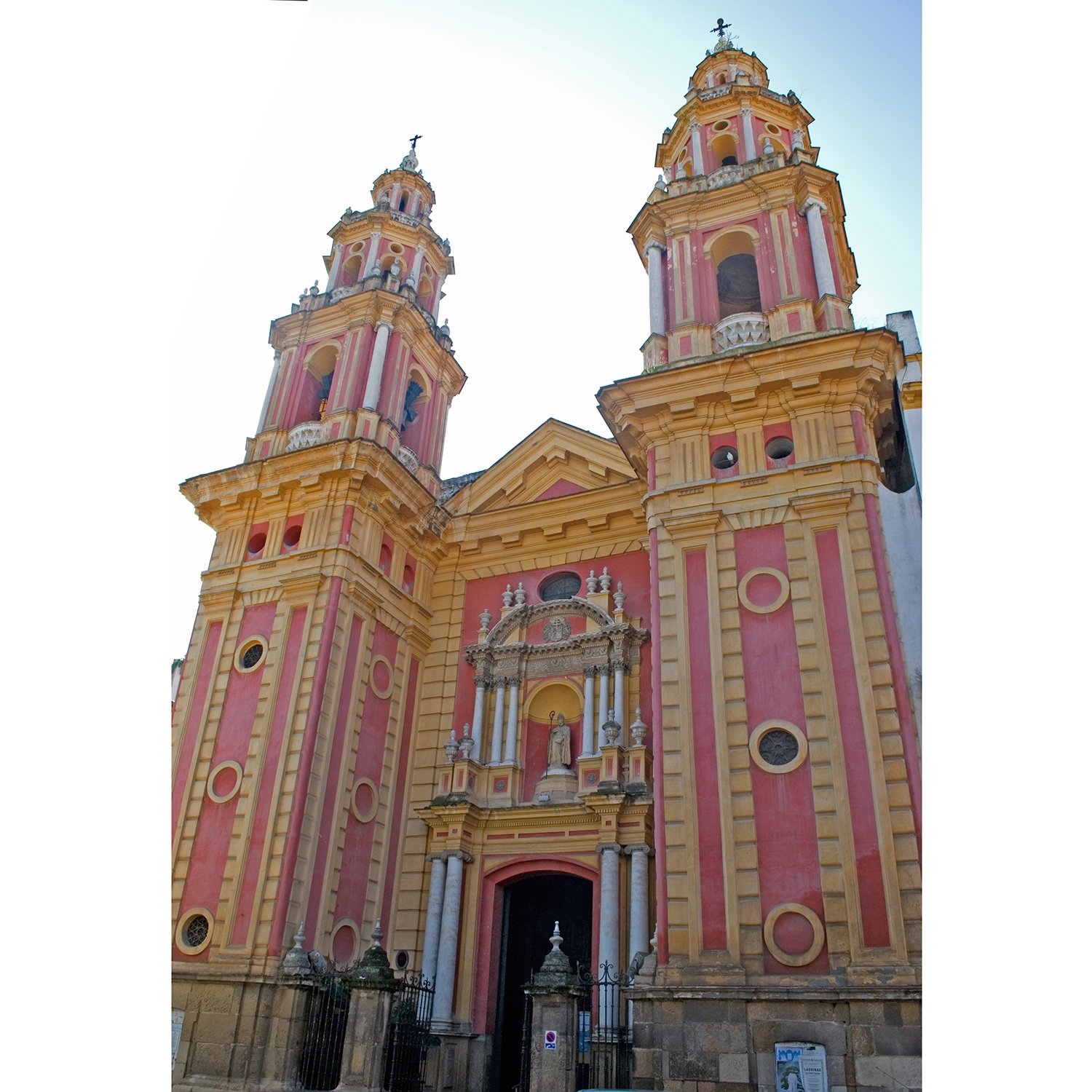
The church of San Ildefonso is an imposing neoclassical temple that stands right in front of the convent of San Leandro, in the Alfalfa neighborhood. Its construction began at the end of the 18th century and, from the outside, it is one of the most striking churches in Seville for various reasons. Firstly, there are very few neoclassical churches in the city. In addition, it has two tall twin towers that flank its entrance and is completely covered in the quintessential colors of Seville: albero and almagra.
History
The current temple began to be built at the end of the 18th century, replacing a previous one that was damaged after the Lisbon Earthquake in 1755. We know that San Ildefonso was one of the 24 parishes into which the city was divided after the Christian conquest. , so it is very likely that the previous temple was a medieval construction, probably of the Gothic Mudejar style so characteristic of Seville.
However, there is a tradition that tries to trace the origins of the parish to Visigothic times. It is based on a supposed tombstone that was preserved in the old church and that alluded to a priest named Saturninus who would have been buried in this place in 657. Diego Ortiz de Zúñiga, famous Sevillian historian of the 17th century, describes it this way in Book II of his famous “Ecclesiastical and Secular Annals”:
"...even as a primitive Christian Church, the Parish of San Ildefonso has singular signs, attested with the stone of the tomb of San Saturnino, which was inside it until the year 1649, when in the plague that this city suffered with the escape from opening graves, he was lost or buried there. Viola Ambrosio de Morales, Don Pablo de Espinosa and others, whose epitaph said: (…) Saturnino, Priest, servant of God, lived, more or less, 53 years. this life in peace on the 2nd of the Ides of November (it is the 12th) in the Era of 657, which is the year of Christ of 619. Call him Saint Saturninus' piety; but the epitaph only warns him of a Christian priest, a contemporary of our Archbishop and Patron San Isidoro. This tomb was in front of an altar of our Lady, whose painted effigy shows great antiquity, entitled Coral, and venerated with deep devotion."
Of note is the mention of the Virgen del Coral, a mural painting that fortunately is still preserved in the church today. Attempts to trace the origin of this venerated image to pre-Islamic times were also frequent, although currently its dating to the 14th century is certain, more or less contemporary with the Virgin of Antigua.
In any case, the works for the construction of the temple we are talking about today began in 1794 under the direction of José de Echamorro and in accordance with the neoclassical project of Julián Barcenilla. The monumentality of the building meant that the works lasted for almost fifty years. The church was inaugurated in 1816, but only with the left nave completed, so services were held at an altar presided over by the Virgen del Coral. Complete completion of the church would not take place until 1841.
DESCRIPTION
As we have pointed out in the introduction, the church of San Ildefonso is a neoclassical temple that fits perfectly with the academic aesthetic trend prevailing in the country since the 18th century and during the 19th century. It has a rectangular floor plan, divided into three naves, with the central nave and the transept being the widest. Protruding from the floor is a deep semicircular presbytery at the head and two large square towers at the foot.
Outside
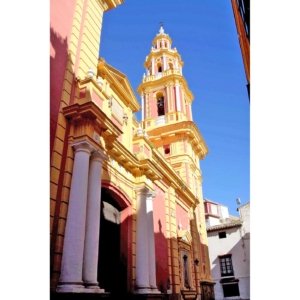
Possibly the first thing that catches your attention from the outside is the bright albero and almagra colors with which the church is painted. On the main façade, the two towers stand out, moving forward with respect to the line of the façade, creating a small atrium in front of the main entrance.
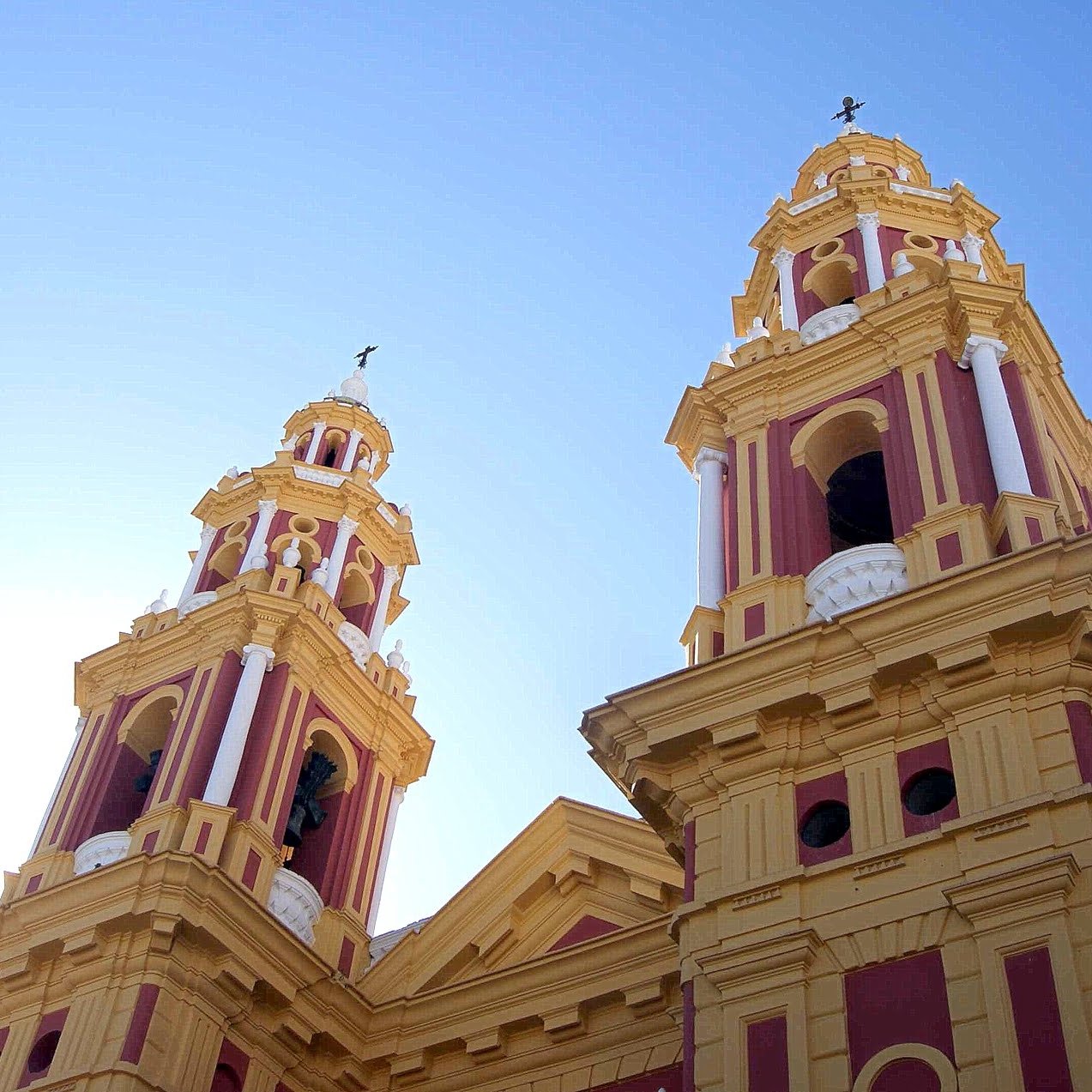
The towers are very tall and have four bodies of decreasing size. The first two are square in plan, the third is octagonal in plan and the last is circular. They are decorated with white stone elements that stand out against the albero and almagra background, such as the columns, balustrades and vases.
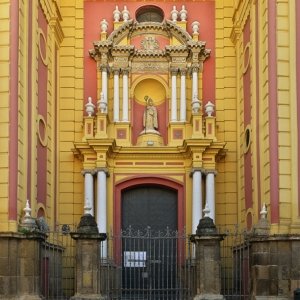
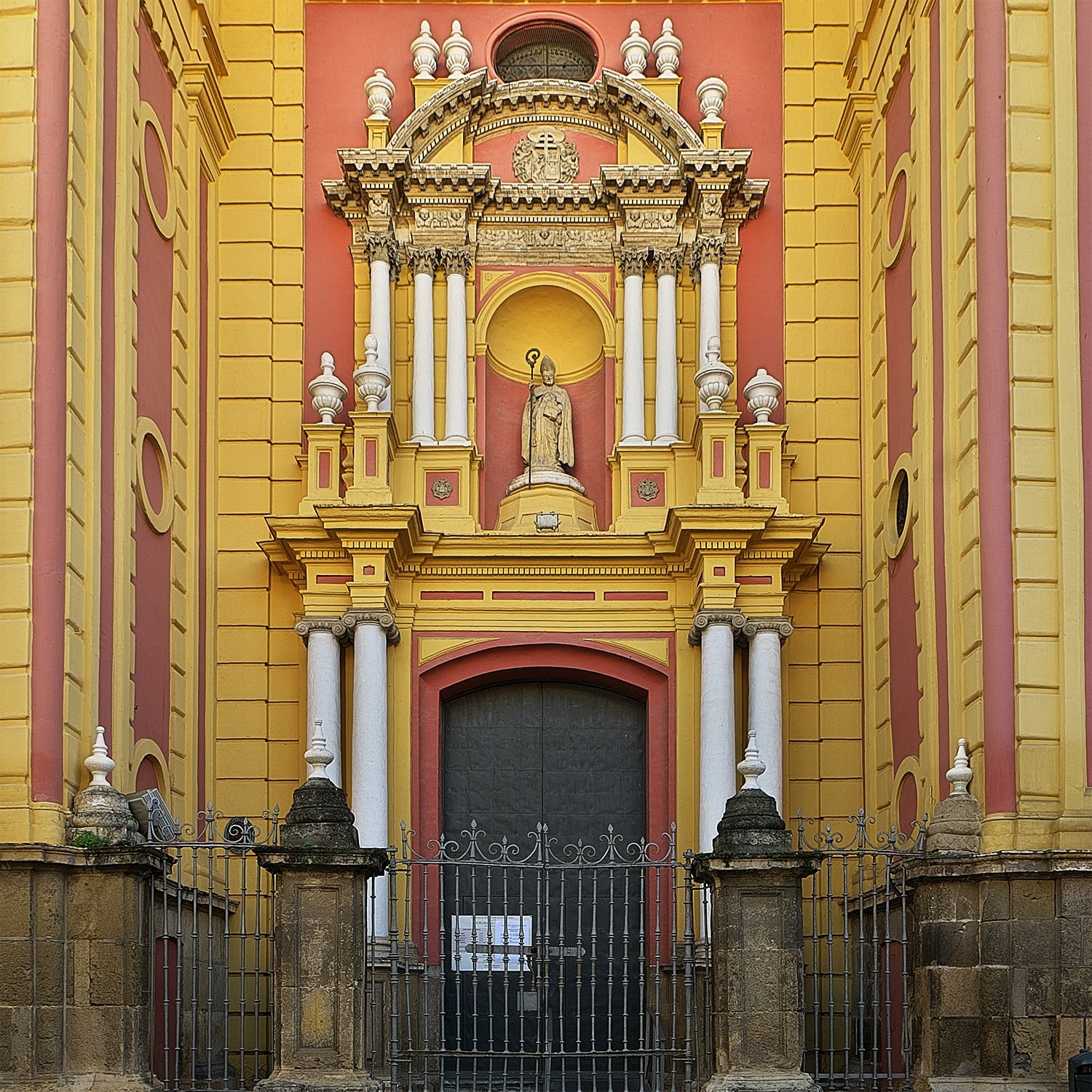
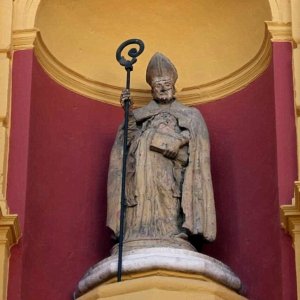
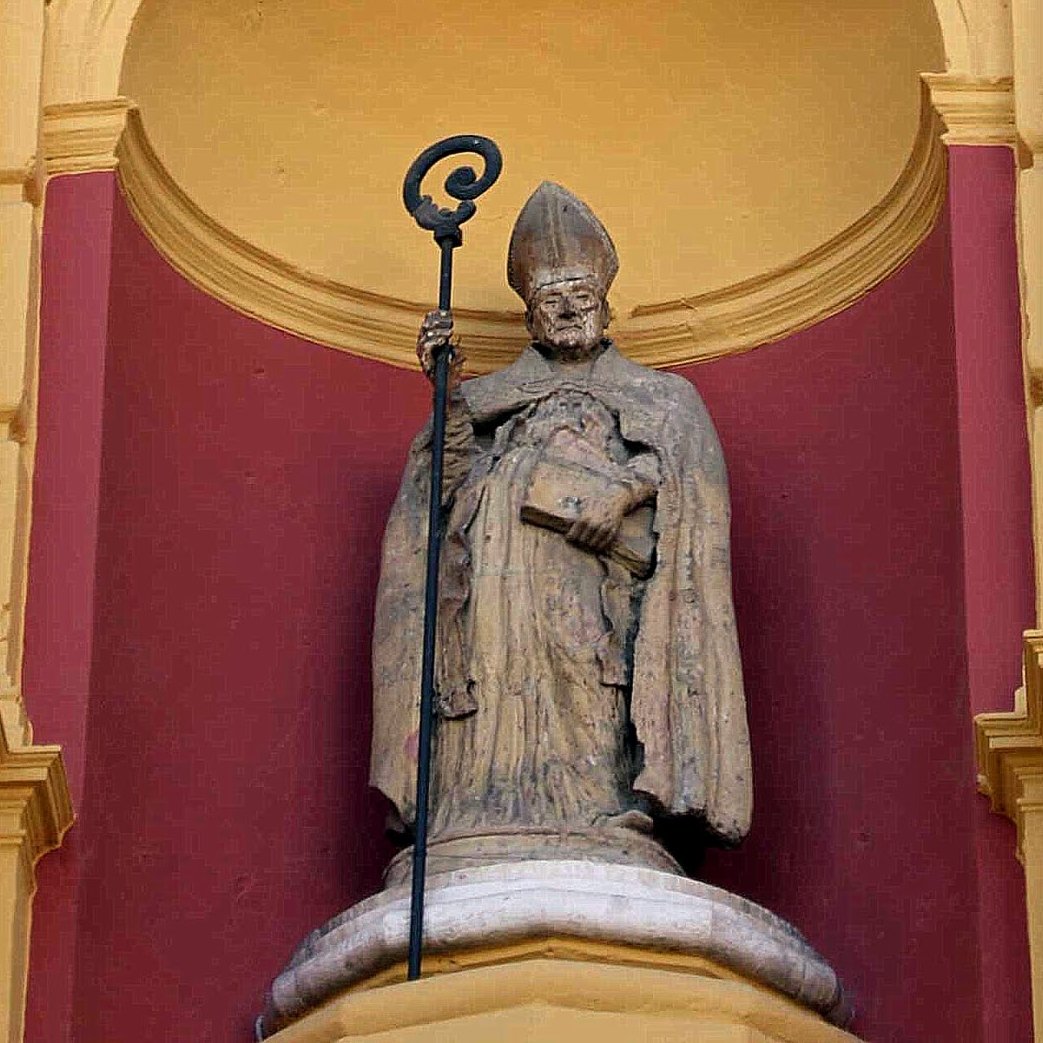
The cover has two bodies and a very classic structure. The first, framed by pairs of Ionic columns, houses the segmental arch that constitutes the main entrance. Above it, a niche houses a small stone sculpture of San Ildefonso, also framed by columns on the sides, in this case in a composite style. The niche is topped by a curved pediment in the center of which the episcopal shield of the titular saint is represented.
-
- Torres *
-
- Portada principal *
-
- Escultura de San Ildefonso *
On the left side, on Rodríguez Marín Street, a second access door to the temple opens, with similar characteristics to the previous one but simpler. In this case, two pairs of simple Tuscan columns frame the entrance. They also serve to support the entablature on which a simple niche topped by a triangular pediment is located.
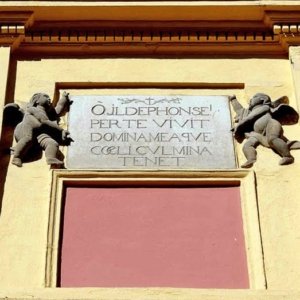
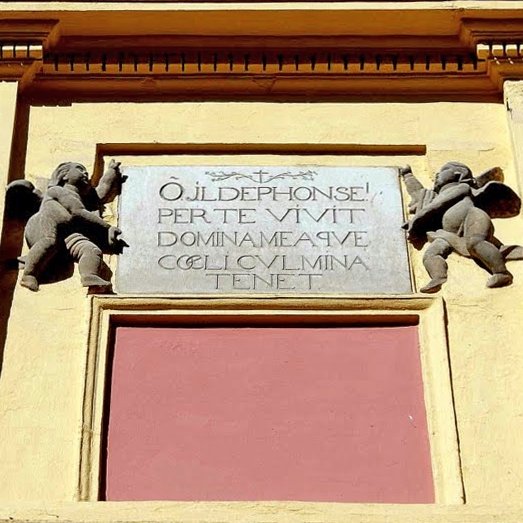
In this niche we see two little angels holding a marble inscription that reads: “O ILDEPHONSE PER TE VIVIT DOMINA MEA QUE COELI CULMINA TENET.” This is a phrase that tradition attributes to Saint Leocadia. Apparently, one day Bishop Ildefonso was praying before the tomb of the saint, when she appeared to him and uttered the phrase that can be translated as "Oh Ildefonso, my Lady, who supports the peaks of heaven, lives through you". In this way, the apparition recognized the important work of Saint Ildefonso as a defender of the Virgin Mary and promoter of her devotion to her.
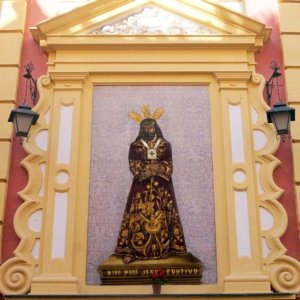
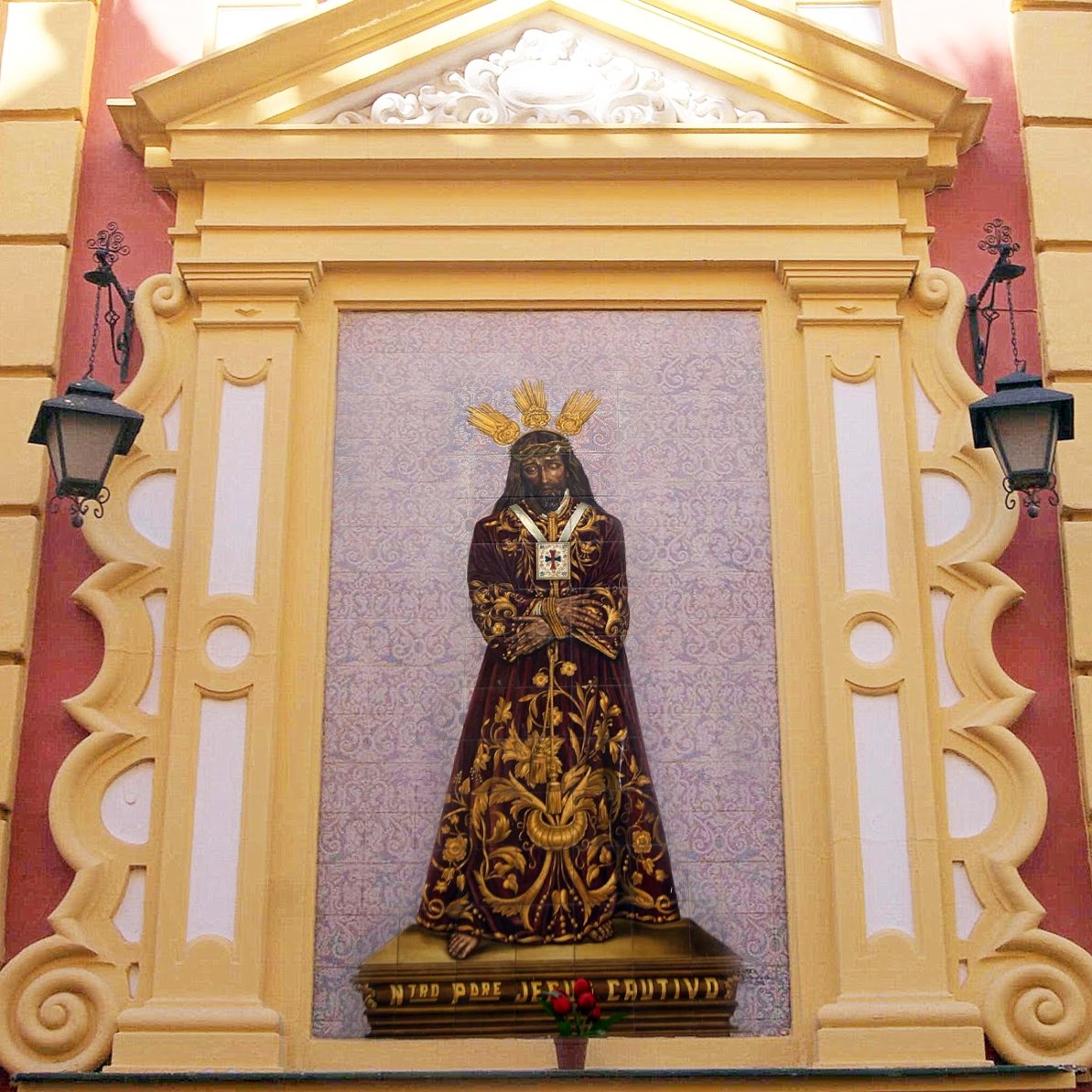
To the right of this side doorway, a molding with a classical structure but baroque decoration houses the ceramic altarpiece of Nuestro Padre Jesús Cautivo de Medinaceli. It is an image of great devotion that is venerated inside the temple and which we will talk about later. The tile was made by the great ceramist painter Antonio Kierman Flores in the Santa Ana factory in Triana (1955).
-
- Portada lateral *
-
- Inscripción sobre la portada lateral *
-
- Retablo cerámico de Jesús Cautivo (Antonio Kierman, 1955) *
Inside
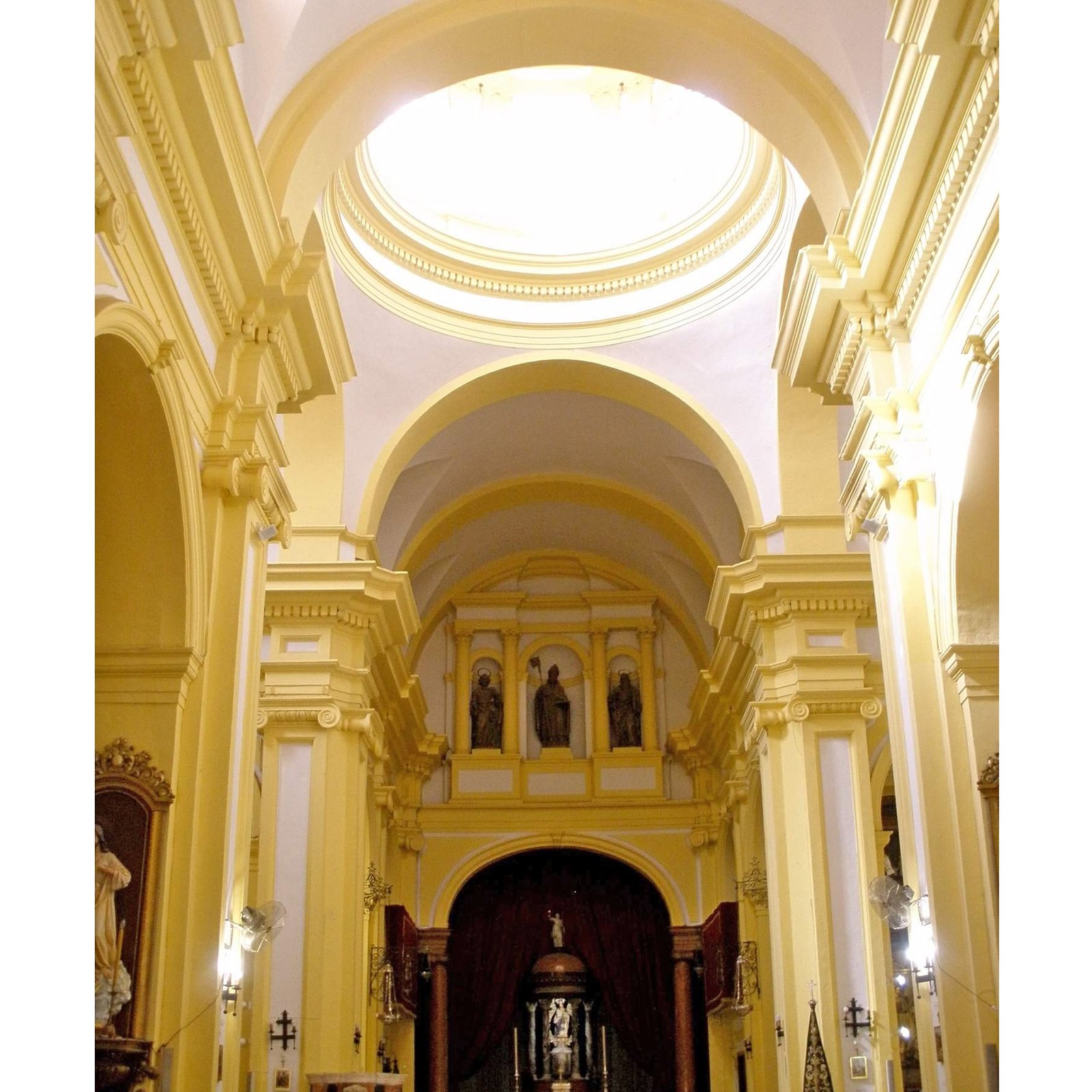
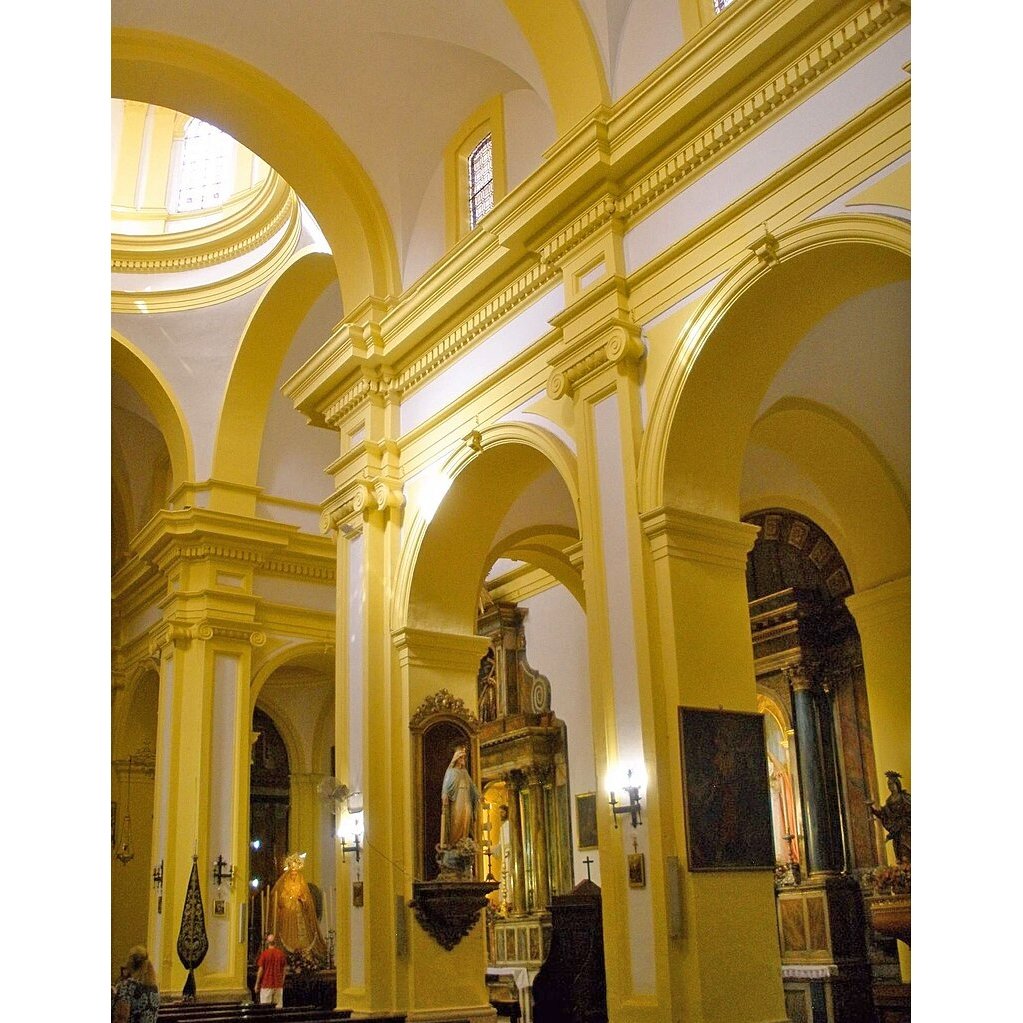
Inside, the church is divided into three naves by eight cruciform pillars. In the central nave and in the transept, the vaults are barrel vaults with lunettes and have transverse arches. The side naves, which are somewhat narrower, are covered by a groin vault, except in the chapels at the head of each nave, which are covered by hemispherical vaults. Above the transept there is a large dome, raised on a high circular drum and topped by a lantern. Both the drum and the lantern have semicircular openings that provide luminosity to the interior.
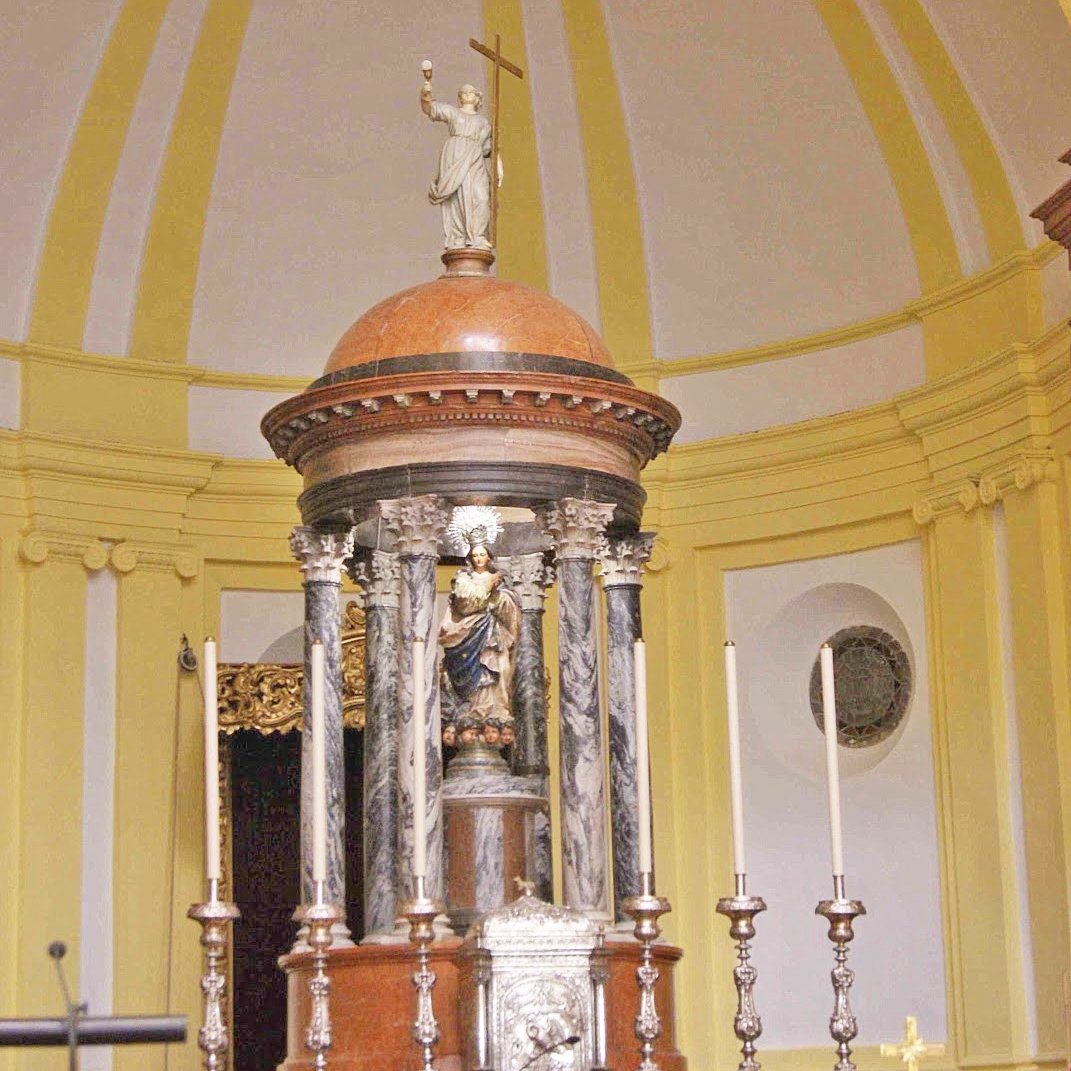
The presbytery area is quite unique in the context of Sevillian churches, since it does not have an altarpiece, following the dictates of the academic aesthetic to which the temple adheres. In its place, we find a classical style temple made by José Barrado in 1841. Six columns of black jasper support a hemispherical dome on which is located a small stone allegory of Faith. The temple houses a classic Immaculate Conception from the 18th century by the author a stranger.
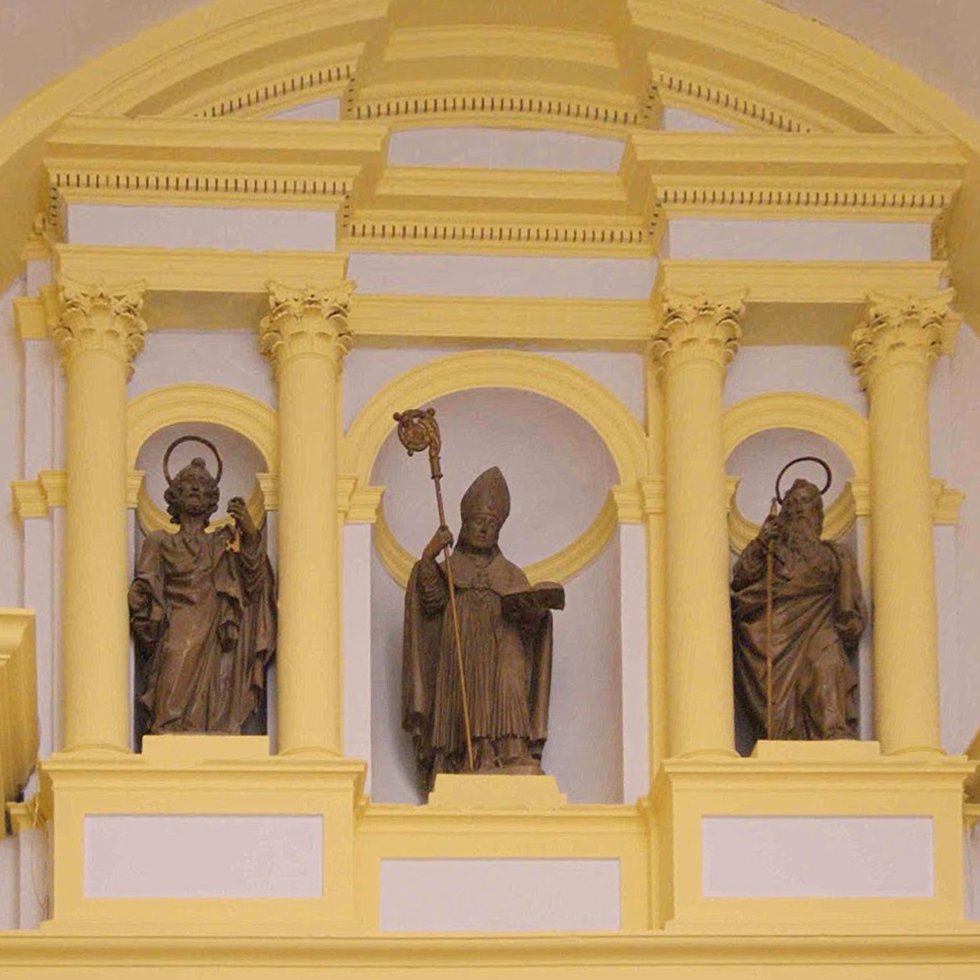
Above the main arch that frames the presbytery, there are three niches between Corinthian columns that house the sculptures of San Ildefonso, in the middle, flanked on the sides by San Pedro and San Pablo. These are carvings made by Felipe de Ribas around 1637 that belonged to the altarpiece of the church before the current one. Juan de Astorga intervened on them in the 19th century to adapt them to the new temple, thus completely altering their original baroque polychrome.
-
- Nave central *
-
- Nave de la Epístola *
-
- Templete del presbiterio *
-

- San Pedro, San Ildefonso y San Pablo, sobre el muro toral *
The altarpieces of the church are all from the 19th century, in line with the neoclassical aesthetics prevailing at the time and without much artistic interest. However, the church has a series that should be highlighted for its artistic and historical interest.
On the Epistle side (on the right):
- Relief of the “Two Trinities”, made by Martínez Montañés around 1609. It is located in the Baptismal Chapel, at the foot of the Epistle nave (right). It is a beautiful relief in which the master combines the representation of the Trinity formed by the Father, the Son and the Holy Spirit, with that other trinity that would be formed by Jesus himself, along with Saint Joseph and the Virgin Mary. The Holy Family is located on a lower plane, and above them the Holy Spirit and God the Father. In the center, the figure of Jesus, still a child and in front of a Cross, serves as a union and link between the two planes.
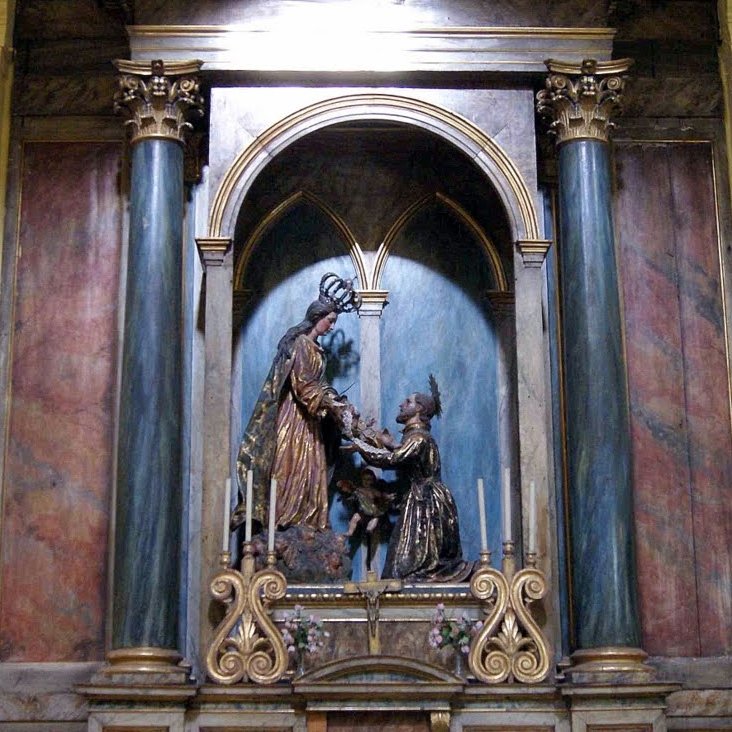
- Sculptural group of “The Appearance of the Virgin to San Cayetano”, in one of the chapels on the right side. It has been dated to the 18th century and is probably by Cristóbal Ramos.
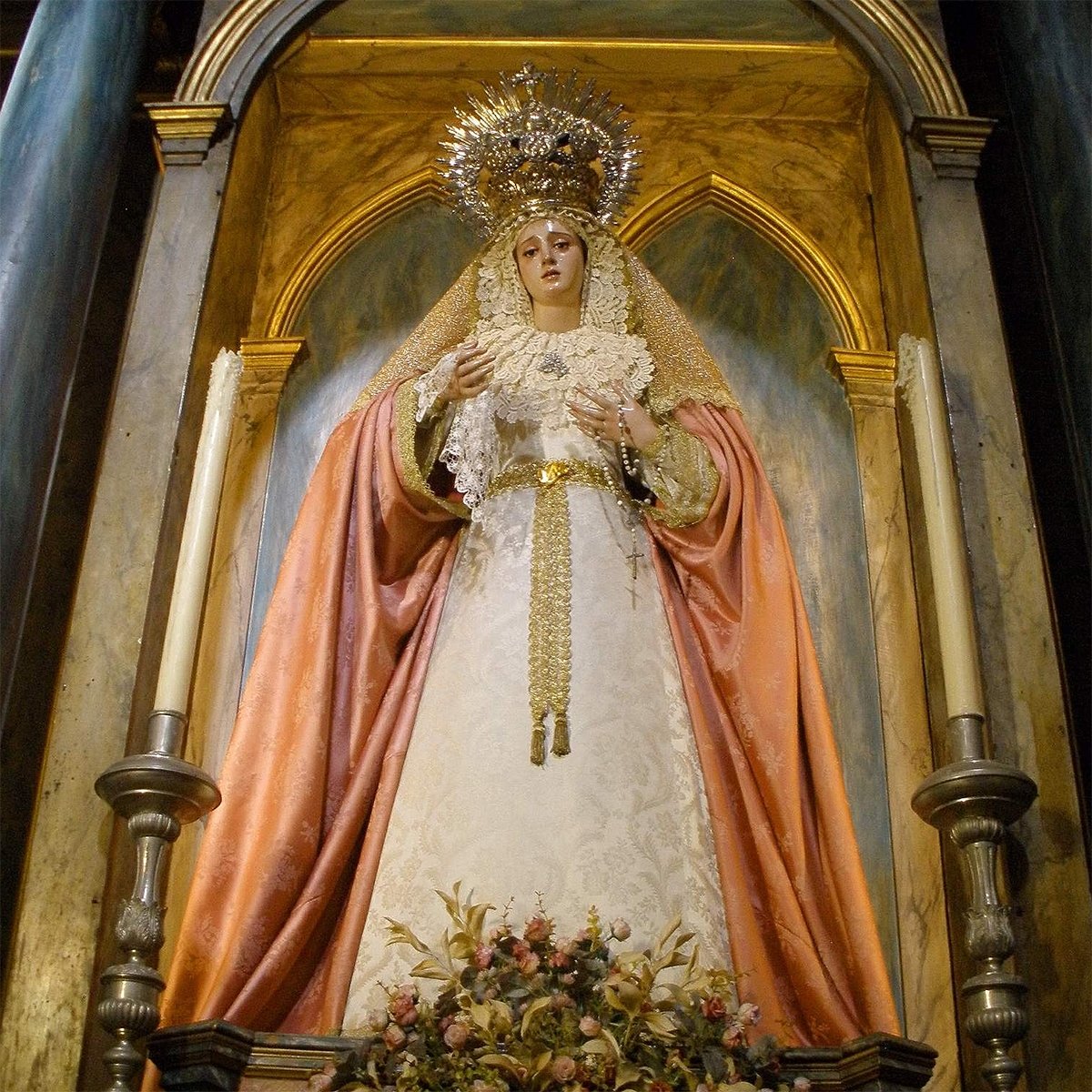
- The Virgin of Soledad presides over another of the altarpieces on the right side. This is a magnificent dress-painting made around 1844 by Juan de Astorga, probably the most prominent sculptor of the 19th century in Seville.
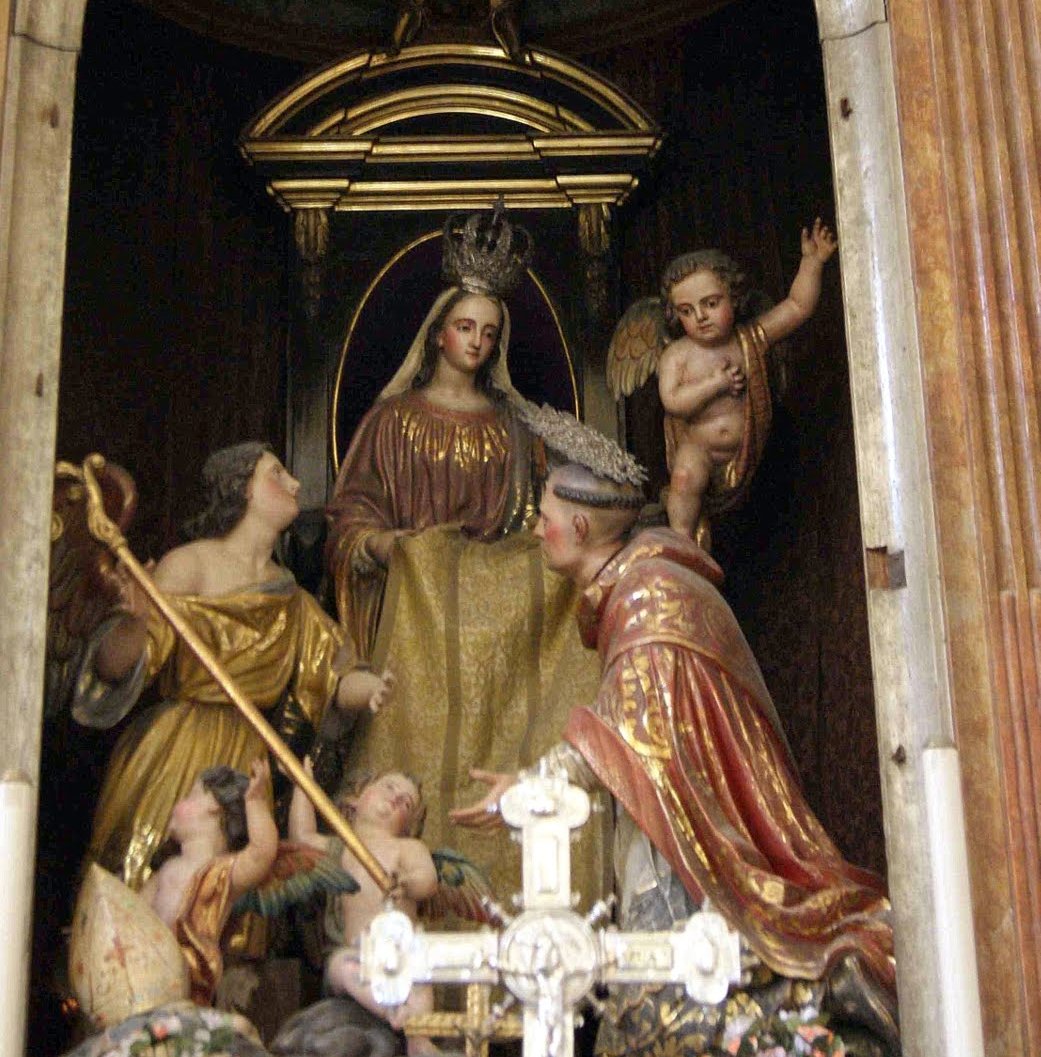
- Sculptural group of “The delivery of the chasuble to San Ildefonso”, which is located in a marble altarpiece at the head of the nave. This is a quite interesting group dating from the late 18th or 19th century, but whose authorship is unknown.
-
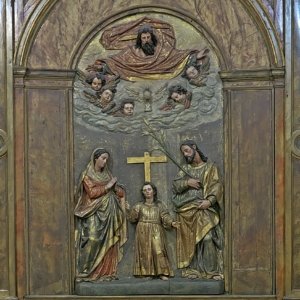
- “Las dos Trinidades” (Martínez Montañés, 1609) º
-
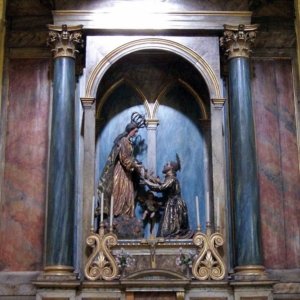
- “Aparición de la Virgen a San Cayetano” (Cristóbal Ramos ?, XVIII) *
-
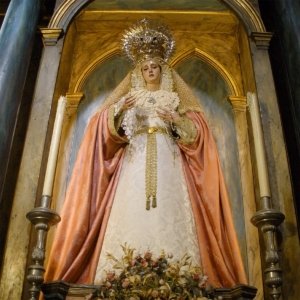
- Virgen de la Soledad (Juan de Astorga, c. 1840) º
-
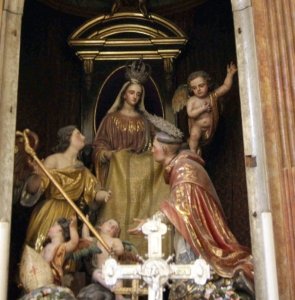
- “Imposición de la casulla a San Ildefonso” (anónimo, XVIII-XIX) *
In the Gospel nave (left side):
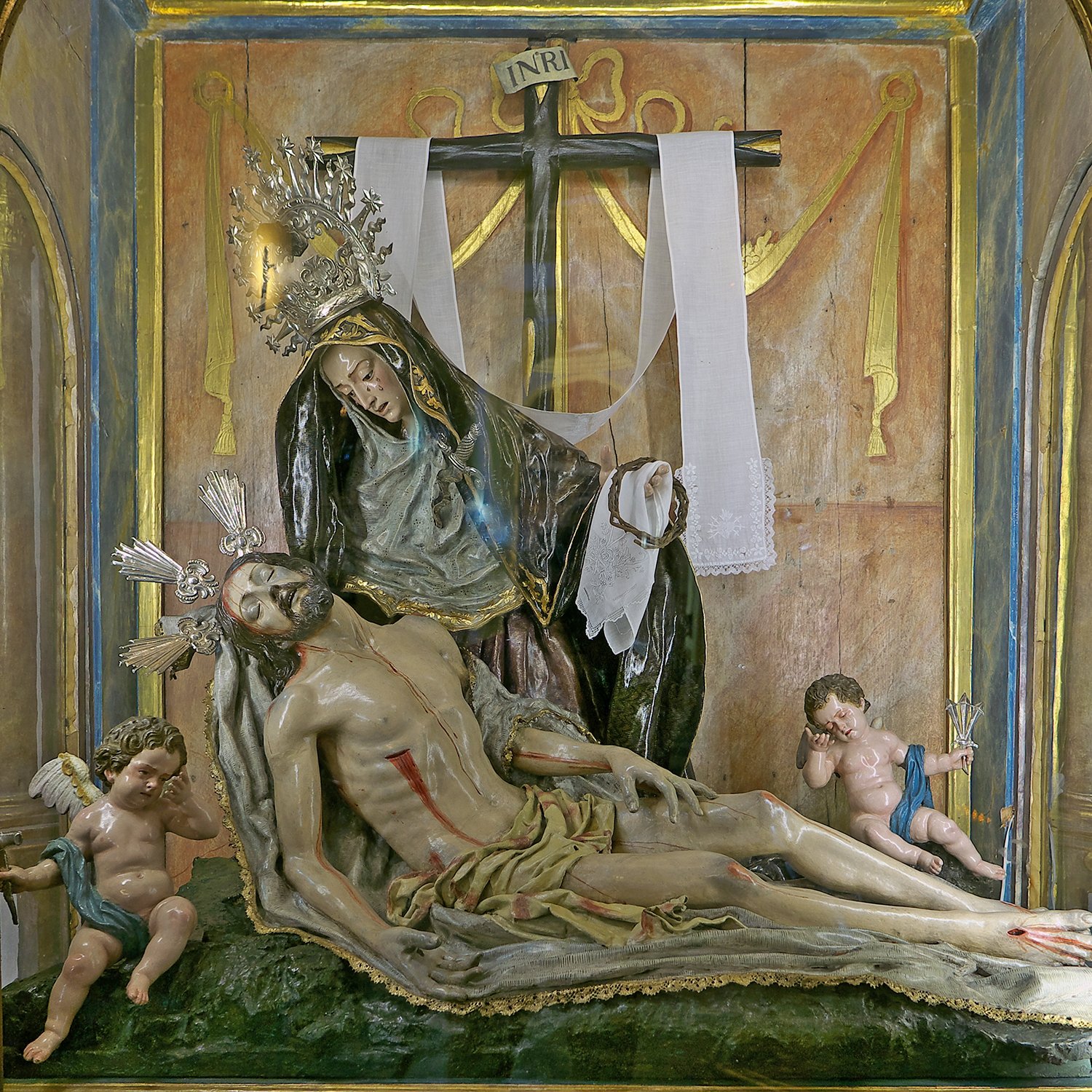
- At the foot of the nave, next to the entrance, a showcase like a temple houses a beautiful small-format Pietà. This is an image from the 18th century, most likely the work of the sculptor Cristóbal Ramos.
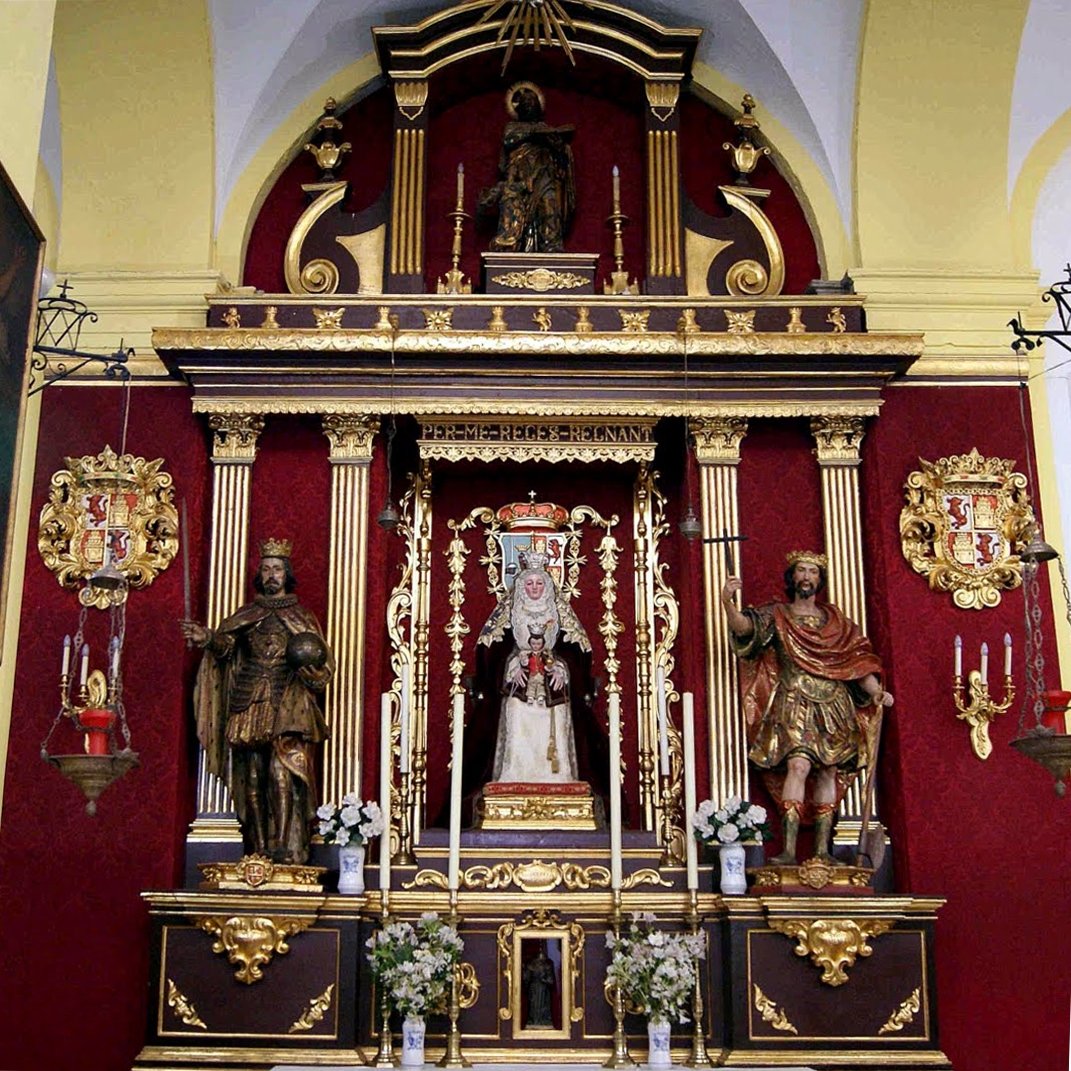
- Also on the Gospel side is the altarpiece of the Virgin of the Kings, also called “of the Tailors”, as this guild was the one that originally commissioned the image. Traditionally the image has been considered one of the so-called “fernandinas”, that is, original from the early times after the Christian conquest (13th century). Today there is a tendency to think that the image is the work of the 16th century, with notable baroque transformations, such as the Child himself, which was added in the 17th.
The image is owned by the Brotherhood of Tailors, which has its origin in the old San Marcos hospital, which was located in the Alfalfa area. This is the reason why we find a small carving of Saint Mark in the attic of the altarpiece. In the side streets, we find San Fernando and San Hermenegildo, patron saints of the Spanish monarchy. They are carvings by Pedro Roldán dated around 1674.
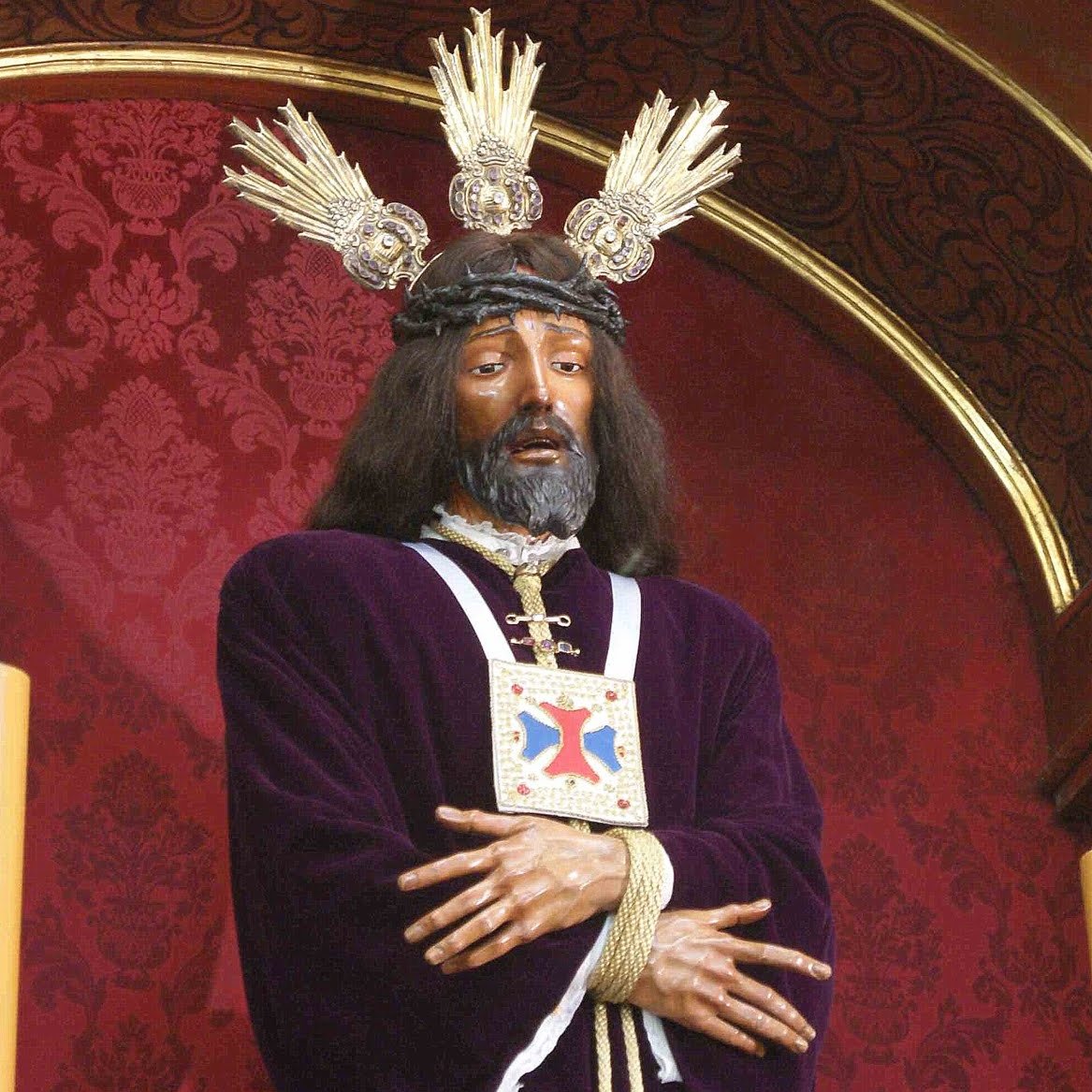
- At the left end of the transept is the Cautivo altarpiece, which houses the image of Nuestro Padre Jesús Cautivo y Rescatado, also called Medinaceli because it reproduces the iconography of the image found in Madrid with the same dedication. It is an anonymous image from the 18th century that represents Jesus just before starting the path to Calvary. It is a dress size that makes use of natural hair, a resource that was very common during the Baroque as a way of giving images greater realism and drama.
This iconography was greatly promoted by the order of the Trinitarians, who were dedicated to collecting alms for the rescue of Christian captives in Muslim territory. It was the monks of this order who brought devotion to Seville. The image was originally in the church of his convent, which was located next to the Plaza del Cristo in Burgos. When the convent disappeared during the confiscation, the carving went to the church of San Hermenegildo and from there it was moved to its current location at the beginning of the 20th century. Currently it has great devotion in the city, with numerous devotees approaching its altar every Friday, especially during the Fridays of Lent.
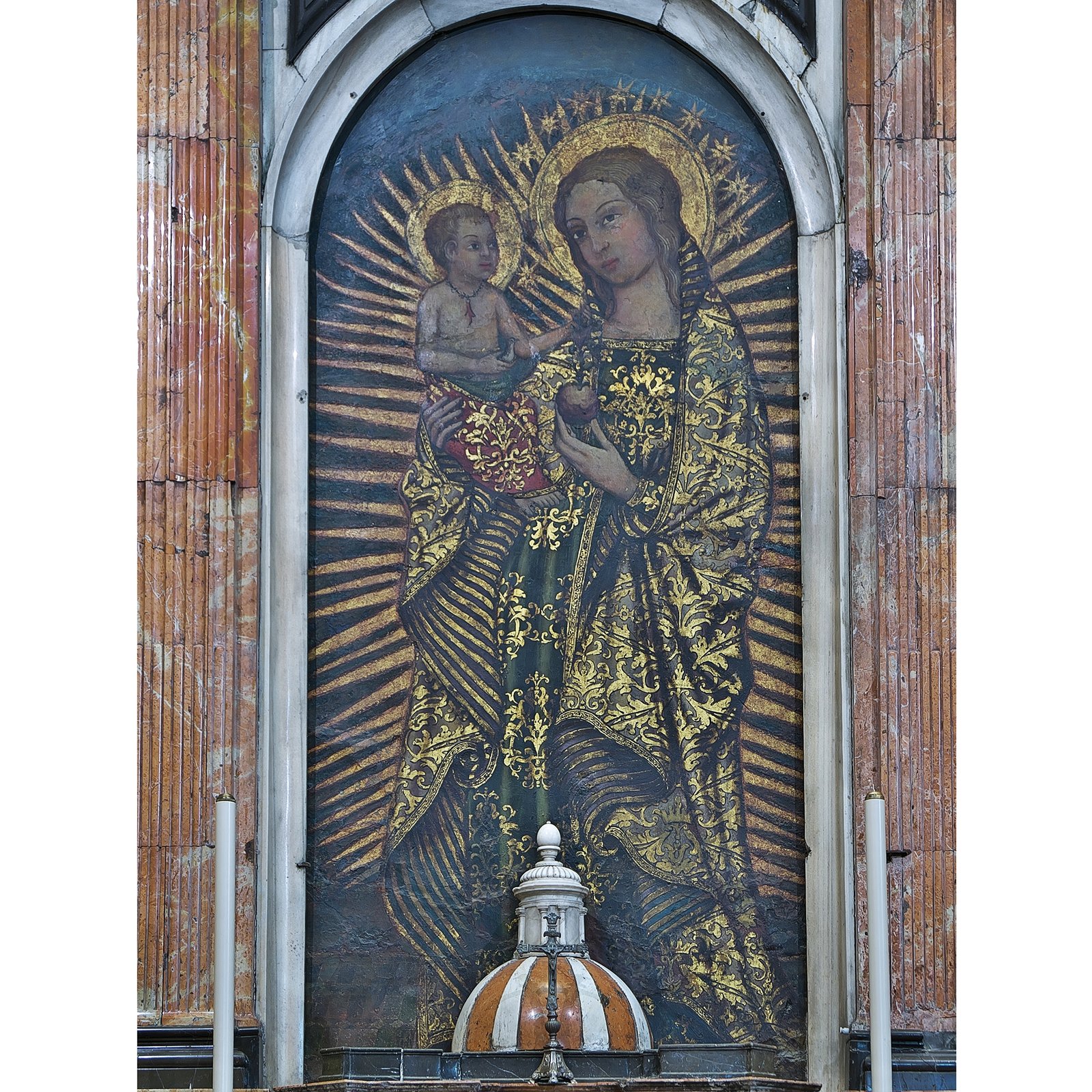
- At the head of the Gospel nave is the altarpiece of the Virgen del Coral. The central image is a very interesting representation of the Virgin and Child, by an anonymous author, but belonging to the so-called international style of the late 14th century. It would, therefore, be contemporary with the Virgen de la Antigua that is venerated in the Cathedral. José Francisco Haldón Reina makes an interesting description of the image on the parish website:
“It is a mural painting that follows the so-called international style, dating back to the last quarter of the 14th century. The dedication of the Coral is due to the fragment that hangs from the necklace that adorns the Child's neck. The red color of the coral appears here as a prefiguration of the Eucharist and the Passion of Christ. The Virgin is represented as "Hodegetria" (Bearer or Conductor). She is dressed in a purple tunic and mantle, decorated with golden lozenges, bands and plant motifs. The Virgin surrounds her head with a golden nimbus with stars. The head of the Child also has a golden nimbus. Both effigies are surrounded by golden glow. Mary carries the Child on her right arm, showing in her left hand a pomegranate, a symbol of the Church.
-
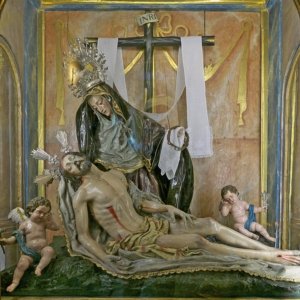
- “Piedad” (Cristóbal Ramos, XVIII) º
-
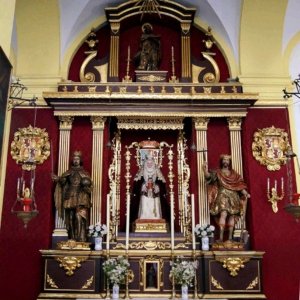
- Retablo de la Virgen de los Reyes, llamada “de los Sastres” *
-
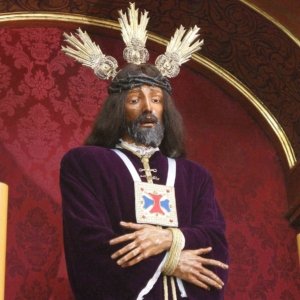
- Jesús Cautivo y Rescatado (anónimo, XVIII) *
-
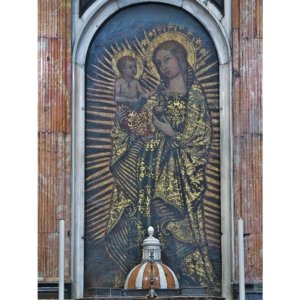
- Virgen del Coral (anónimo, XIV) º
* : Leyendas de Sevilla │ º : Wikimedia Commons