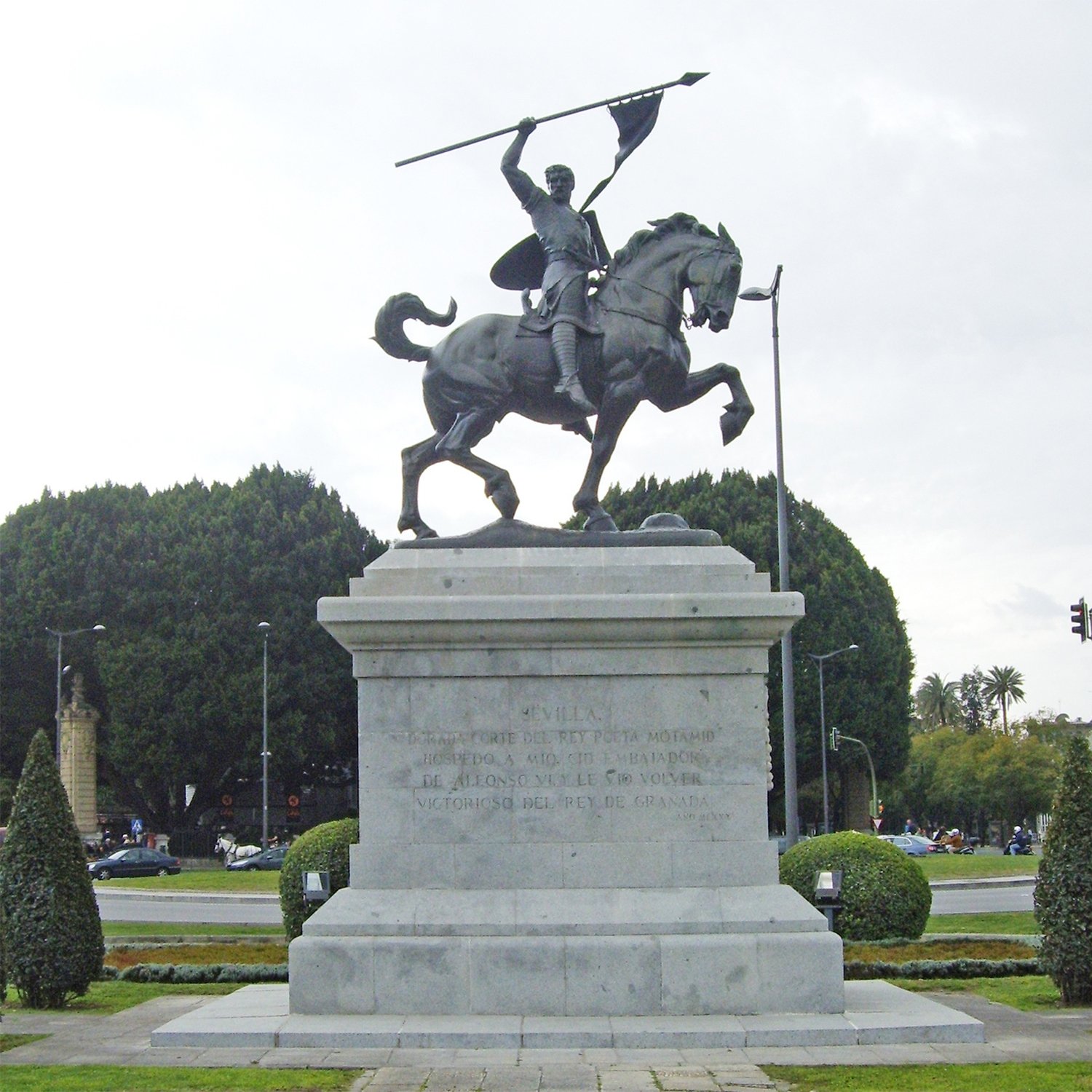
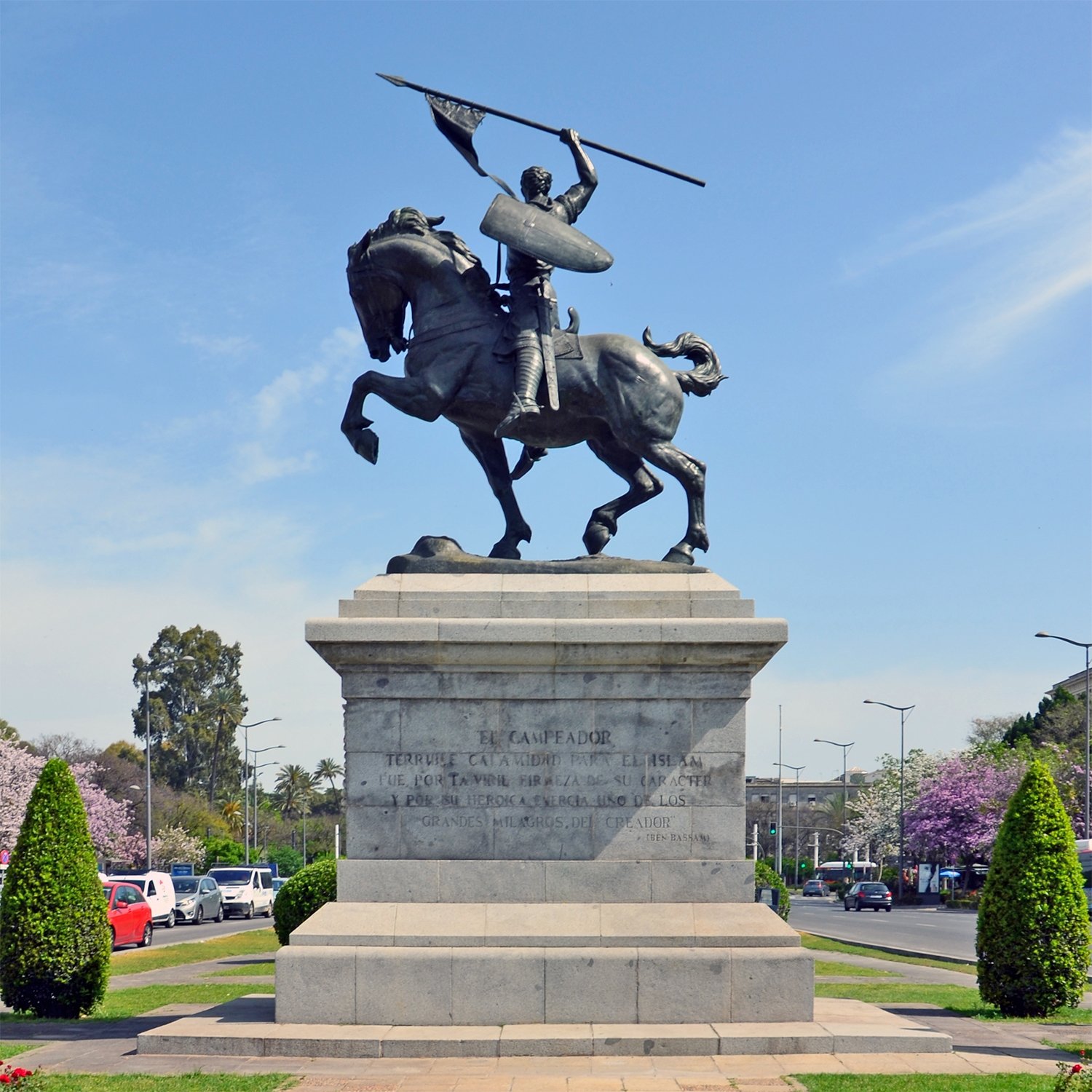
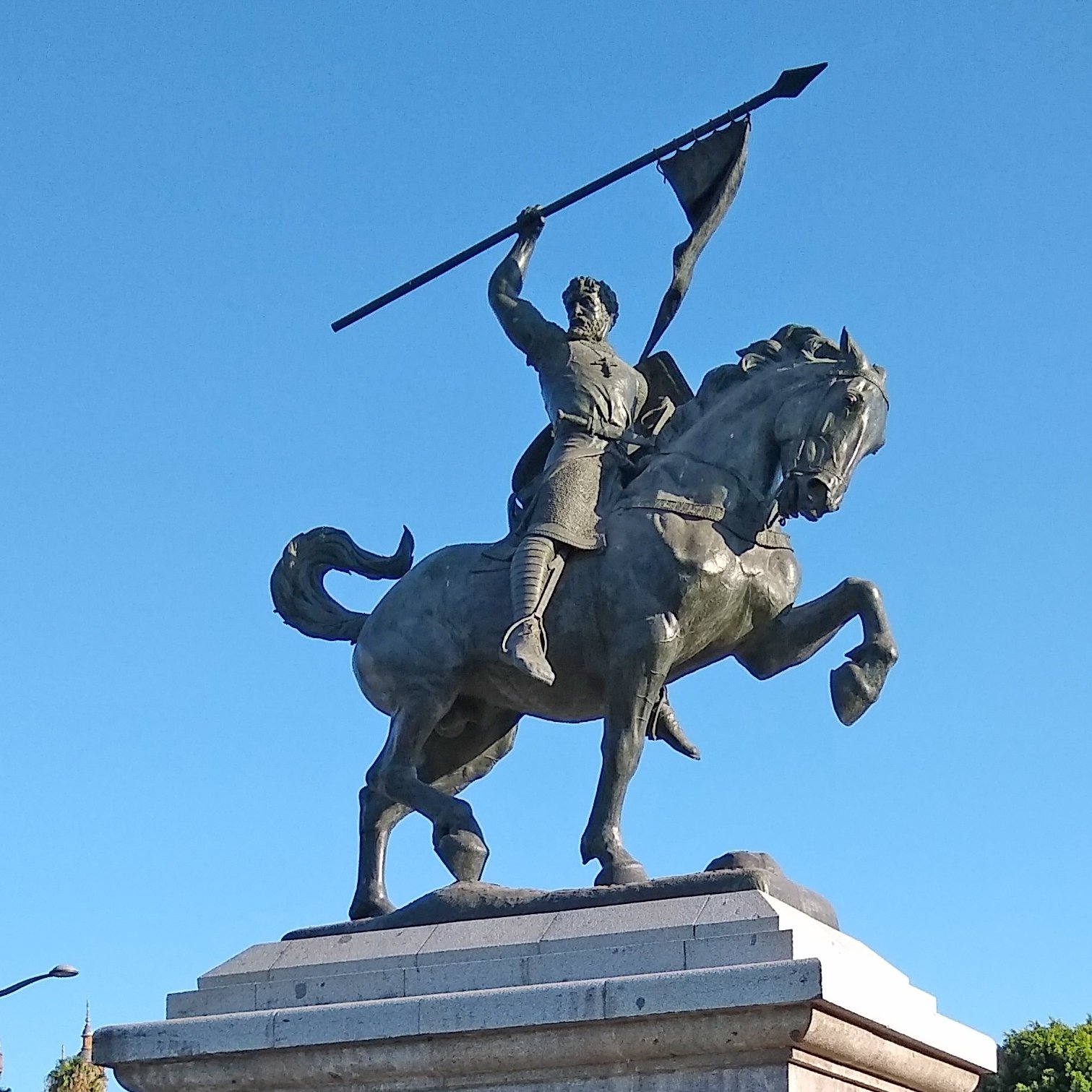
Located in the center of Avenida del Cid, it is an equestrian statue by the American artist Anne Hyatt Vaugh. It was a gift from the New York Hispanic Society to the city of Seville on the occasion of the celebration of the Ibero-American Exposition of 1929. In fact, it was decided to place it right in front of what was the main entrance to the venue, between the Portugal Pavilion and the old Tobacco Factory.
Its author stood out above all for her monumental bronze sculpture, frequently representing historical figures and specializing above all in the recreation of animals. In this field she achieved great mastery, especially with the figure of the horse, of which Huntington was truly in love.
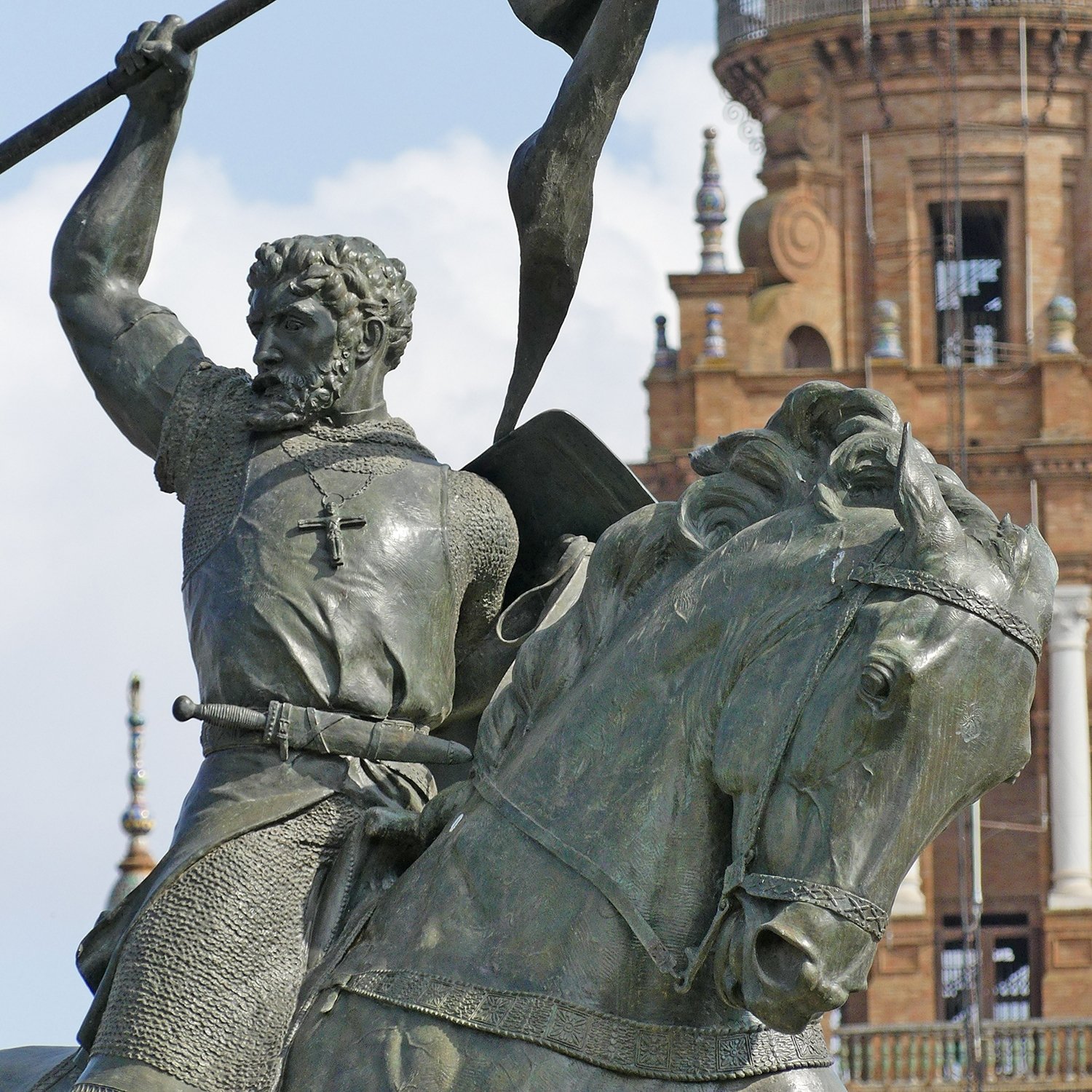
These qualities are clear in the example of her statue for Seville. The Cid's horse is represented with great anatomical realism and transmitting a strong sensation of movement, which gives the entire work a great dynamism that does not detract from its solemnity.
The posture of the figure of Rodrigo, turned to one side with respect to the axis of the horse, contributes to this dynamism. He wears warrior mail and raises one arm holding a spear, in an attitude of haranguing the troops. In the other arm he carries a shield and his sword.
It is a magnificent example of 20th century equestrian sculpture, which from the beginning enjoyed the recognition and admiration of both the people of Seville and the artistic circles of the time. The original sketch of the work was made in the same year, 1927, and is today in Brookgreen Gardens in South Carolina. The success of the Sevillian monument led to various copies being made that are spread throughout various points of Spanish and American geography, such as New York, Buenos Aires, San Francisco and Valencia.
El Cid is the nickname by which Rodrigo Díaz de Vivar was known, a Castilian knight who lived during the 11th century and who ended up being one of the most famous characters of the Spanish Middle Ages. He was first a vassal of King Sancho II and, after his death, of his brother, Alfonso VI.
By order of this king, the Cid traveled to Seville in 1079 to collect the pariahs from King Al Mutamid. During Rodrigo's stay in Seville, the kingdom suffered an attack by order of the Granada king Abdalá ibn Buluggin. El Campeador collaborated with Al Mutamid in his fight against the Granadans, who were defeated in the battle of Cabra. This fact is alluded to in the inscription found on the pedestal of the monument: “Seville, home and court of the poet King Motamid, hosted Mio Cid, ambassador of Alfonso VI, and saw him return victorious from the King of Granada.” On the other side of the pedestal one can read: “The Campeador, a firm calamity for Islam, was, due to the virile firmness of his character and his heroic energy, one of the great miracles of the Creator. “Ben Bassam.”
In detail: El Cid in Seville