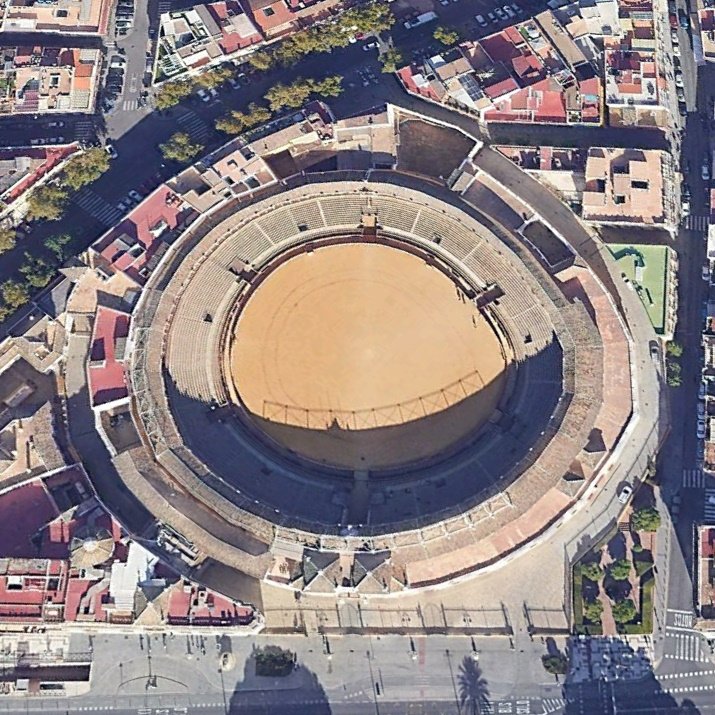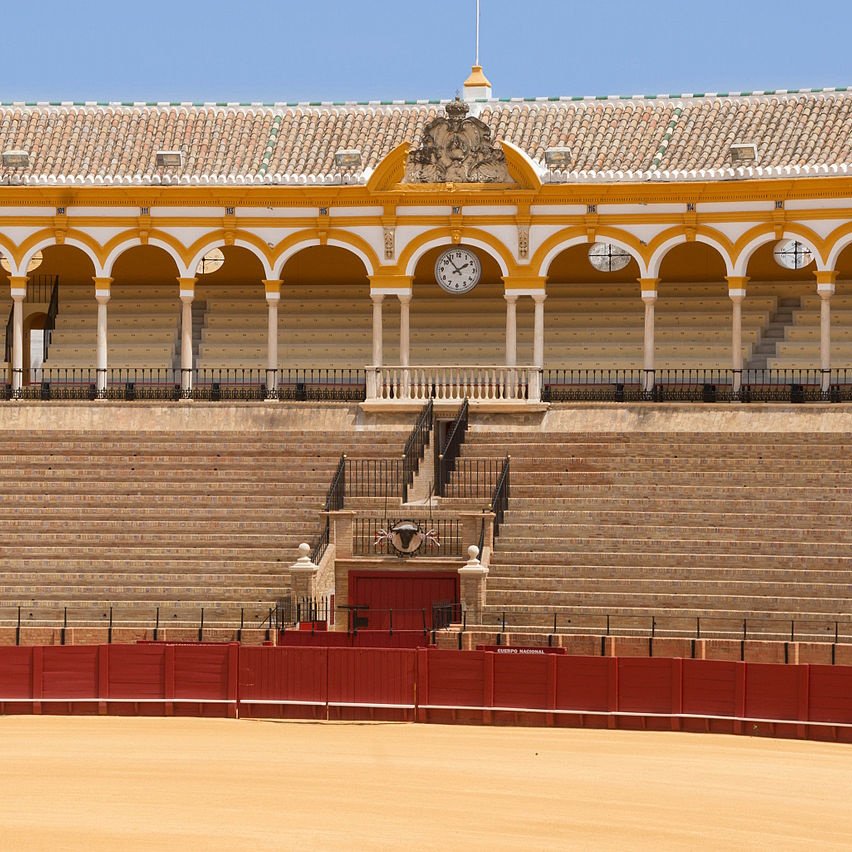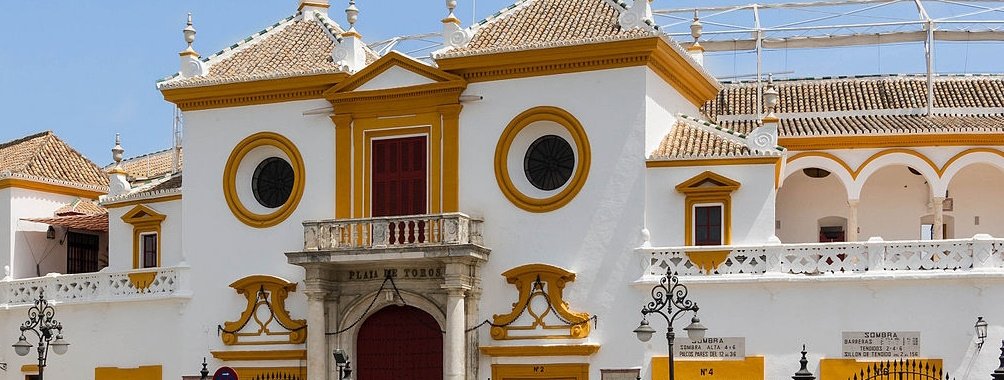
The Plaza de la Maestranza in Seville is among the oldest in Spain and is the most important for the world of bullfighting, along with Las Ventas in Madrid. It has a capacity for 12,000 people and its construction lasted in different phases for more than a century, between 1761 and 1880, the date of the definitive completion of the works.
It is known that in this same neighborhood of Arenal, a previous bullring was built, mainly made of wood and square, which was demolished for the construction of the current one. The initial project is the work of architect Vicente San Martín, and the result was a beautiful complex in a late baroque style with a very classical air.
One of the most curious characteristics of the Maestranza is that its plan is not completely circular, but is "flattened" on one of its sides. This circumstance is due to the development of the works in different phases that we already mentioned and because the space between the Arenal hamlet was gradually opened, as they progressed.
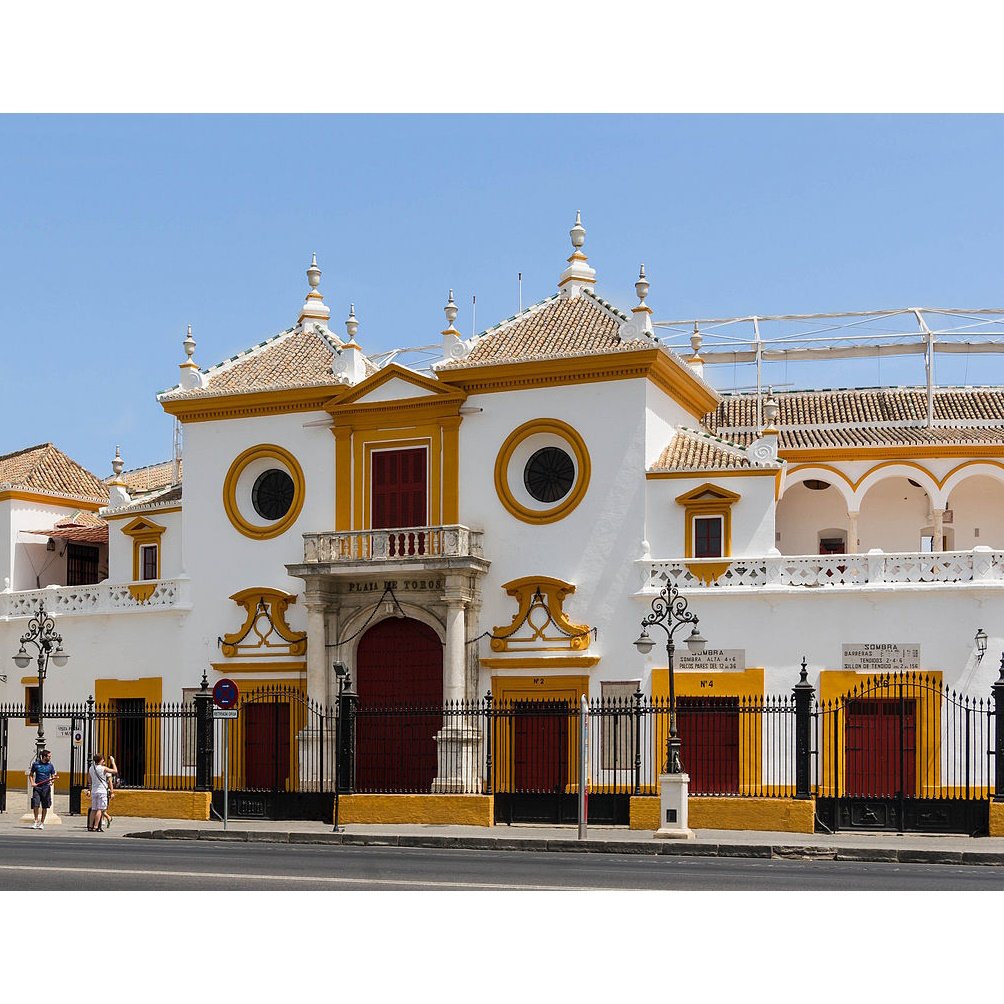
The main façade was built in the first phase and was already completed in 1787. The famous Puerta del Príncipe is a semicircular arch flanked by marble columns, which support a central balcony. The balcony opening is in turn framed by pilasters and under a triangular pediment.
On both sides, the façade extends giving the sensation of having two wide towers as a frame for the main entrance. In the lower part, two smaller doors flank the main one, crowned by two mixtilinear pediments of curious shape. Two large oculuses open above them. Finishing off each side of the façade are hipped tile roofs.
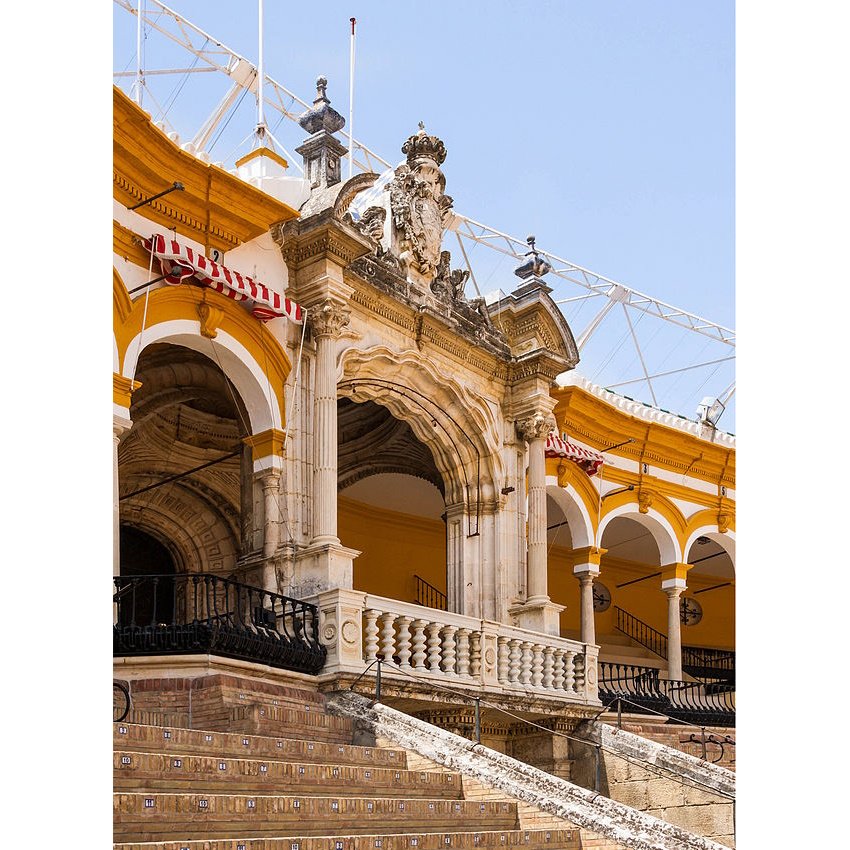
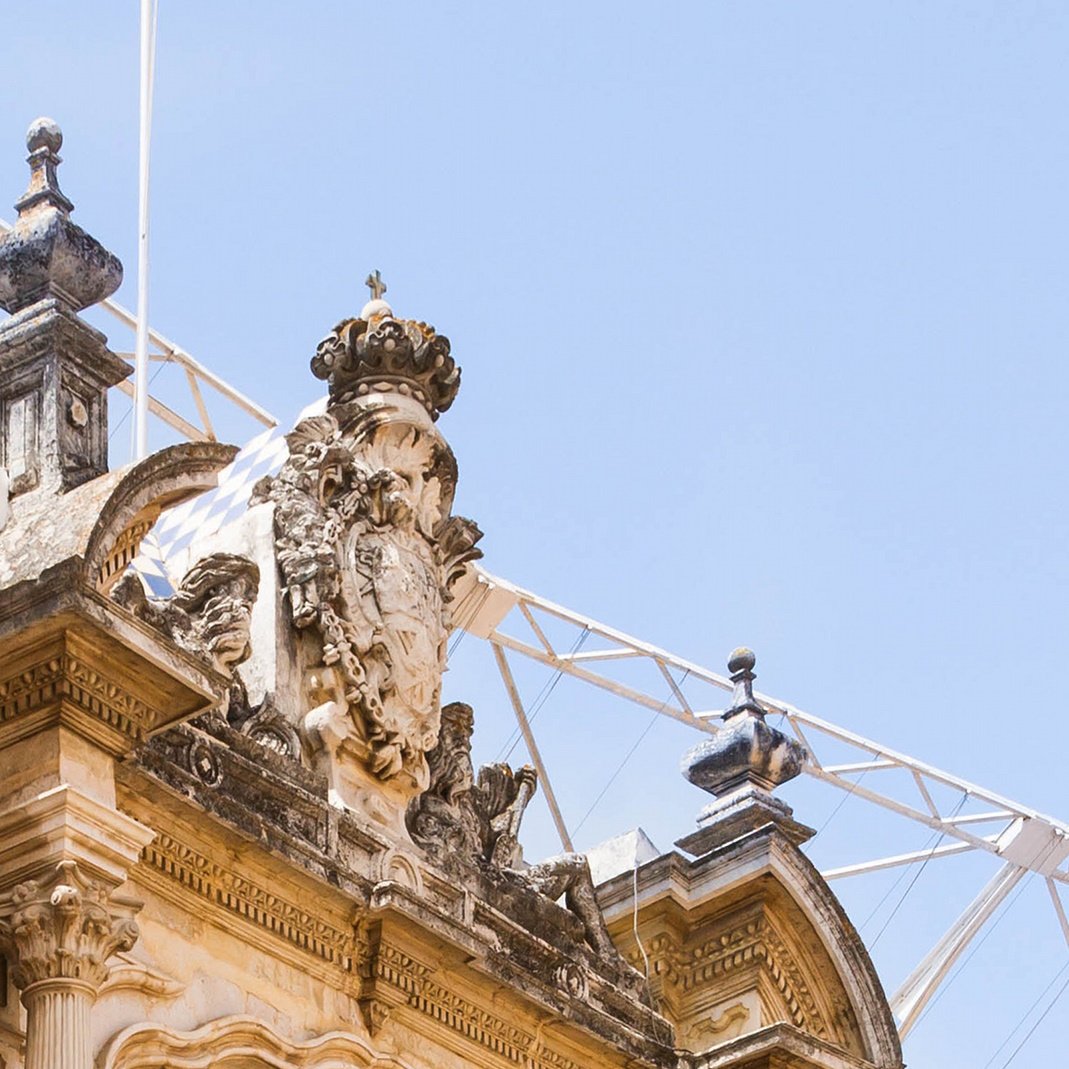
The Royal or Prince's Box also corresponds to the first construction phase of the building. It consists of two bodies. In the first we find a lowered semicircular arch framed by two Ionic columns that support the box itself. On the upper level, the central arch is segmental and has a curious undulating profile. It is flanked by two Corinthian columns, which support a split curved pediment.
In its center is the royal shield, made by Cayetano de Acosta, who also sculpted the two allegorical figures that are on both sides. These are the allegories of the Po and Guadalquivir rivers, which are represented as bearded and reclining men. The allusion to the Italian river is not clear, but it is probably a reference to the Celtic-Ligurian people of the Taurines, who settled in the upper Po valley. Its capital was called Taurus, the name from which the current Turin derives, which still today has a bull as its symbol.
The lines of the plaza are divided into two levels, low and high. The tall steps are covered by a gabled tile roof that surrounds the entire square and is supported by semicircular arches perched on Tuscan marble columns.
The lower levels were subject to a thorough restoration in 1977, directed by Barquín Barón, who also prepared various auxiliary spaces for the installation of the bullfighting museum.