The Jewish quarter of Seville is the area where the city's Jewish community lived during the late Middle Ages. It extends over a large area in the south and southeast of the historic centre, which corresponds in general terms to the current neighbourhoods of Santa Cruz and San Bartolomé.
Although the presence of a Jewish community in Seville can be traced back to Roman times, the truth is that the decision to settle this population in the area that we know today as the Jewish quarter was taken after the Christian conquest of the city in 1248. It was not Fernando III, the king who was the architect of the conquest, who was in charge of this foundation, but his son and successor, Alfonso X the Wise, probably shortly after being crowned in 1252. We know that its initial inhabitants were the Jews who arrived in the city after it was taken by the Christians, since the religious intolerance of the Almohads had caused there to be no Jews or Christians living in Seville in the final days of Muslim domination.
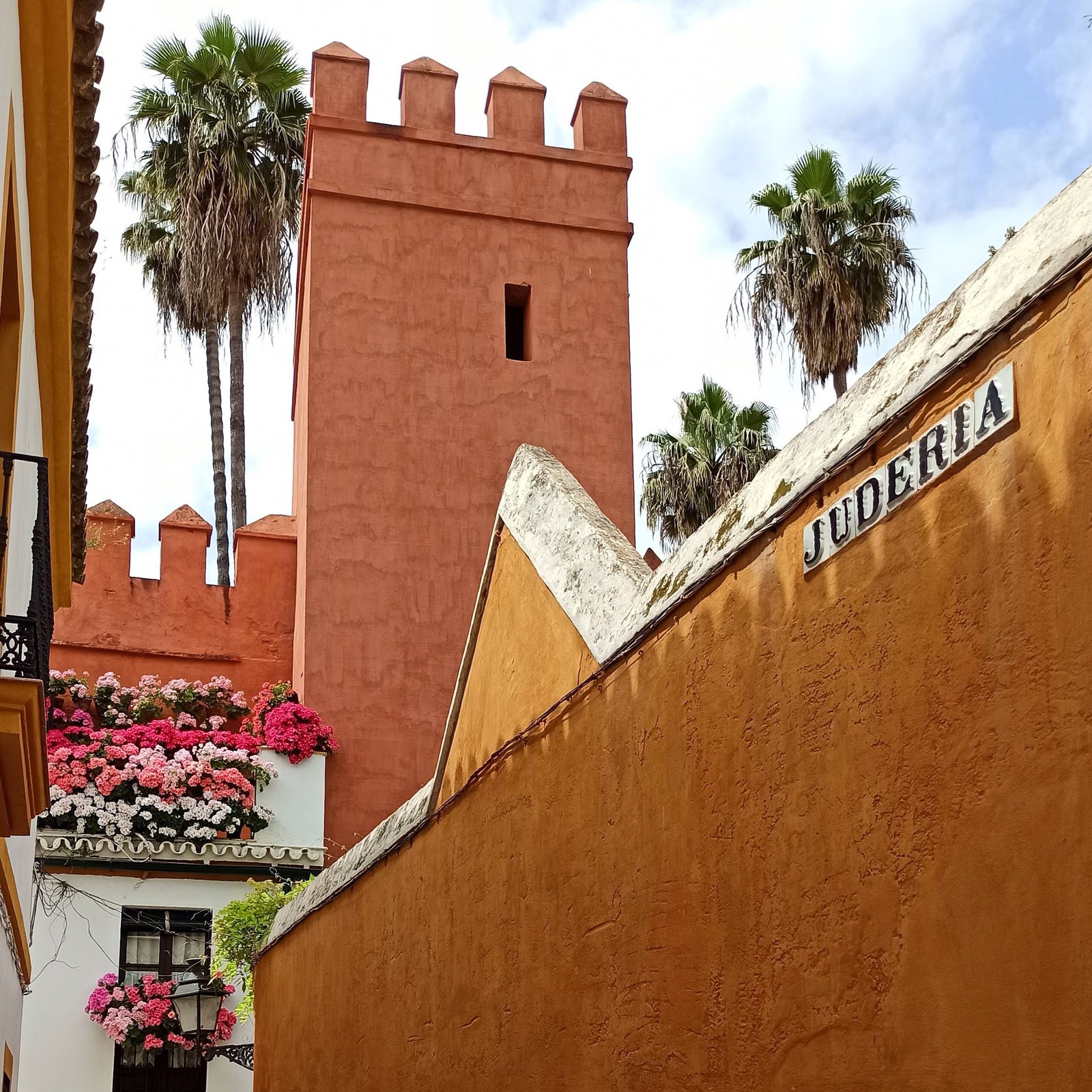
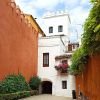
King Alfonso ordered that the Jewish quarter be located in a prominent place in the city, next to the fortress and very close to the cathedral. It was surrounded by a wall of mud with various doors and shutters that were closed every day at nightfall. This circumstance was common in other Spanish Jewish quarters and was due both to the interest in limiting contact between Christians and Jews, and to the purpose of trying to avoid possible attacks in times of disorder or tumult. Only a fragment of this wall of about ten metres is preserved today, a testimony to those turbulent historical moments.
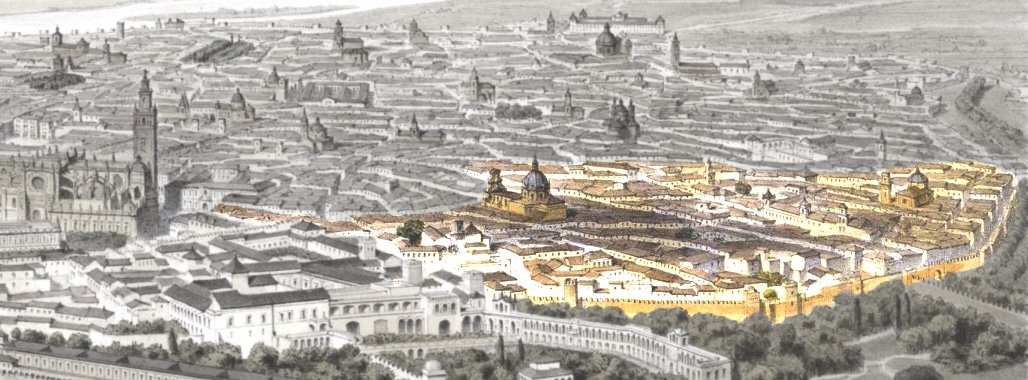
Approximate area of the old Jewish quarter of Seville according to the aerial lithograph by Alfred Guesdon (c. 1854)
It is also known that they had at least three synagogues from the very beginning, since the king gave them the three old mosques that were in this area to be transformed and dedicated to the Hebrew cult. The three would end up being Christian churches after the expulsion of the Jews and only one of them remains today. This is Santa María la Blanca, a medieval jewel completely reformulated during the Baroque period that is located in the heart of the Santa Cruz neighborhood. Some authors have pointed out the possibility that the king granted them a fourth mosque, which would have been where the Madre de Dios convent is currently located, but this cannot be confirmed with certainty. Several accounts from the 14th century have also been preserved that speak of more than twenty synagogues in Seville, although they were certainly smaller and more modest places of prayer than those mentioned.
The headquarters of the aljama was also located in the Jewish quarter. This term was used to designate both the Jewish community residing in a city and the institutions through which it was organized. They had their own legal system known as “tacanot” and an institutional framework with political, cultural and religious functions. There was a chief rabbi, sometimes called “nasí” or prince, who was in charge of the highest representation of the community before the authorities and whose position depended on royal appointment. In addition, there were councils dedicated to specific issues, such as fiscal or religious matters. They were made up of judges or “dayanim”, who Christians also called rabbis.
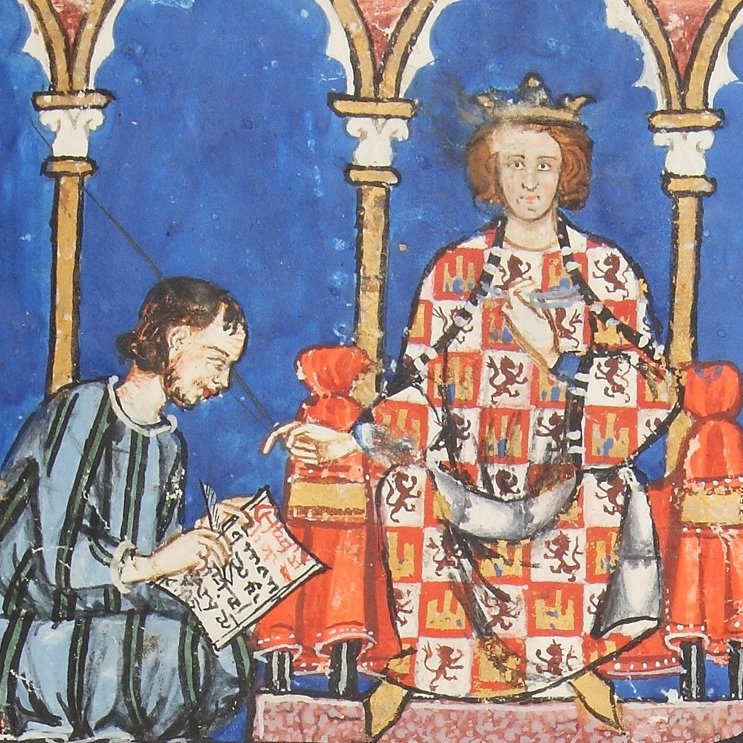
Image of King Alfonso X dictating to a scribe on folio 65 of the "Libro de los juegos de Ajedrez, Dados y Tablas". Sevilla, 1283.
The Seville aljama was the second largest in the kingdom, only after that of Toledo. With an area of about 16 hectares, it had numerous productive spaces, such as shops, markets or slaughterhouses. There was also a group of rich Jews, dedicated to the money trade as bankers, lenders and landlords of royal and municipal taxes (...). Other typical professions, more or less lucrative, were those of doctor, tailor, weaver, silversmith, silkmaker, some merchants and craftsmen of various kinds (Ladero Quesada, “Historia de Sevilla. La ciudad medieval”).
To the east was the cemetery, outside the walled enclosure of the city and very close to the gate known as “Minjoar” or Carne. It was probably the largest Jewish necropolis in medieval Spain, with about four hundred tombs excavated in different archaeological campaigns to date. Most of the bodies were found buried in wooden coffins, with the burial site covered by a simple brick barrel-vaulted grave.
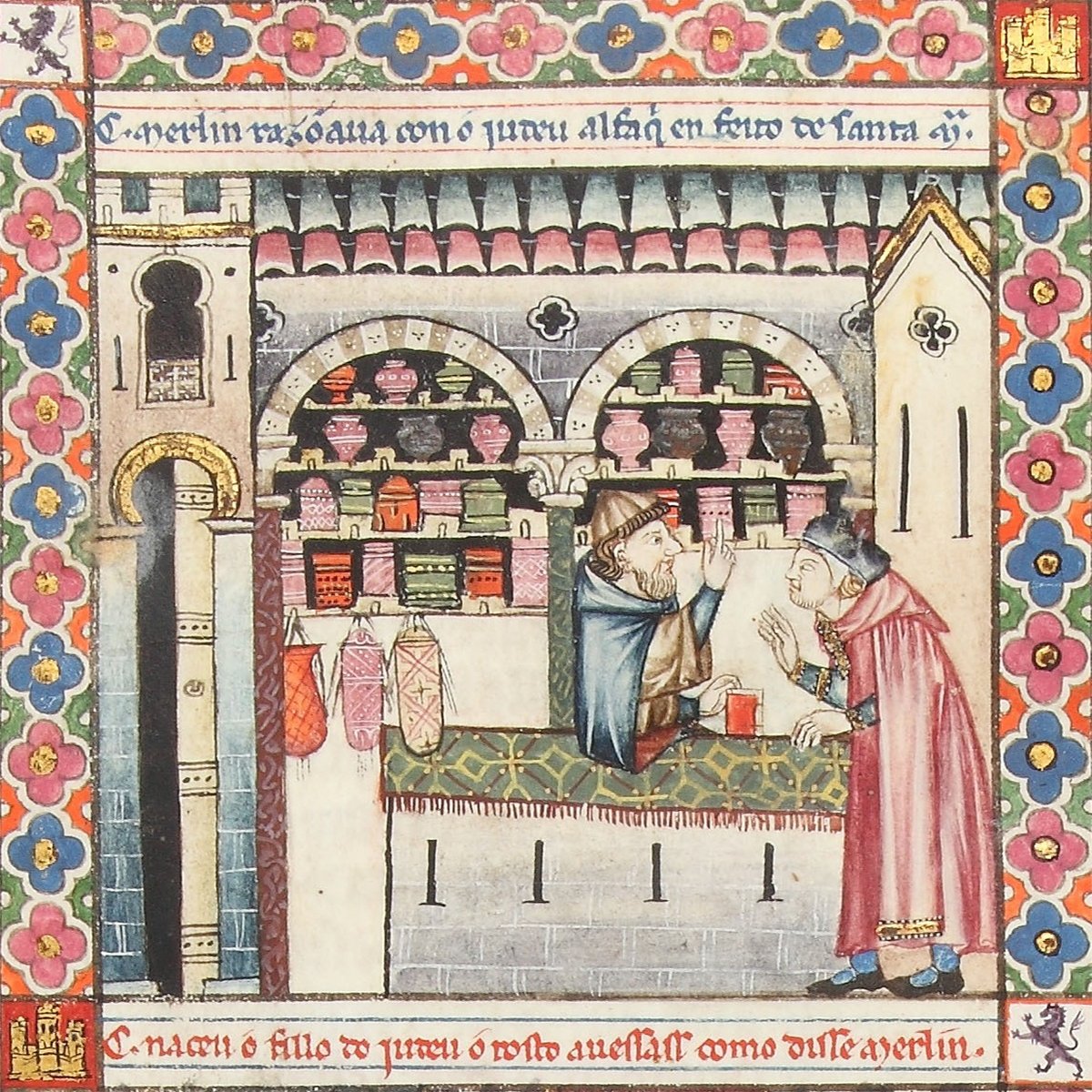
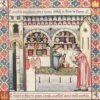
Scene from a Jewish pharmacy (c. 1285). Cántiga 108 (folio 155). Biblioteca del Monasterio de San Lorenzo de El Escorial
The fact that the Jews opted for this type of cemetery outside the city walls, as opposed to the burials in churches and their surroundings that were common among Christians, is of great importance. At times when the city was going through an epidemic crisis, the spread of the disease was usually faster among Christians than among Jews, which ended up arousing the suspicion of the majority community. They did not have the scientific knowledge that we have today and were unable to understand what was happening, attributing the contagions among Christians to bad practices on the part of the “deicidal people”.
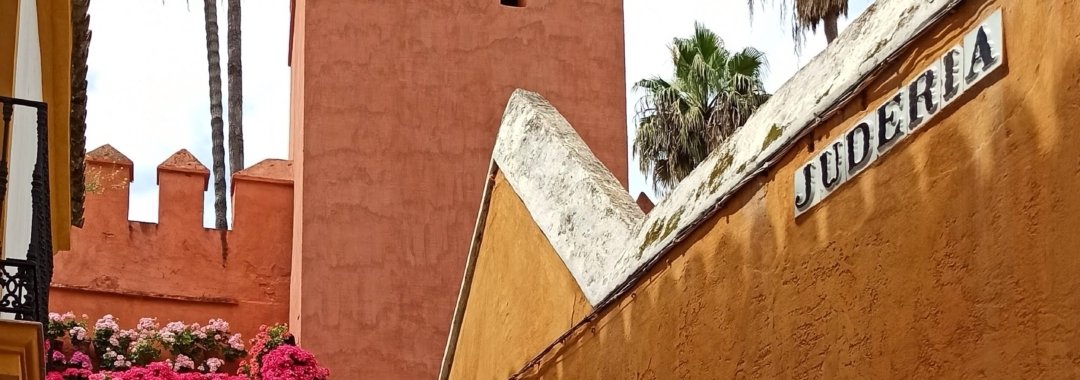
The current appearance of the old Jewish quarter of Seville is far from the medieval one. It is true that the neighbourhood has preserved a good part of its medieval structure, with its characteristic narrow and angular streets and its irregular little squares. The adarves or dead-end streets are common, in an urban network of labyrinthine appearance. This is the trace of the Islamic city of Isbiliya, which still exists today in an atmosphere that echoes in cities such as Tangier and Marrakech. However, more than five centuries have passed since the Jews were forced into exile in 1492. Since then, the district has been inhabited by people from the most varied social and economic positions, who have gradually modified its appearance and generated the complex chronological mosaic that has survived to this day.

Narrow, angled streets are the most common in the old Jewish quarter, inherited from the urban planning of the Islamic city of Isbiliya.
In this process of change, a decisive moment was the first decades of the 20th century, when the city set its sights on what would be the Ibero-American Exposition of 1929. The local authorities counted on the support of the Government to organize a great international event that would serve to transform the urban landscape and infrastructure of Seville. Focusing on the Santa Cruz neighborhood, the idea was to completely renovate it and recreate the atmosphere of an "Andalusian village." It was then that its most iconic corners were designed, such as the Plaza de Doña Elvira, the Plaza de la Alianza or the Plaza de Santa Cruz. A romantic transformation of the Jewish quarter took place which, together with the medieval urban structure, is the basis of the picturesque and beautiful landscape that we can currently enjoy in the neighborhood.
If you are in Seville and want to learn about the scenes of Jewish history in our city, the best way to do so (and almost the only way) is through an official guide. It will take you to the most significant spaces of the old Jewish quarter, putting them in the context of the history of the Sephardic people. I myself have been showing the Jewish quarter for years to travelers from all over the world interested in history and art. And always in small groups, since at @sevillaxm2 we are committed to a model of tourism that respects the well-being of the inhabitants of the neighborhood.
On this same website you can check prices and book a tour, but if you have any questions, do not hesitate to contact us via the means you prefer.

Agua Street is one of the most emblematic streets of the Jewish quarter, closed on one side by a section of the 12th century Islamic wall.

TOUR OF THE JEWISH QUARTER OF SEVILLE
1h 30m - Private groups of up to 10 people - Flexible start time
The ideal option to discover the most interesting corners of the Santa Cruz neighborhood in relation to the history of the Jewish community in the city. This tour covers some of the most beautiful squares and alleys in Seville, which serve as the setting for a journey through some of the most important episodes in our history.
Guide: Manuel Hellín, graduate in History and official tourist guide of Andalusia.