The Paseo de Catalina de Ribera (promenade) and the Murillo Gardens make up one of the most interesting garden areas in terms of history, art, landscape and environment in the city of Seville. They are fully involved in the life of the city and preserve interesting botanical species as well as architectural and sculptural samples and original street furniture elements from the time of their formalisation in the first quarter of the 20th century.

The current Paseo de Catalina de Ribera has its remote origin in the transfer, in 1862, of part of the Huerta del Retiro del Alcázar. This new public space, which was intended to attenuate the narrowness of the urban layout of the neighbouring neighbourhoods, did not yet have a special layout. At the end of the 19th century, a first project was undertaken for landscaping and furnishing what was then called the "Paseo de los Lutos" and, in 1920, on the occasion of the interventions carried out in view of the Ibero-American Exhibition, the architect Juan Talavera y Heredia, formalised the layout preserved today.
This same architect, a well-known representative of regionalist historicism, had designed a few years earlier the adjacent Murillo gardens, also the result of a transfer (1911) of another portion, located to the north-west, of the Huerta del Retiro del Alcázar. The layout of the Paseo de Catalina de Ribera has a clear longitudinal arrangement, designed for traffic, while the Murillo Gardens respond, due to their location and design, to a more secluded enclosure.
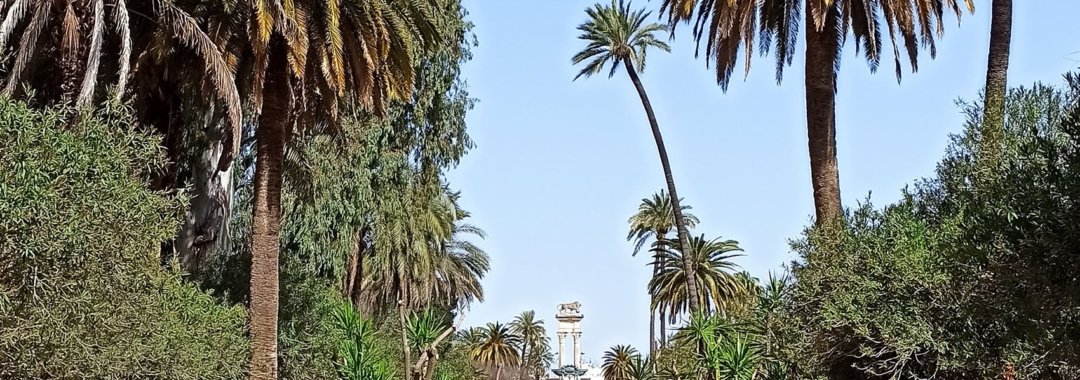
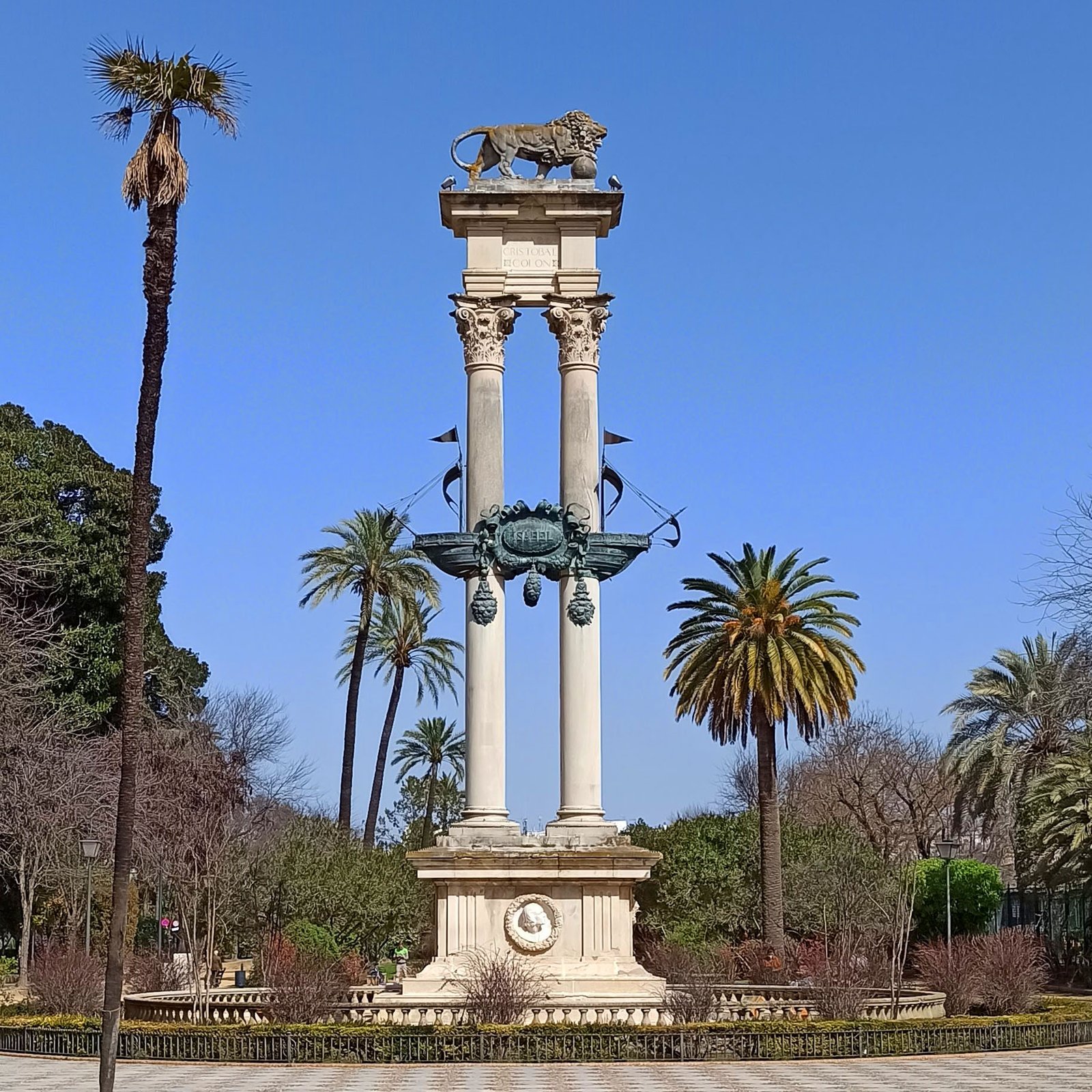
The walk is structured by a central axis and two secondary axes, parallel to the latter and arranged on both sides, which are made up of flowerbeds delimited by factory and tiled parapets. The central axis is interrupted at its midpoint by a large circular space centred by a fountain, also circular, on which, above a pedestal with busts of Columbus and the Catholic Monarchs, two columns stand, supporting an entablature crowned by the figure of a lion and, at mid-shaft, the prows of the caravels.
The monument, which provides the vertical element of compositional compensation to the promenade, was designed by the architect Talavera and executed by the sculptor Lorenzo Coullaut-Varela, and is dedicated to Christopher Columbus, in keeping with the events of the Ibero-American Exposition of 1929, when it was held.
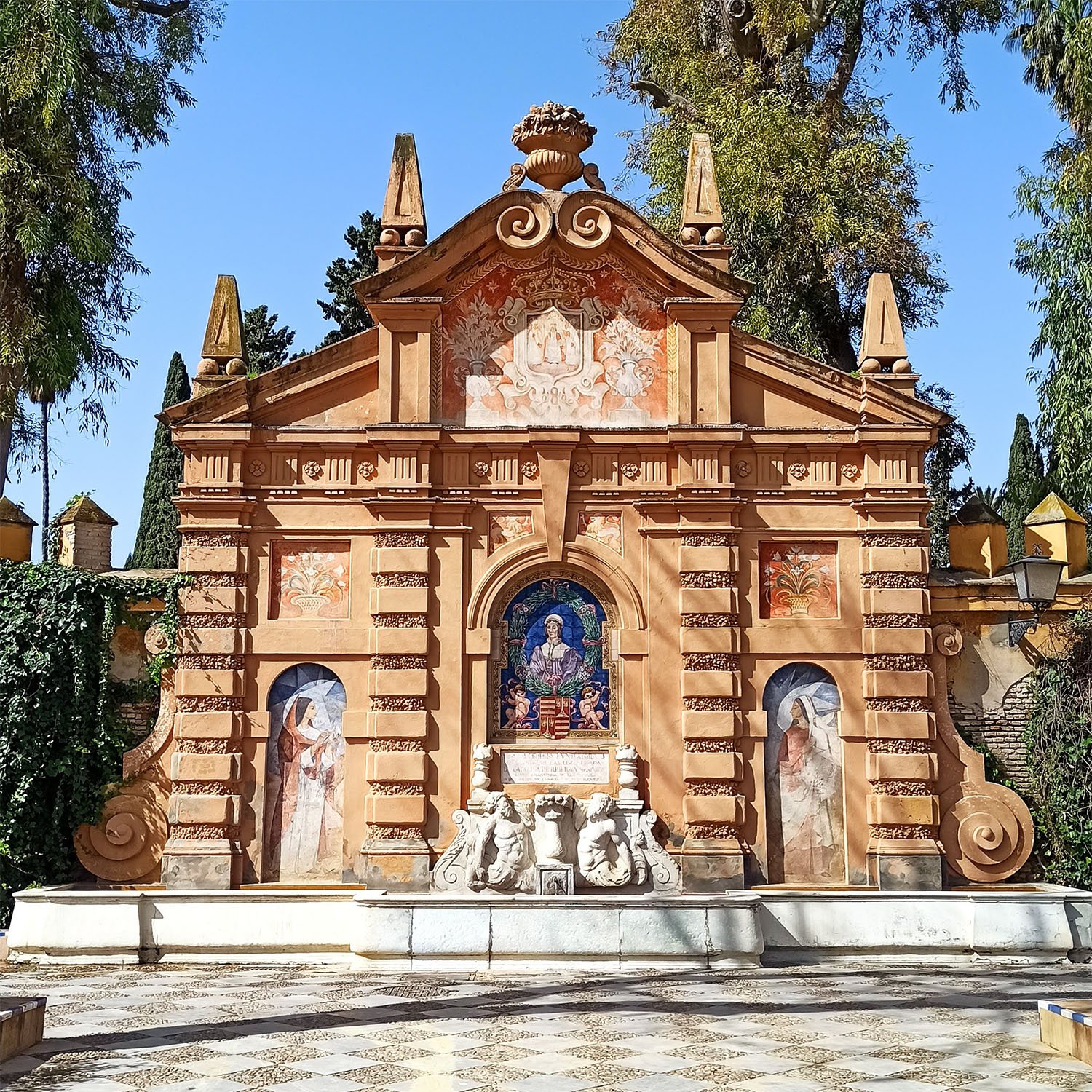
Very close to the monumental fountain is the parietal fountain, attached to the enclosure wall of the Alcázar gardens, dedicated to Catalina de Ribera, benefactor of the city with the foundation of the Hospital de las Cinco Llagas. It has an architectural structure in neo-mannerist style designed by Talavera and Heredia himself with paintings alluding to the lady, plus the remains of another fountain from the 16th century.
Text of the BIC declaration, 12-03-2002.
-

- Monumento a Cristóbal Colón
-

- Monumento a Catalina de Ribera