(14th century) Also known as David ben Joseph, he was a "rishon" or chief rabbi who lived in Seville in the 14th century. He was best known for his commentary on the Siddur, the book of daily prayers of the Jewish religion. His birth and death dates are unknown, but his period of splendor was around 1340.
Abudarham belonged to the class of writers who, in an age of decadence, felt the need to disseminate in a popular way the knowledge accumulated in various sources of rabbinical literature. His book "Sefer Abudarham" was intended to serve as a continuous commentary on the liturgy. In the preface he states that he wished to provide the means to use the liturgy intelligently. To explain each fragment, he collected material from both the Babylonian Talmud and the Jerusalem Talmud, from the Geonim and from all the commentators up to his own time. In order to elucidate the meaning and origin of each observance connected with divine worship throughout the year, he made use of all the works on rites that he could obtain, some of which were very rare. In addition, he made a systematic exposition of the Hebrew calendar.
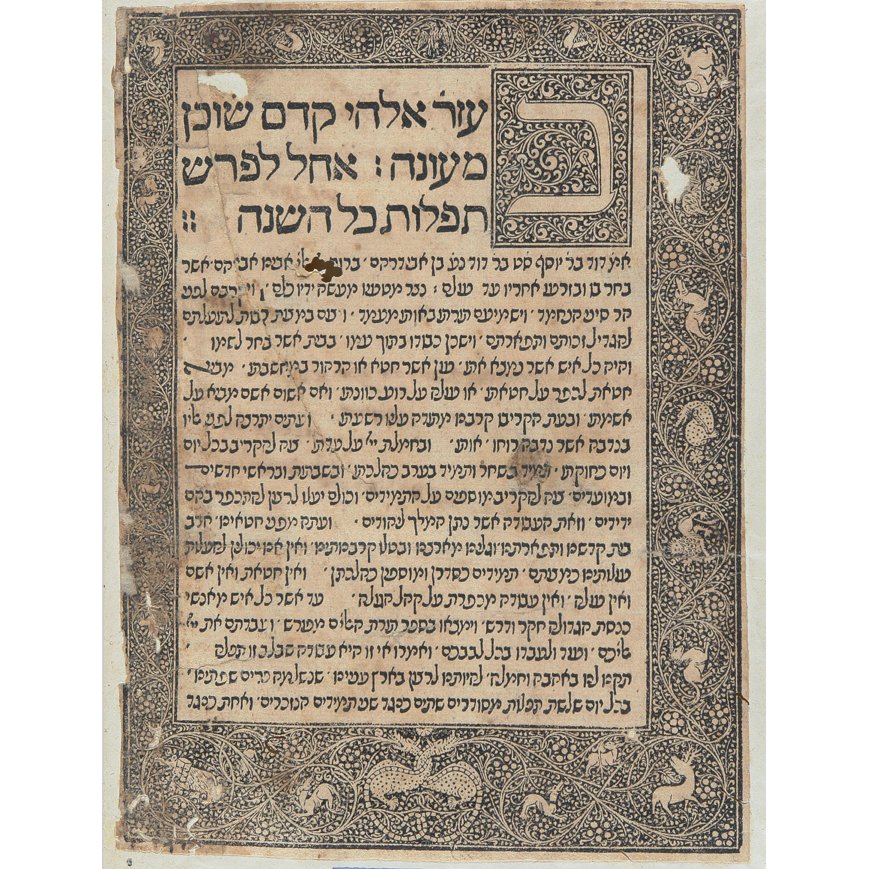
First edition of the "Sefer Abudarham", published in Lisbon in 1489.
“Sefer Abudarham”, the first book printed in Africa
The first edition of the “Sefer Abudarham” took place in Lisbon in 1489 by the printer Eliezer Toledano. Hebrew printing in Portugal became impossible after the expulsion of the Jews from this country in 1497. Among the exiles who left the country was Samuel ben Isaac Nedivot, who had worked in Eliezer Toledano’s printing house. Samuel and his son Isaac founded a printing house in the city of Fez and for their first printing they again chose the “Sefer Abudarham”. Its first edition dates from 1516, thus becoming the first book in history printed on the African continent.