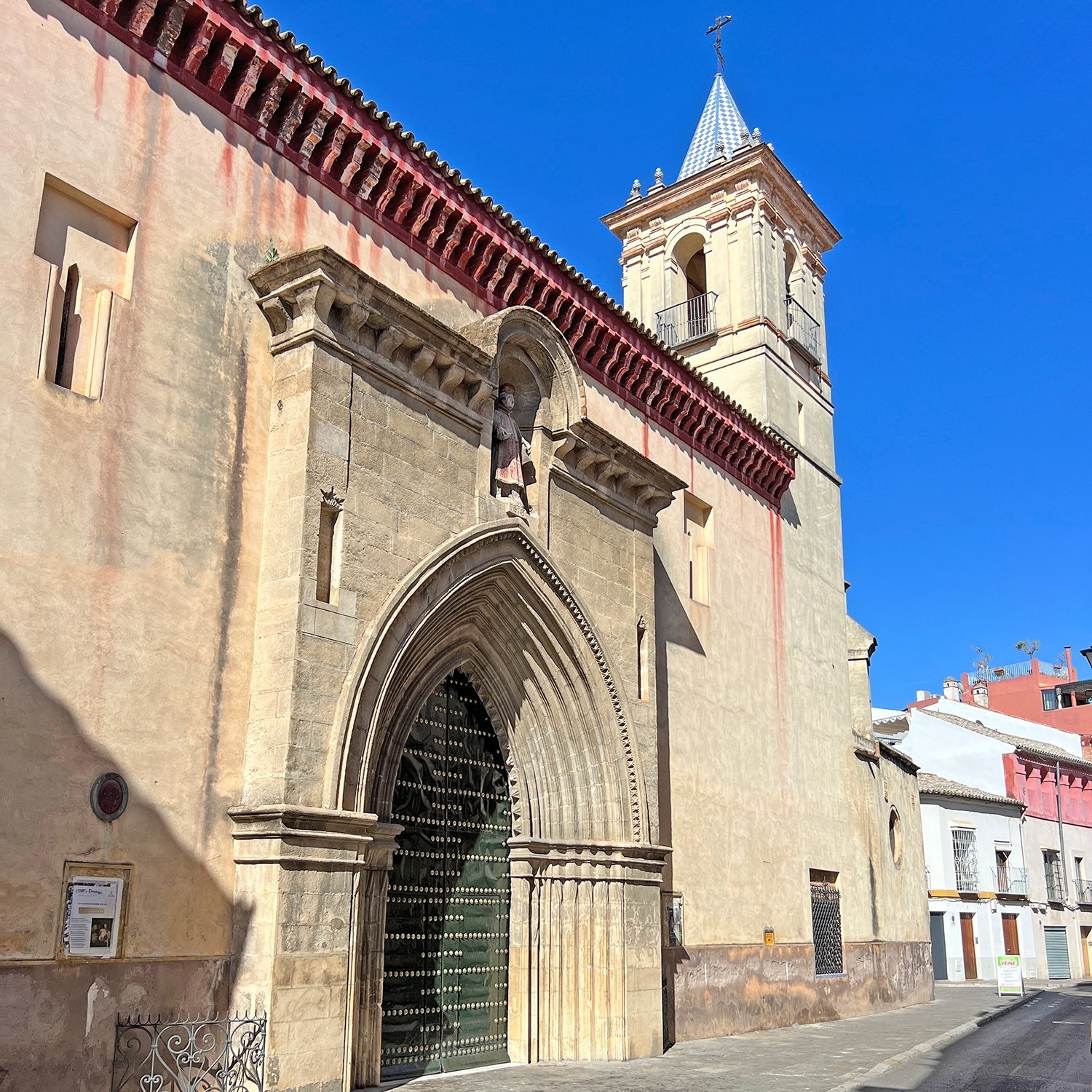
The church of San Esteban is located in the Alfalfa neighborhood, which has historically been the main access axis to the city from the East. It is a Mudejar Gothic temple built in the second half of the 14th century, although its exterior façades are somewhat later. As time went by, other reforms and extensions came, such as the construction of the tower, which dates back to the 17th century.
DESCRIPTION
It is a temple with three naves of irregular size, since the central one is larger than the lateral ones and among the lateral ones, the one on the right is narrower than the one on the left. It has a rectangular plan from which the deep irregular head that houses the presbytery stands out. Also standing out from the floor plan are the chapel of Christ of Health and Good Voyage, on the right side wall, and the sacramental chapel, next to the left nave.
Exterior
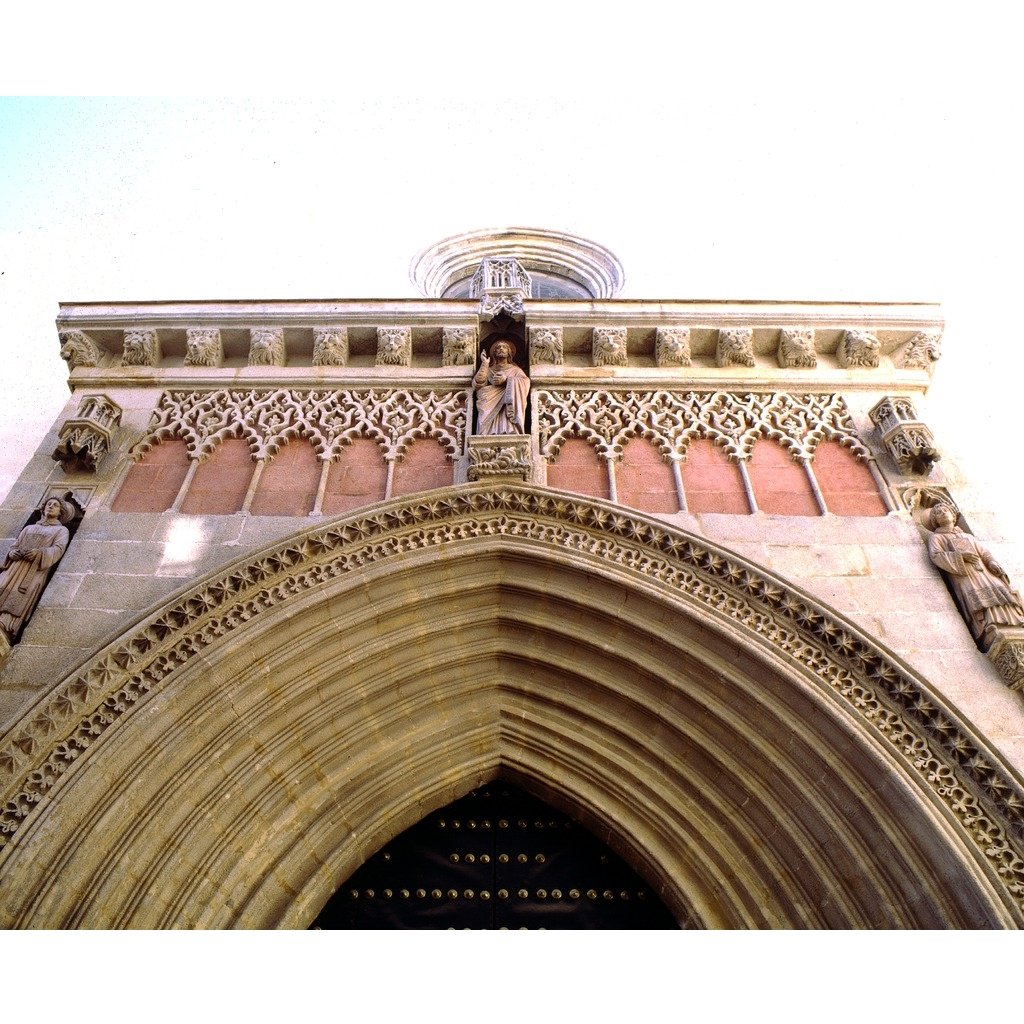
Outside, the church with two doors. The main one opens at the foot of the church towards Medinaceli Street and is a beautiful example of Sevillian Mudejar Gothic doorways. It dates back to the early 15th century and is considered one of the highest quality in this group. The opening is a flared pointed arch, with an archivolt formed by eight arches of decreasing size. On the fascias you can admire a delicate plant decoration, in which fig and vine leaves seem to be distinguished. The outer limit of the archivolt is decorated with the classic diamond points, also a very characteristic element of Sevillian Gothic.
Above the door is a beautiful frieze formed by a series of columns that support an archway decorated with the traditional sebka, of such deep tradition in the city at least since Almohad times. A little higher, sixteen corbels in the shape of a lion's head support the upper cornice.
On both sides of the façade, above the impost line, there are two small columns with capitals decorated again with lion heads. On the one on the right we find San Lorenzo, holding the grill symbol of his martyrdom. To the left is Saint Stephen, the titular saint of the temple, dressed in his deacon's dalmatic. Finally, on the top of the arch is a representation of Christ as Savior. The three small sculptures are arranged under canopies, an extremely common element in Gothic architecture.
-
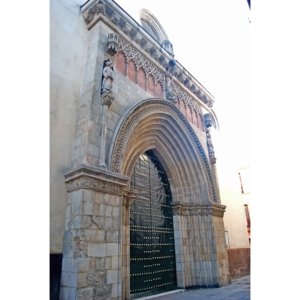
- Portada principal *

-
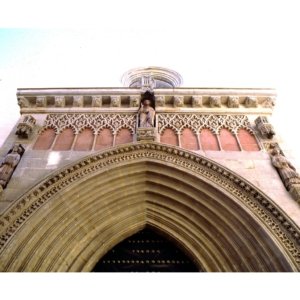
- Detalle de la portada principal *
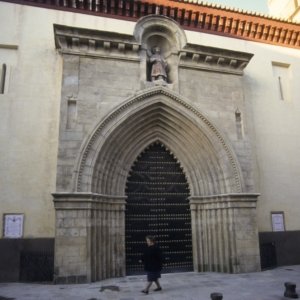
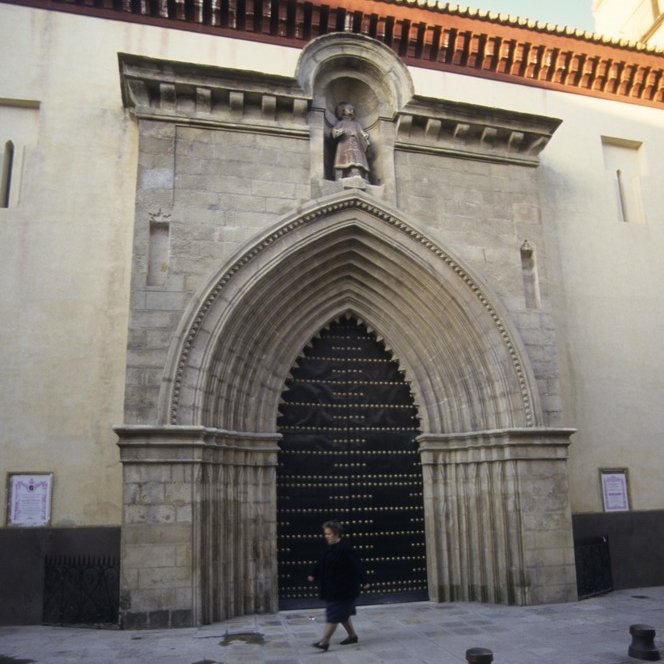
On the left side, towards San Esteban Street, a second doorway opens, very similar in its structure to the previous one, but simpler in its decoration. Above the top of the archivolt there is a niche in which we find again the saint to whom the church is dedicated, this time in a sculpture dated by an inscription in 1618, being, therefore, much later than the door itself.
A characteristic of this cover that is well known in the Sevillian brotherhood world is that the diamond points decorate the archivolt not only on the outside but also on the inside. This circumstance makes it difficult and adds excitement to the exit from the canopy passage of the Virgen de los Desamparados every Holy Tuesday.
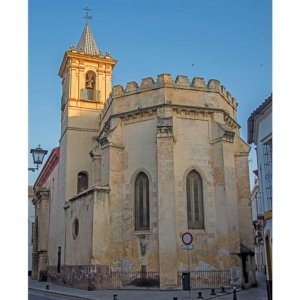
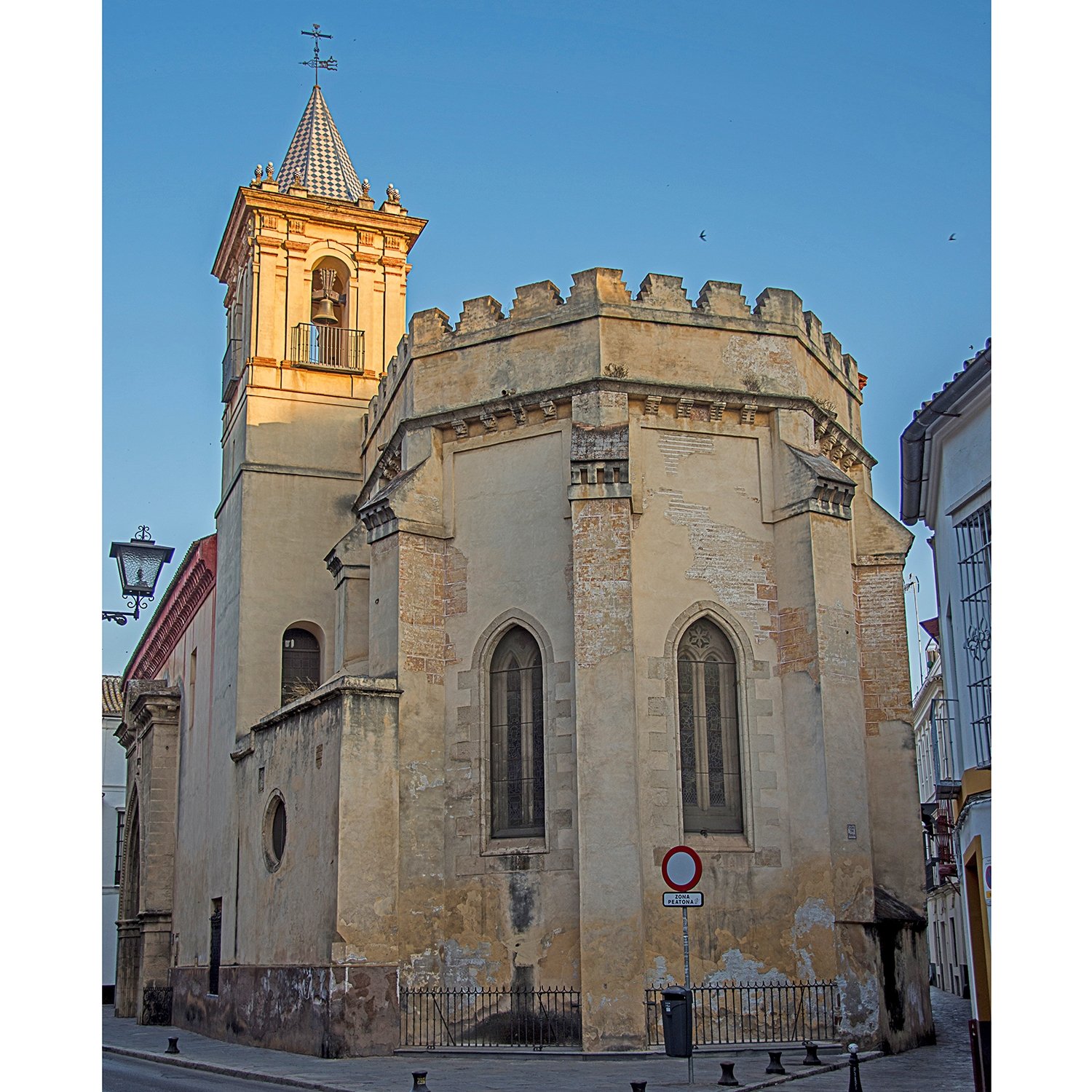
Also on the outside, the robust apse at the head of the temple stands out. It is supported by six enormous buttresses between which elongated Gothic windows open. At the top it is crowned by stepped battlements, very common in Seville since the Middle Ages.
Next to the apse is the bell tower, a simple square structure added in the 18th century. The last body has neoclassical decoration, with pilasters framing the semicircular openings that house the bells. The set is completed by a hexagonal spire decorated with blue and white tiles.
-
- Portada lateral
-
- Ábside y torre
Inside
Once inside the temple, the first thing that catches your attention is that the walls lack any type of plastering or coating, so the brick, which was the basic material in the construction of the church, is visible everywhere.
The naves are divided by graceful pointed arches supported by cruciform pillars. In the central nave they support an interesting three-panel Mudejar coffered ceiling, probably from the 15th century. On the other hand, the side naves are covered with hanging vaults.
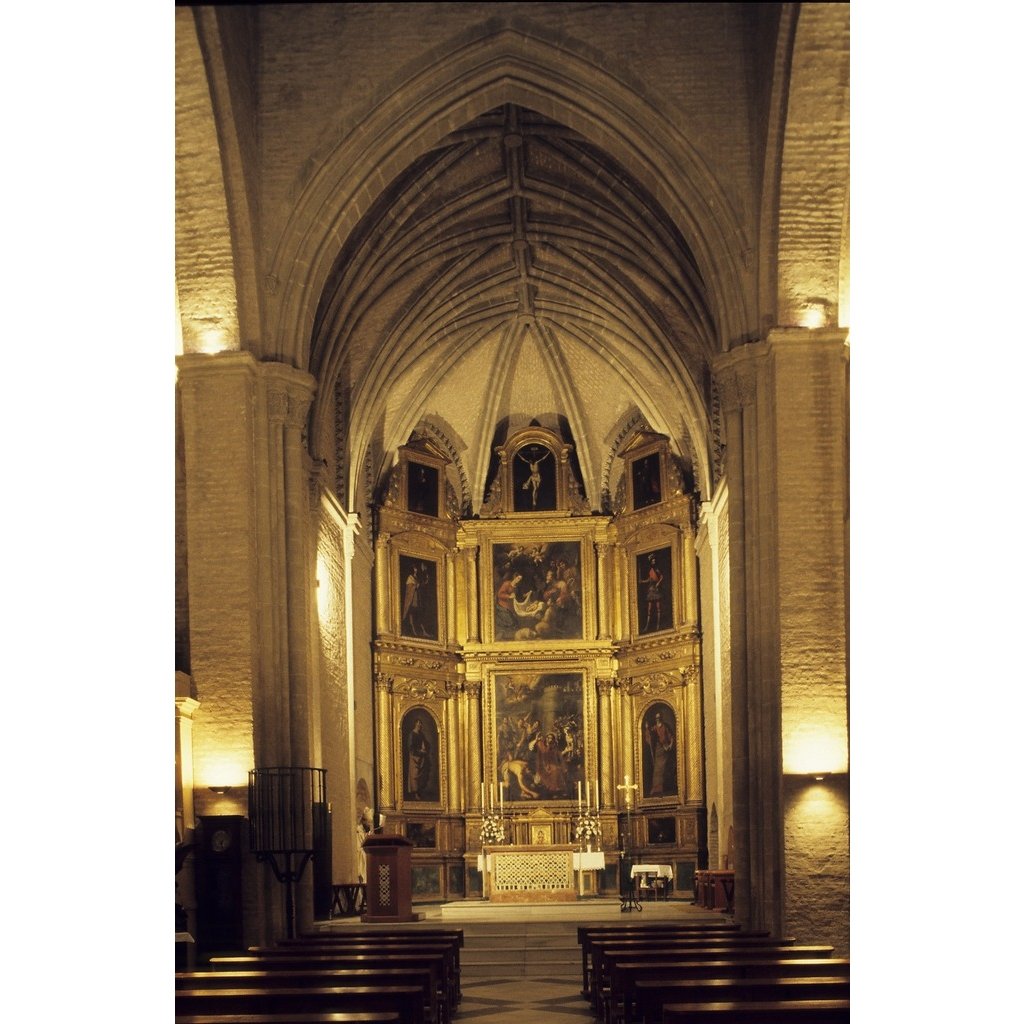
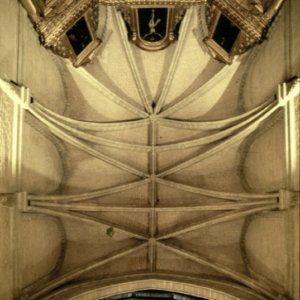
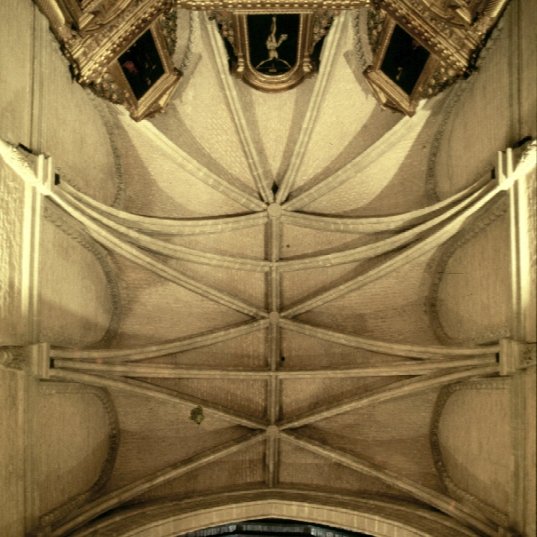
The presbytery area is unique as it is covered with a stone vault with Gothic ribs. This differentiation of covering systems was very common in the churches of the time and even in those of later centuries.
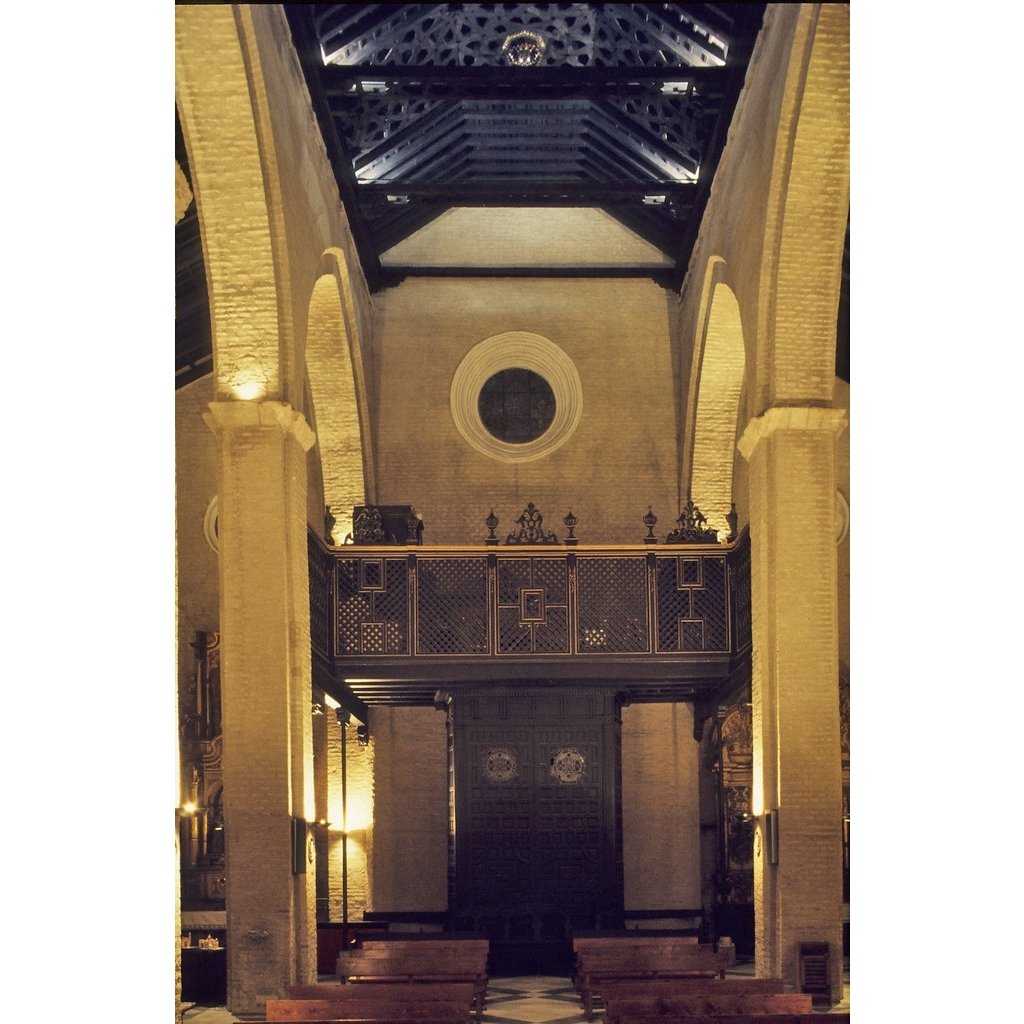
At the foot of the church, above the entrance gate, there is a high choir made up of a structure made entirely of wood.
-
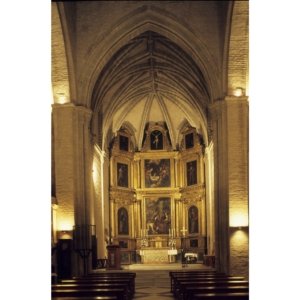
- Vista interior hacia el presbiterio *
-

- Vista interior hacia la entrada principal *
-
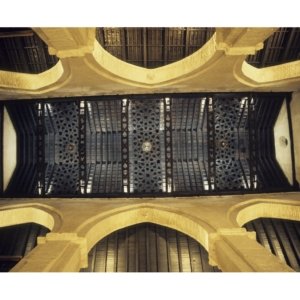
- Artesonado sobre la nave central *

-
- Bóveda gótica sobre el presbiterio *
Main Altarpiece
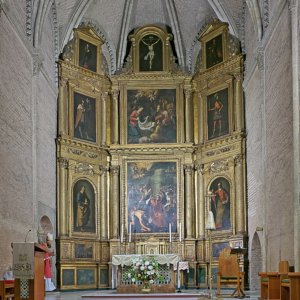
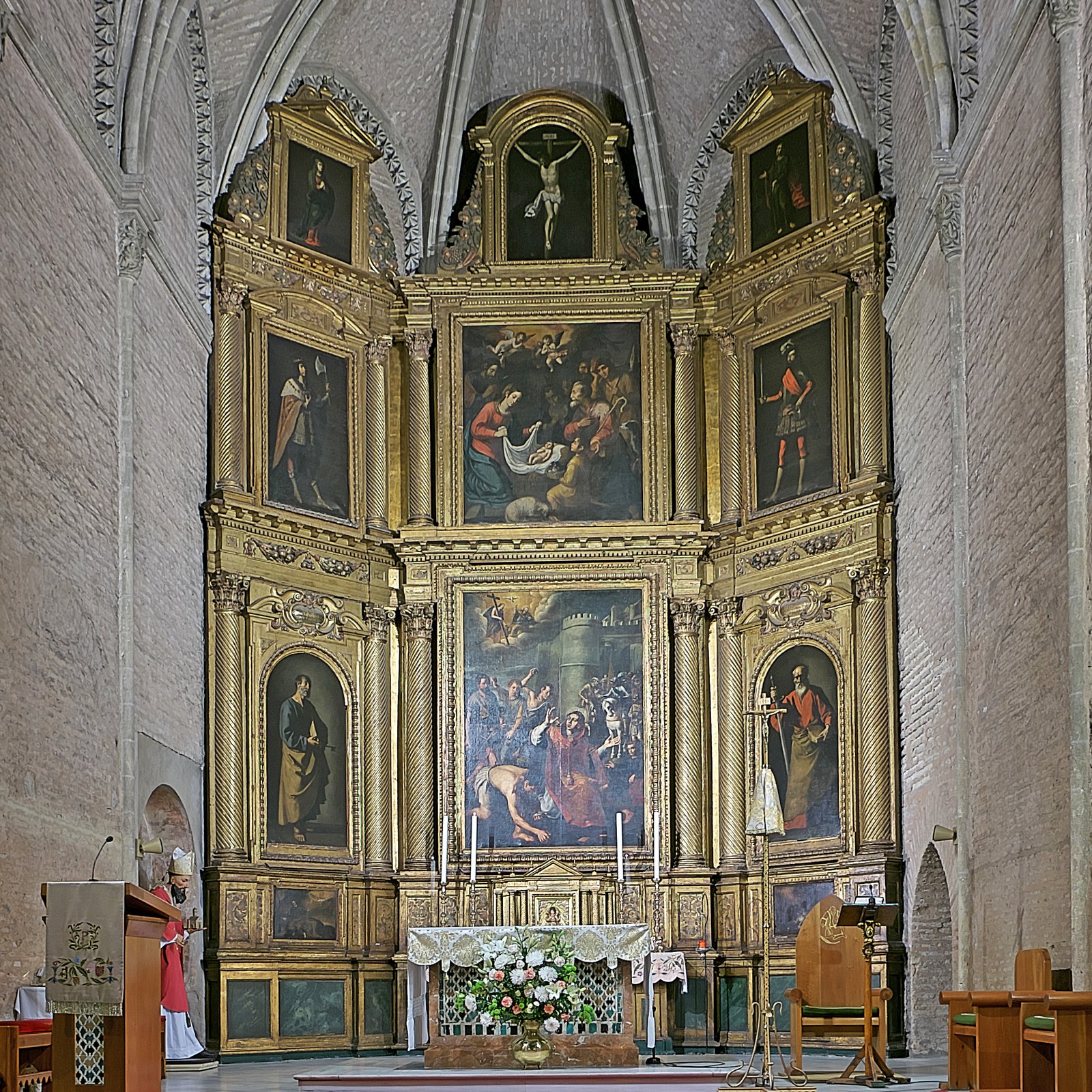
It is a baroque altarpiece commissioned from Luis de Figueroa in 1629. It has two sections and an attic, divided into three streets. It has the particularity that it is completely decorated with paintings and not with sculptures, as is usually the case in Seville.
The paintings on the central street are attributed to the brothers Miguel and Francisco Polanco. From bottom to top we find: “The stoning of the protomartyr Saint Stephen”, “The adoration of the shepherds” and a “Crucified Christ”.
The paintings in the side streets are by Francisco de Zurbarán, an Extremaduran painter who developed his career in Seville and who is one of the greatest exponents of baroque painting in Spain. On the left street, from bottom to top, are San Pedro, San Hermenegildo and La Dolorosa. On the street on the right, San Pablo, San Fernando and San Juan Evangelista.
On the bench there are two other paintings, smaller in size, whose authorship is not clear. On the left is “The Vision of the Impure Animals of Saint Peter” and on the right “The Conversion of Saint Paul.”
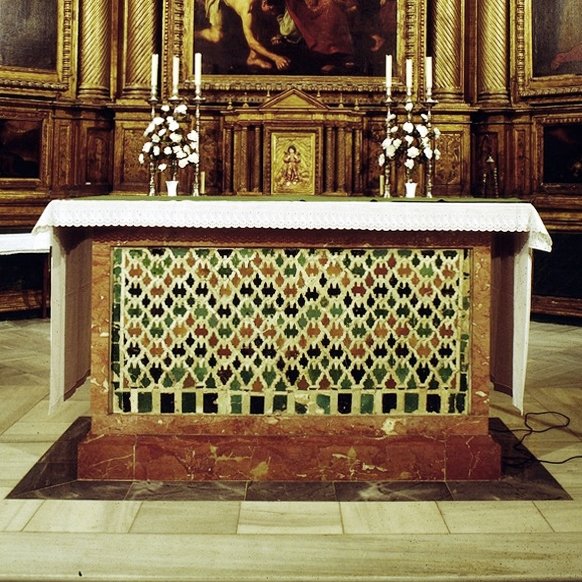
In the presbytery area, the altar can also be highlighted, since its front part is decorated with Mudejar tiling that was found in the church. It presents geometric decoration with the classic “sebka” as a motif.
-
- Retablo mayor (Zurbarán y hermanos Polanco, XVII)
-

- Frontal del altar, con azulejería mudéjar (XV)
Taking a tour of the rest of the church, from an artistic point of view, the following elements can be highlighted:
On the right or Epistle wall:
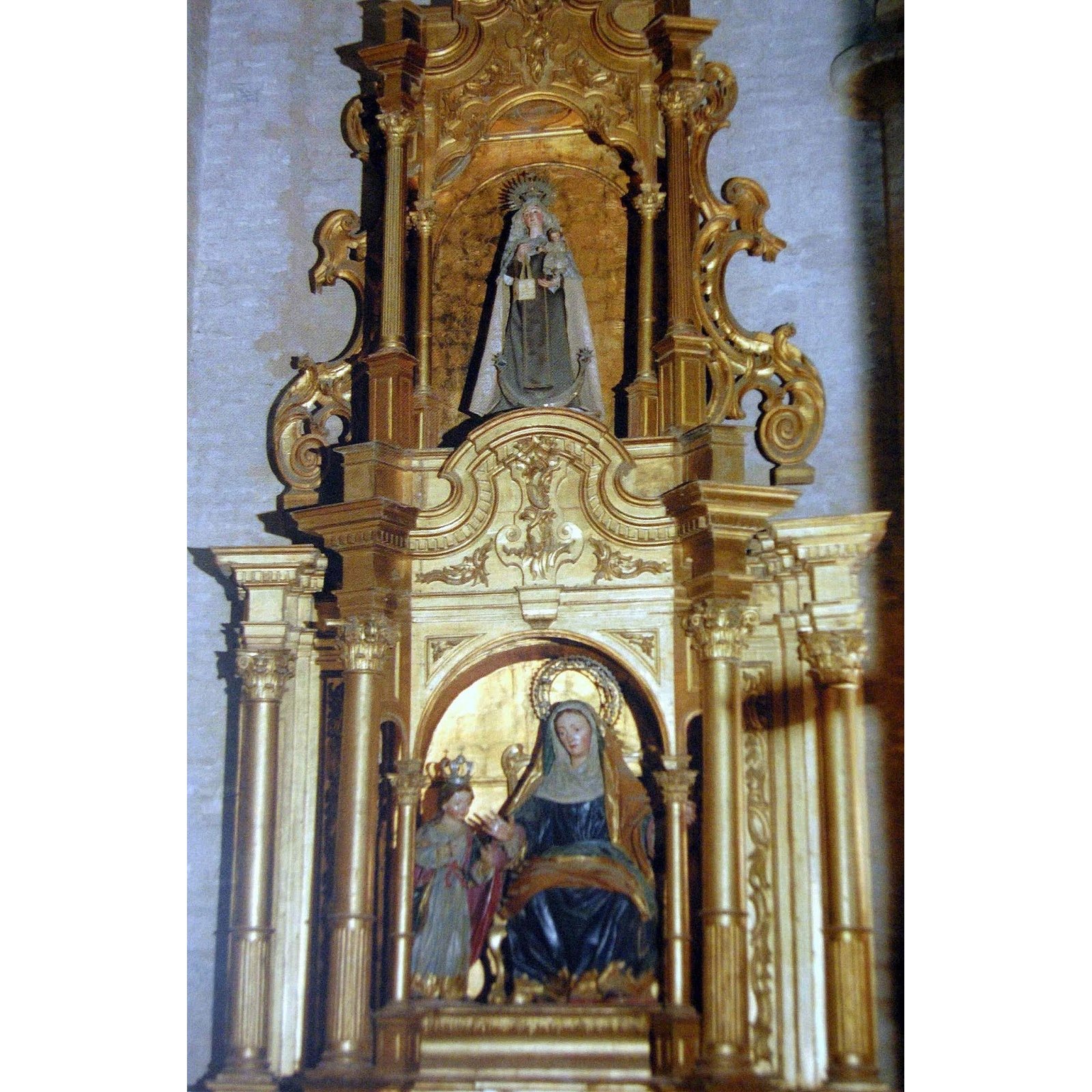
- At the foot there is a small altarpiece dedicated to “Saint Anne teaching the Virgin to read”, an anonymous group from the 19th century. In the attic there is a small dressable image of the Virgin of Carmen.
- Nearby is a 17th century painting reproducing the Virgin of Antigua, an original from the 14th century that is preserved in the Cathedral. This type of paintings, made at different times, are frequently found in Sevillian churches, a reflection of the great popular devotion that the Virgin of Antigua always aroused in the city.
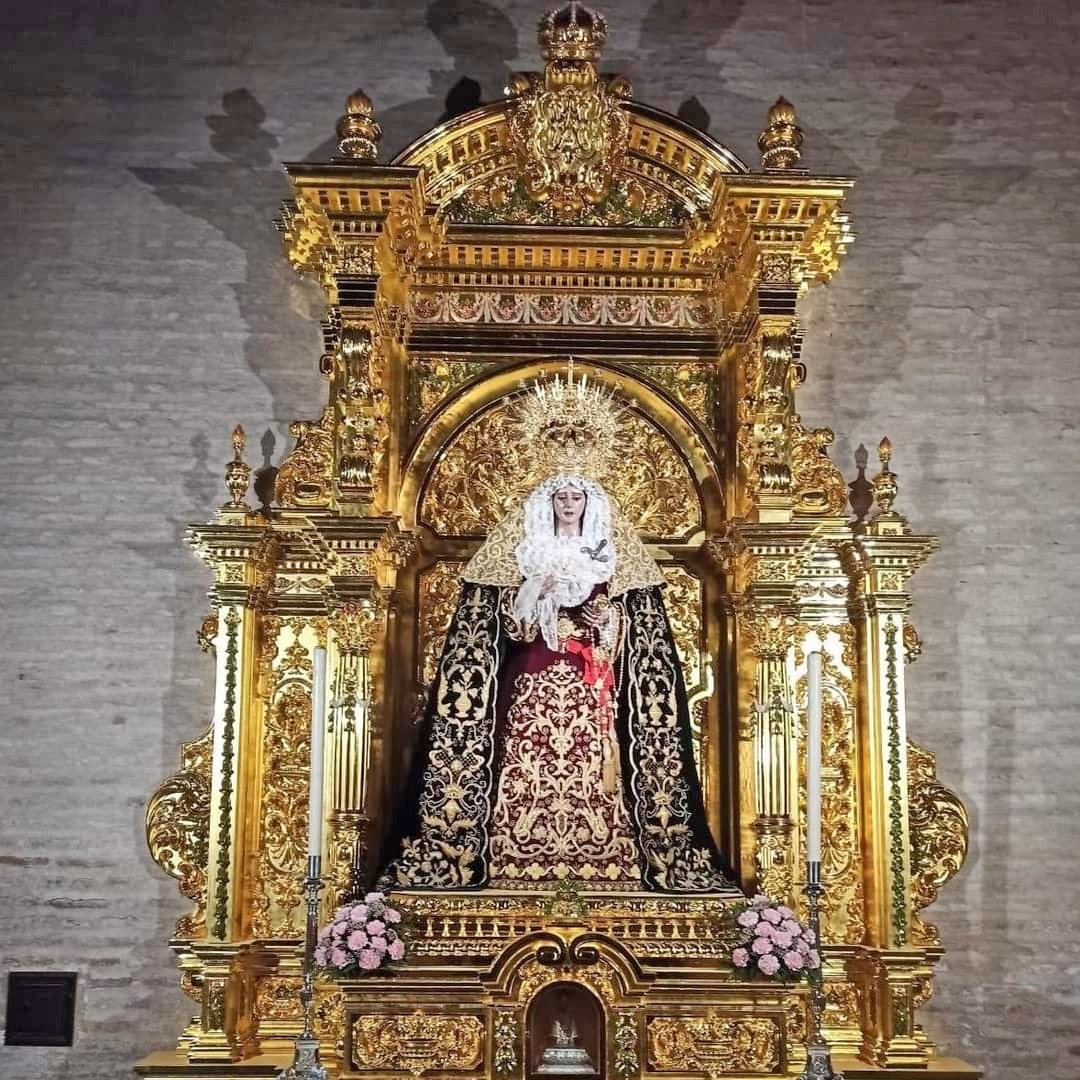
- Altarpiece of the Virgin of the Forsaken, a beautiful painful dress made in 1923 by Manuel Galiano, who is head of the Brotherhood of San Esteban. The altarpiece is in the neo-baroque style and was unveiled in 2022, carved by Pedro Benítez Carrión and gilded by Enrique Castellanos.
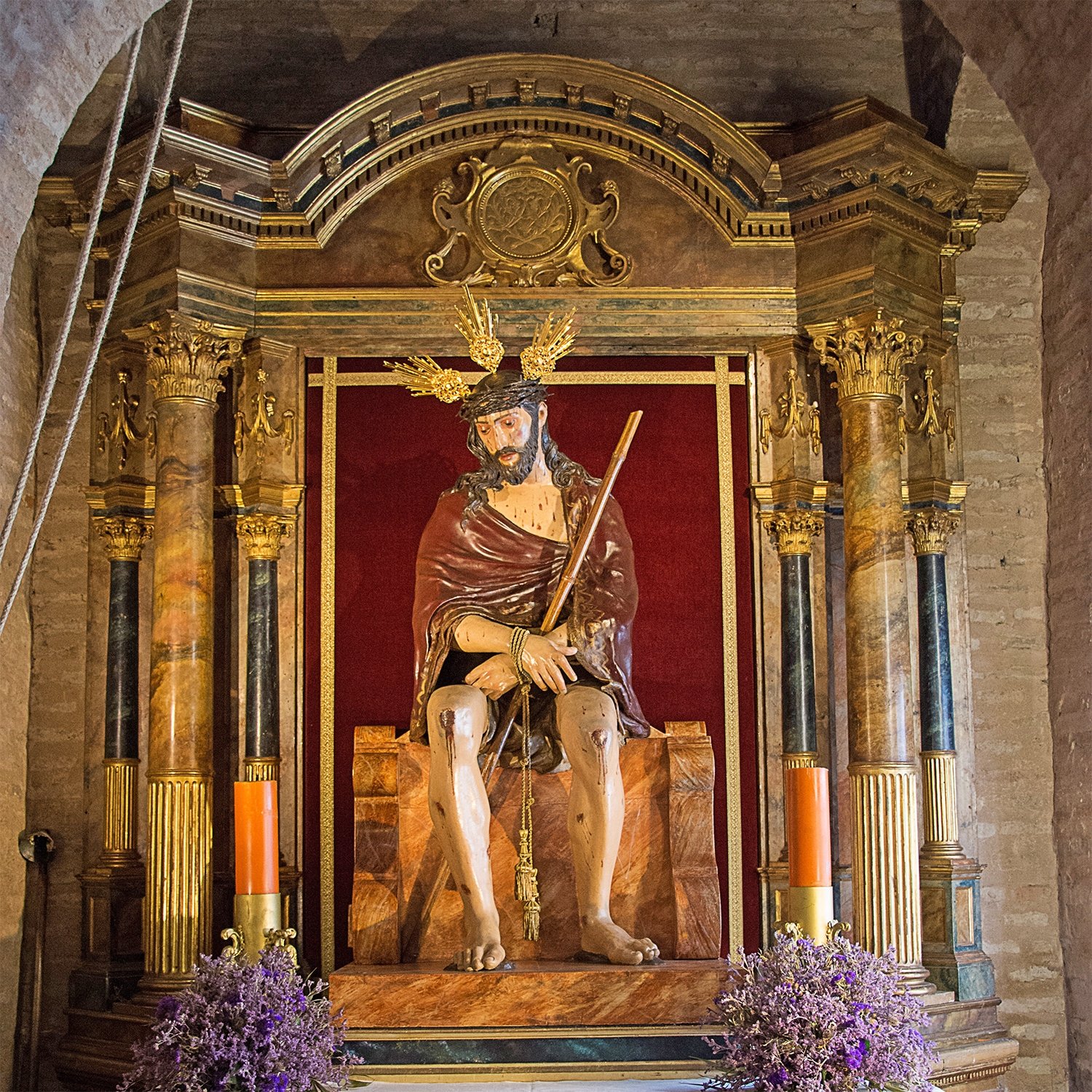
- Chapel of Christ of Health and Good Voyage, located at the head of the Epistle nave. It is a small chapel with a square floor plan, covered by a groin vault. A small altarpiece houses the image of Christ, which has been worshiped in this place since at least the 18th century. The Lord appears seated with the characteristic attributes of an Ecce Homo: crown of thorns, purple mantle and reed as a royal scepter. The work is composed of an original bust in baked clay from the 16th century, to which the body in polychrome wood was added in the 18th century.
On the outside of the chapel a small window opens, so that Christ can be seen from the street, a circumstance that is related to the dedication of Christ. It must be taken into account that the church is located next to the axis of Águilas and San Esteban streets, which was the most direct way to leave the city heading east, to eastern Andalusia. Apparently, it was common for travelers to stop for a few moments to pray before Christ, requesting his protection during their travels. This is why “Health and Good Voyage” was thought of when the dedication of the image was decided, when the brotherhood of San Esteban was founded around it in 1926.
-
- Retablo de Santa Ana
-
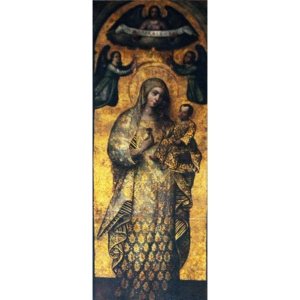
- Virgen de la Antigua (anónimo, XVII)

-
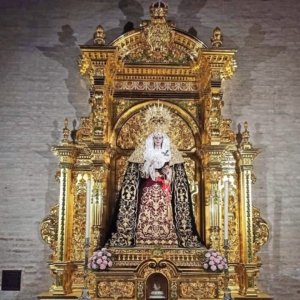
- Retablo de la Virgen de los Desamparados
-
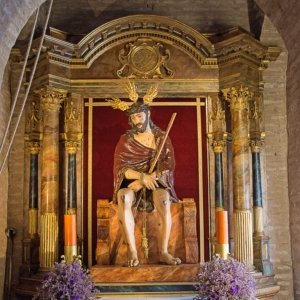
- Nuestro Padre Jesús de la Salud y Buen Viaje
In the Gospel nave (left):
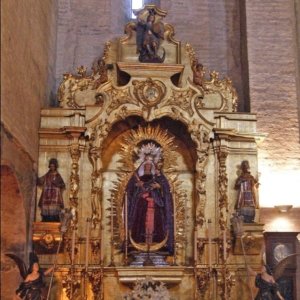
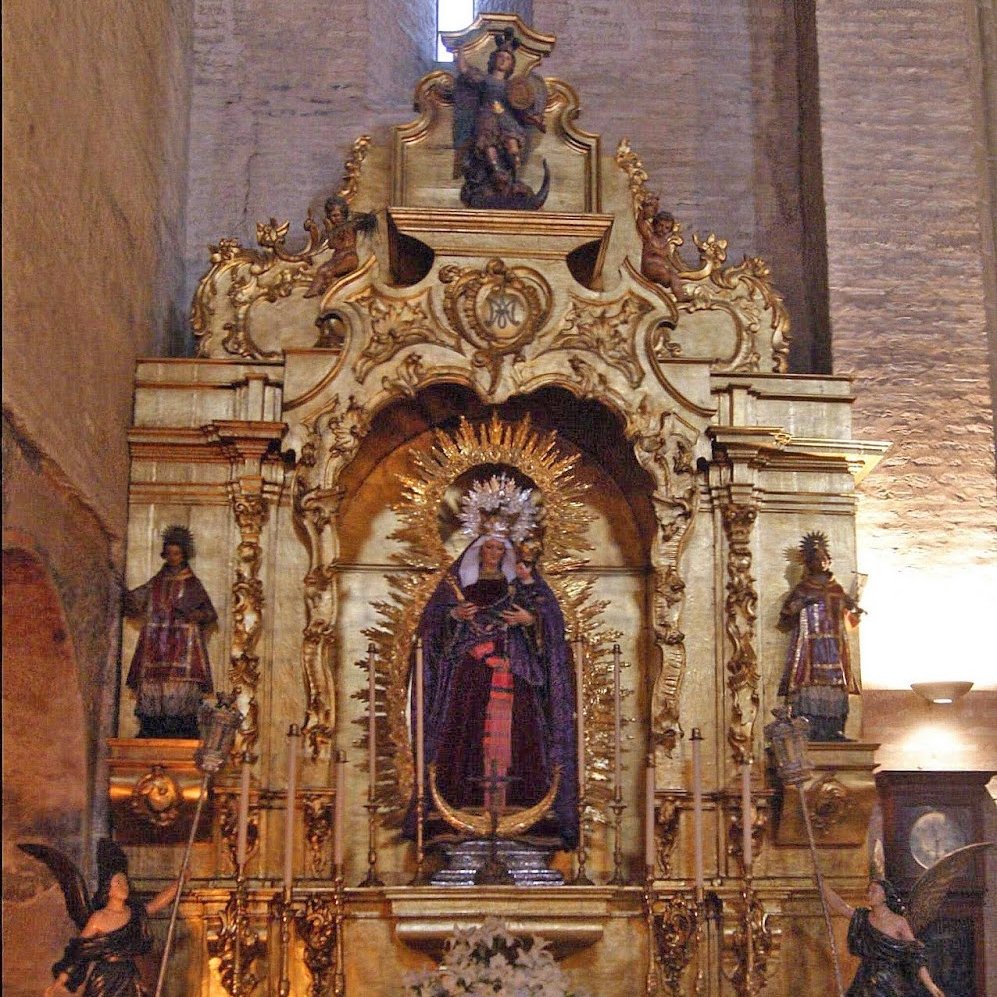
- In the head of the left nave is the neo-baroque altarpiece with the image of Our Lady of Light, an anonymous dress carving from the 18th century, which is the owner of its own brotherhood. In the side streets are San Lorenzo and San Esteban, while in the attic we find “Saint Michael killing the dragon”.
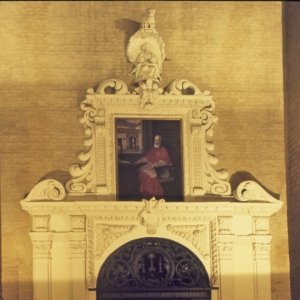
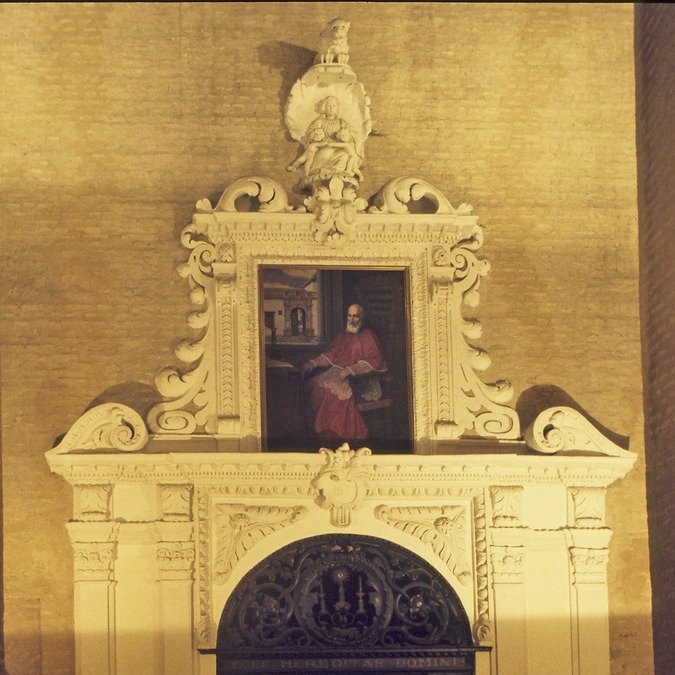
- Sacramental chapel, located next to the left or Gospel nave. It is accessed through a door guarded by a wooden grill from the second half of the 17th century. This type of bars were quite common, but their conservation is obviously much more problematic than in the case of metal ones. The entrance is framed by a neo-baroque doorway, with a niche above the opening in which is located a canvas representing San Pedro de Ribera, born in the parish of this parish. It was made by the Sevillian painter Alfonso Grosso around 1960.
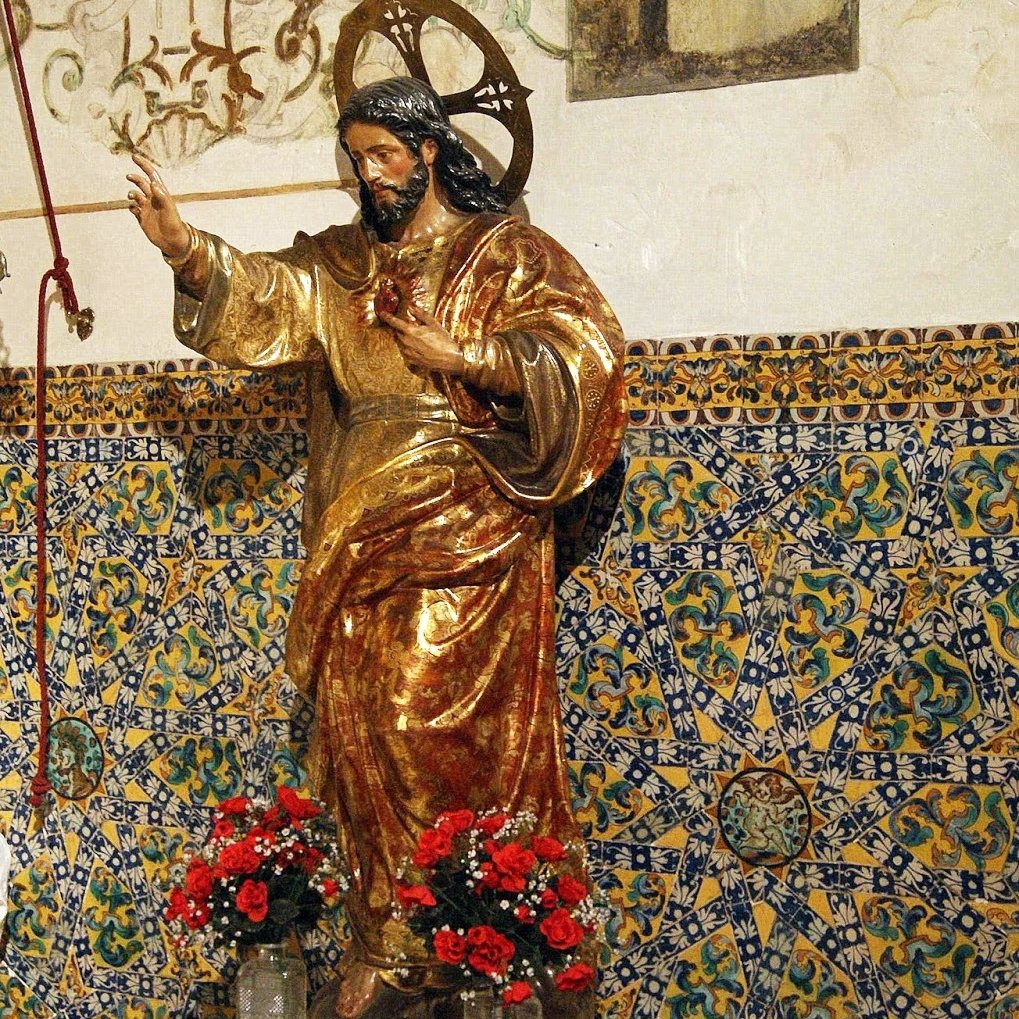
Inside, the chapel has a square floor plan and is covered by a lowered dome, set on pendentives. The exuberant pictorial and plasterwork decoration stands out, similar in style to those that can be found in Santa María la Blanca, which is why its authorship has been linked to the Borja brothers. Also very striking is the splendid tiled plinth, dating from the 18th century and on which some curious geometric motifs are arranged. It is a quite notable specimen in the context of Sevillian tile work.
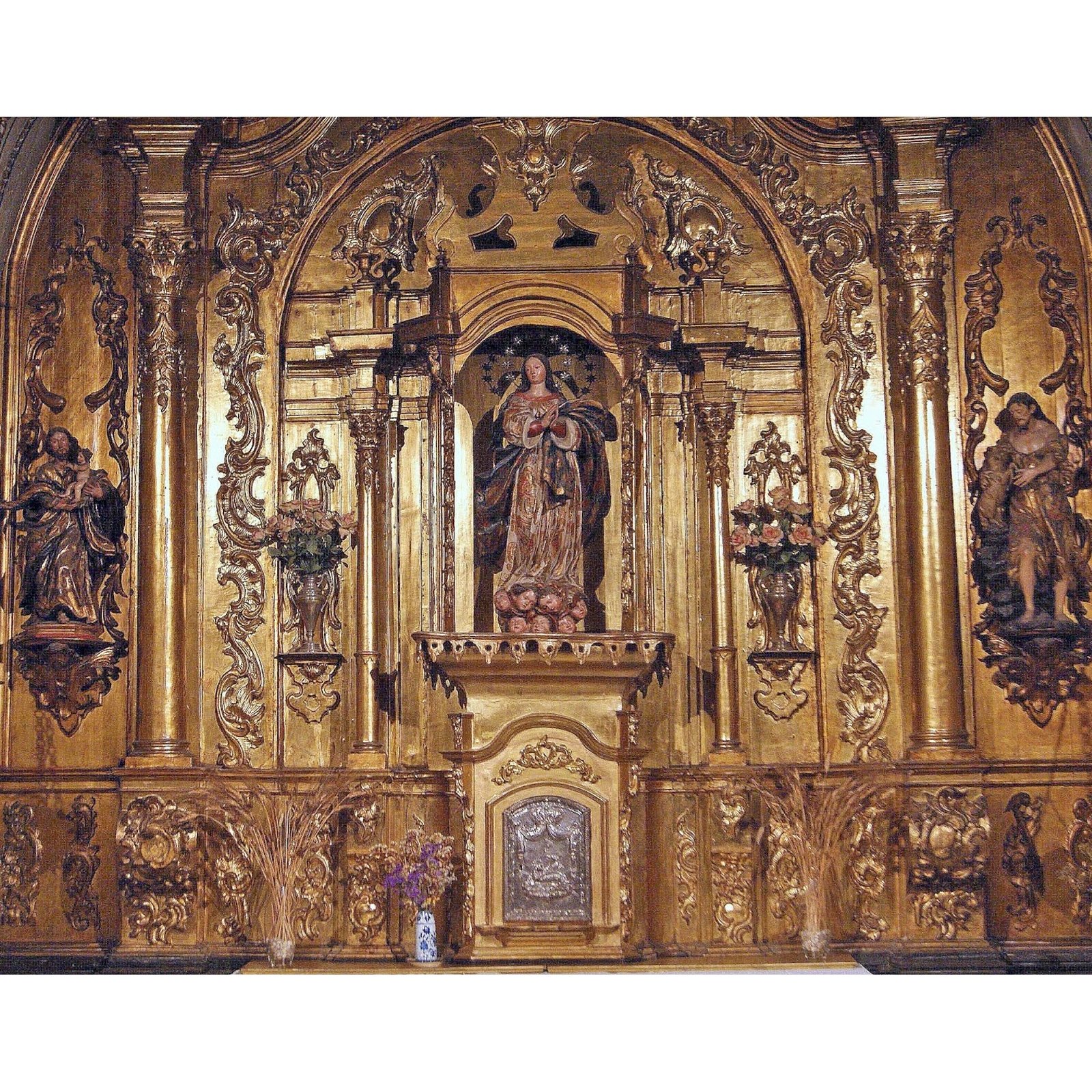
The altarpiece of the chapel houses an Immaculate Conception in its central niche, while we can find Saint Joseph and Saint John the Baptist on the sides. The altarpiece and carvings are also from the 17th century.
On one side of the chapel there is a small polychrome wooden sculpture of the Sacred Heart of Jesus. Apparently it is a work from the youth of Sebastián Santos Rojas, one of the most notable image makers of the 20th century in Seville.
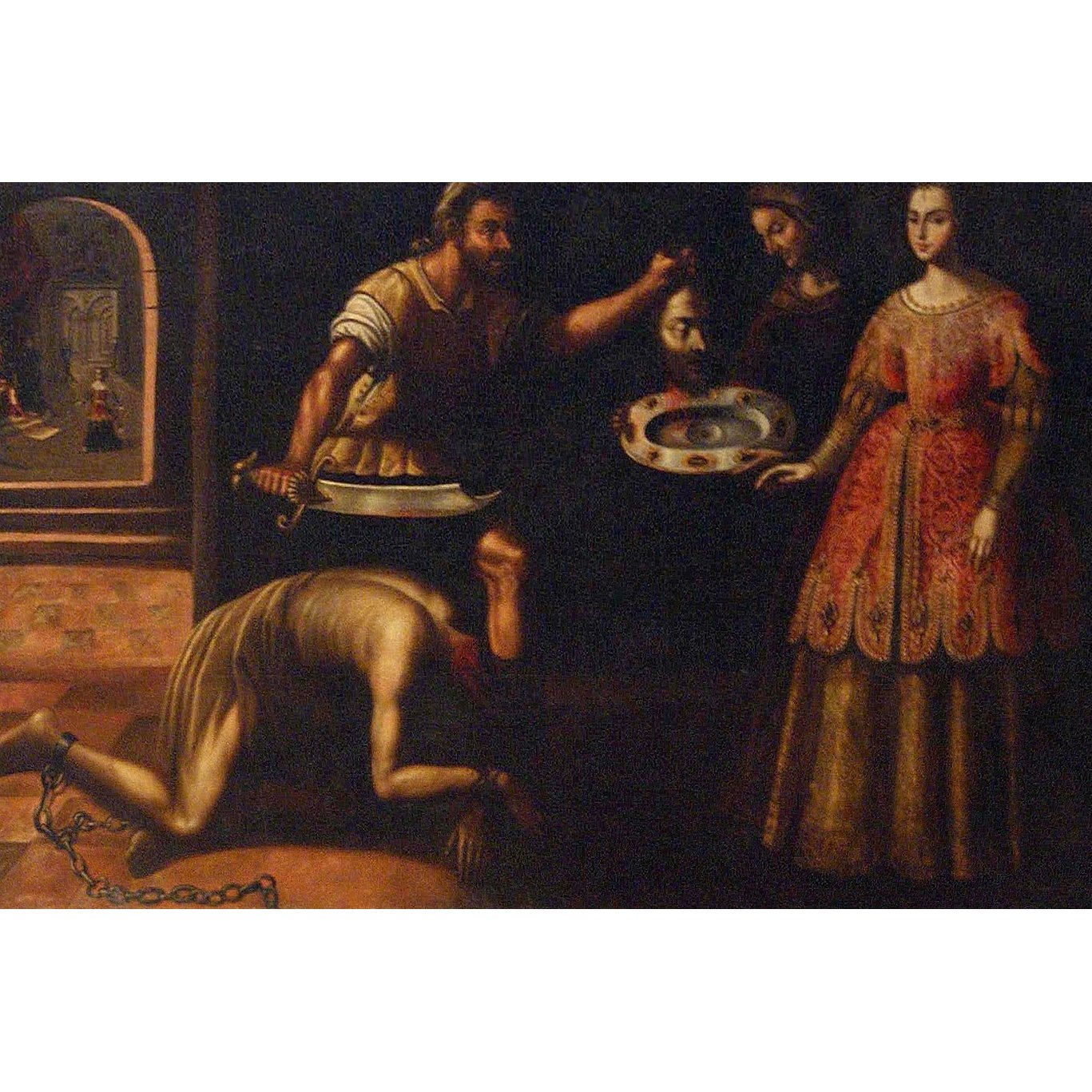
- On the wall next to the access to the chapel you can see a canvas with “The Beheading of Saint John the Baptist”, it is from the 17th century and by an anonymous author, although its possible Italian origin has been noted.
- Finally, at the foot of the nave, there is a Rococo altarpiece from around 1780 dedicated to Saint Joseph, who is represented with the Child in the central niche. He is accompanied by Saint Anthony of Padua and Saint Bartholomew in the side streets, and Saint Blaise in the attic.
-
- Retablo de la Virgen de la Luz º
-
- Portada de la capilla sacramental *
-
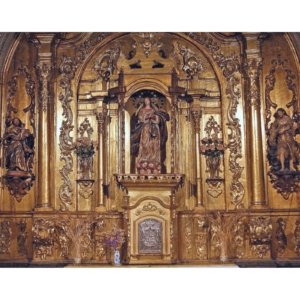
- Retablo de la capilla sacramental º
-
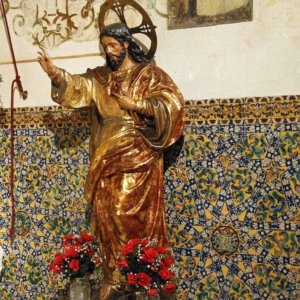
- Sagrado Corazón (Sebastián Santos Rojas, c. 1925). Zócalo de azulejos de la capilla sacramental º
-
- “La decapitación de San Juan Bautista” (anónimo, XVII)
-

- Retablo de San José (XVIII) º
