The church of San Luis de los Franceses constitutes one of the most outstanding examples of Sevillian baroque, with a clear influence of the great works of religious architecture in Rome in the 17th century.
It has a central plan in the shape of a Greek cross, preceded by the entrance by an atrium in which the choir is located. The arms of the cross on the floor plan are finished in the shape of an exedra and in the center of the complex rises an imposing dome on a circular drum.
History
It is the church of the old novitiate of the Company of Jesus in Seville. Its works began in 1699 and continued until its consecration in 1731. Leonardo de Figueroa was the architect in charge, although it seems that the plan of the project, with a marked Italian character, was imposed by the Company. Its similarity has been noted with the plan of Santa Agnese in Rome, the work of the architects Girolamo and Carlo Raimaldi some fifty years earlier. Other architects also participated in its construction, such as Matías de Figueroa, son of Leonardo, or Diego Antonio Díaz, to whom the finishing of the towers is attributed.
Outside
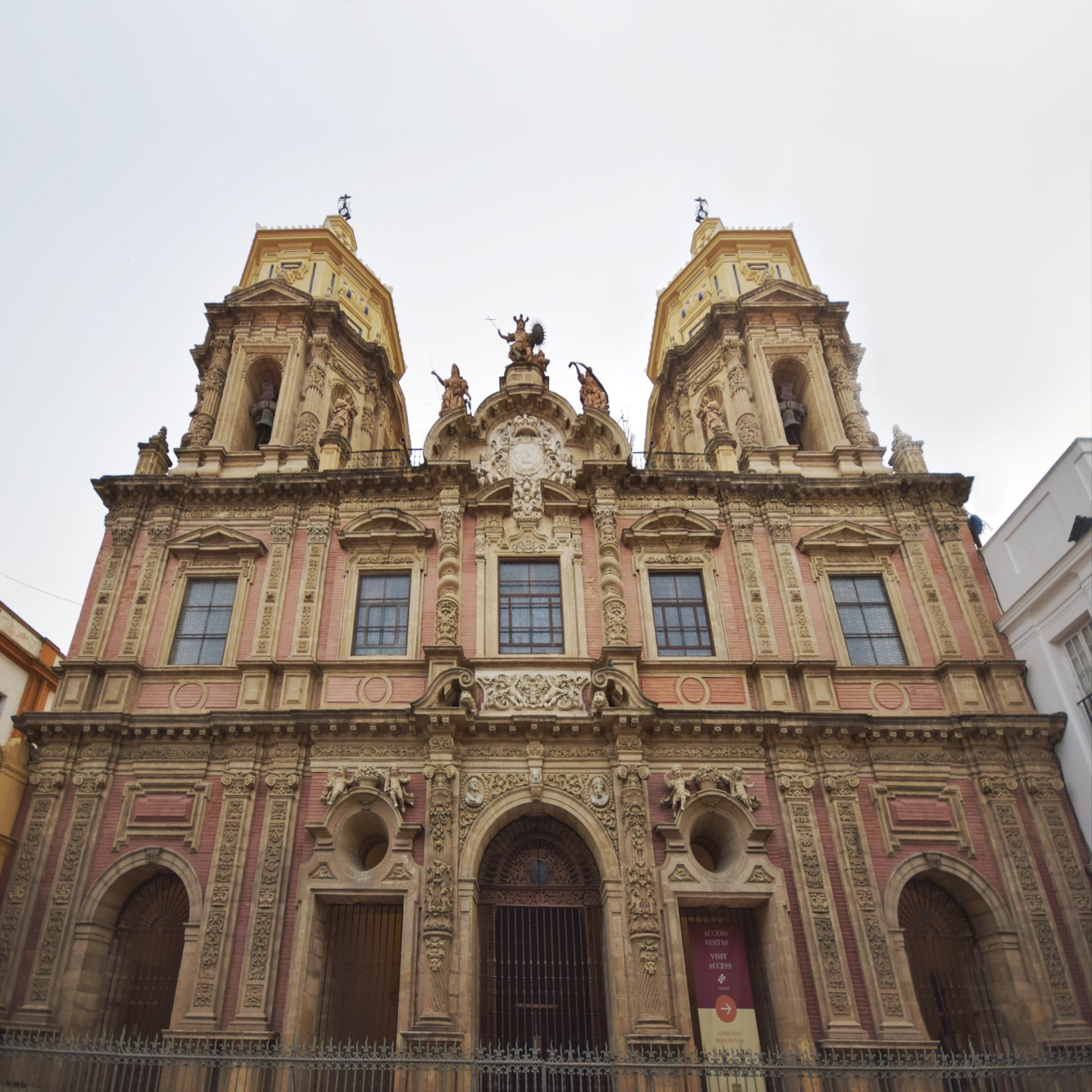
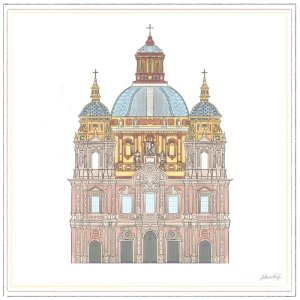
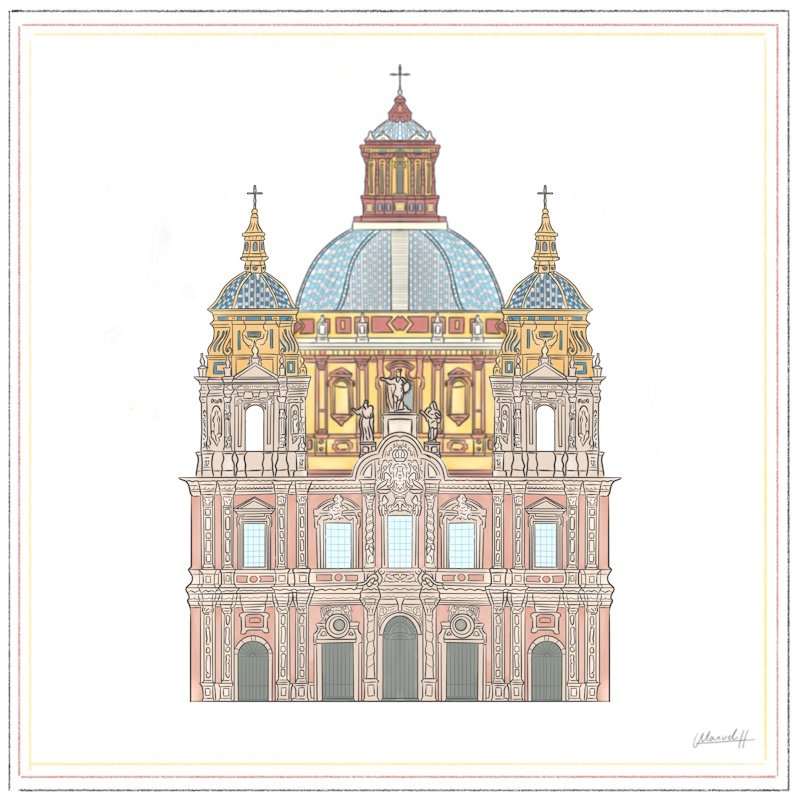
The exterior façade has two horizontal bodies divided by five vertical modules, with the central one accentuated by its greater decorative profusion. In addition, it is finished with a trilobed pediment on which the figures of the three archangels appear. The entire façade shows the traditional bichrome of the Sevillian baroque, with the facings in painted brick and the stone pilasters and decorative stone elements.
At the ends of the façade there are two robust bell towers with an octagonal section, decorated with sculptures of the Evangelists. Both flank the monumental hemispherical dome, set on a drum, covered with glazed tiles and crowned by a lantern.
Inside
The interior of the temple transmits in an unmatched way the sensation of exuberance and decorative profusion of the Baroque, with a perfect symbiosis between architecture, sculpture and painting. Attached to the buttresses that support the dome are monumental Solomonic columns with golden composite capitals that accentuate the feeling of dynamism of the space.
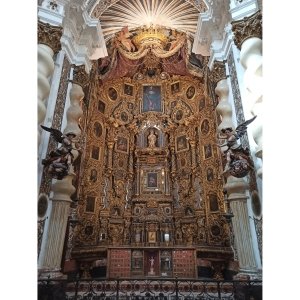
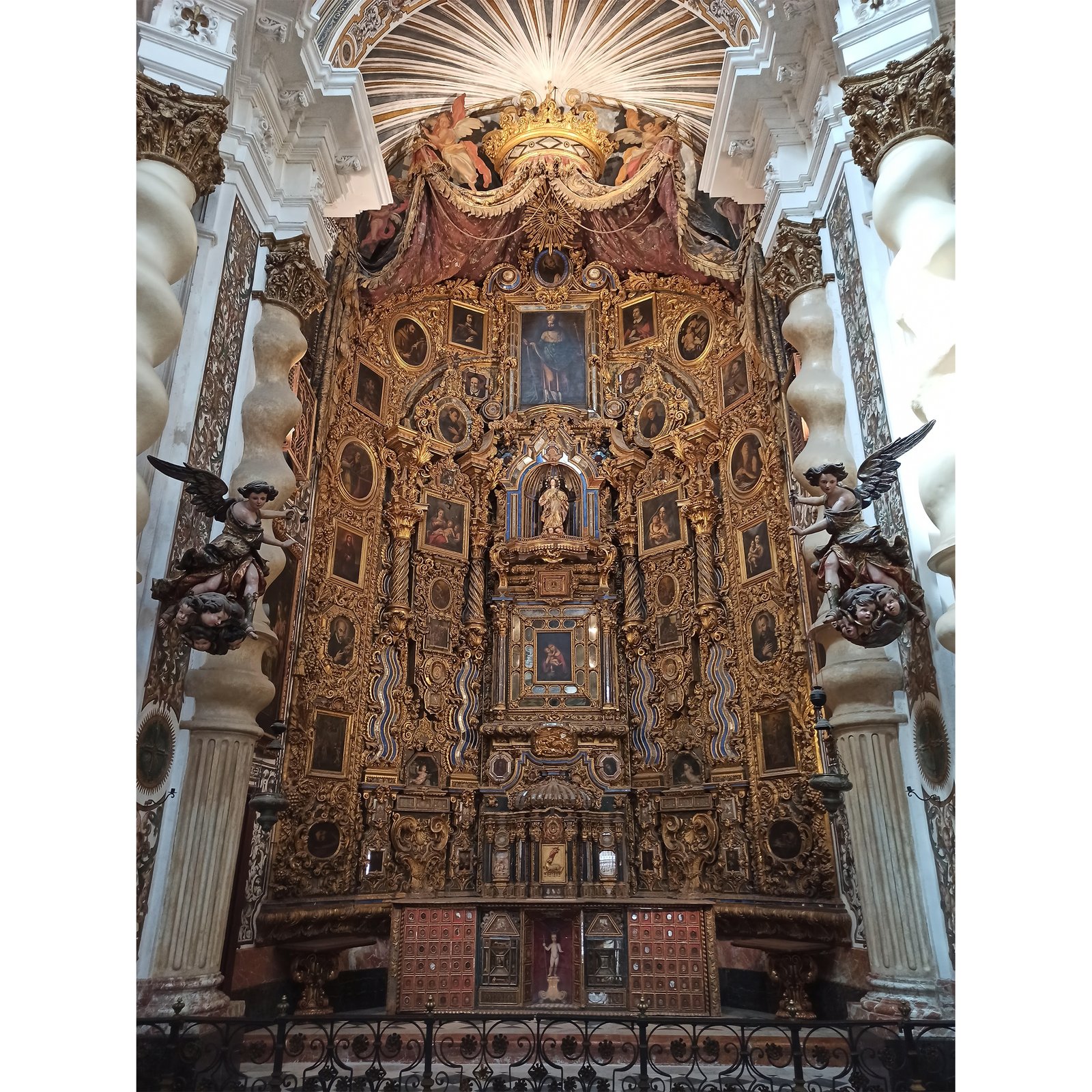
The main altarpiece is the work of Pedro Duque Cornejo and is dated around 1730. It is a true compendium of baroque elements, with paintings, sculptures, relics and architectural elements arranged to form a motley ensemble, without any ordered structure. At the top, it is covered by a large canopy that shelters the whole like a canopy, crowned by a large royal crown.
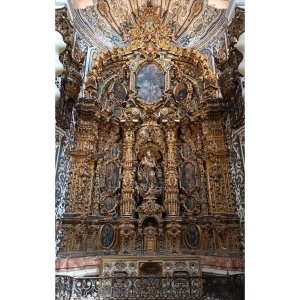
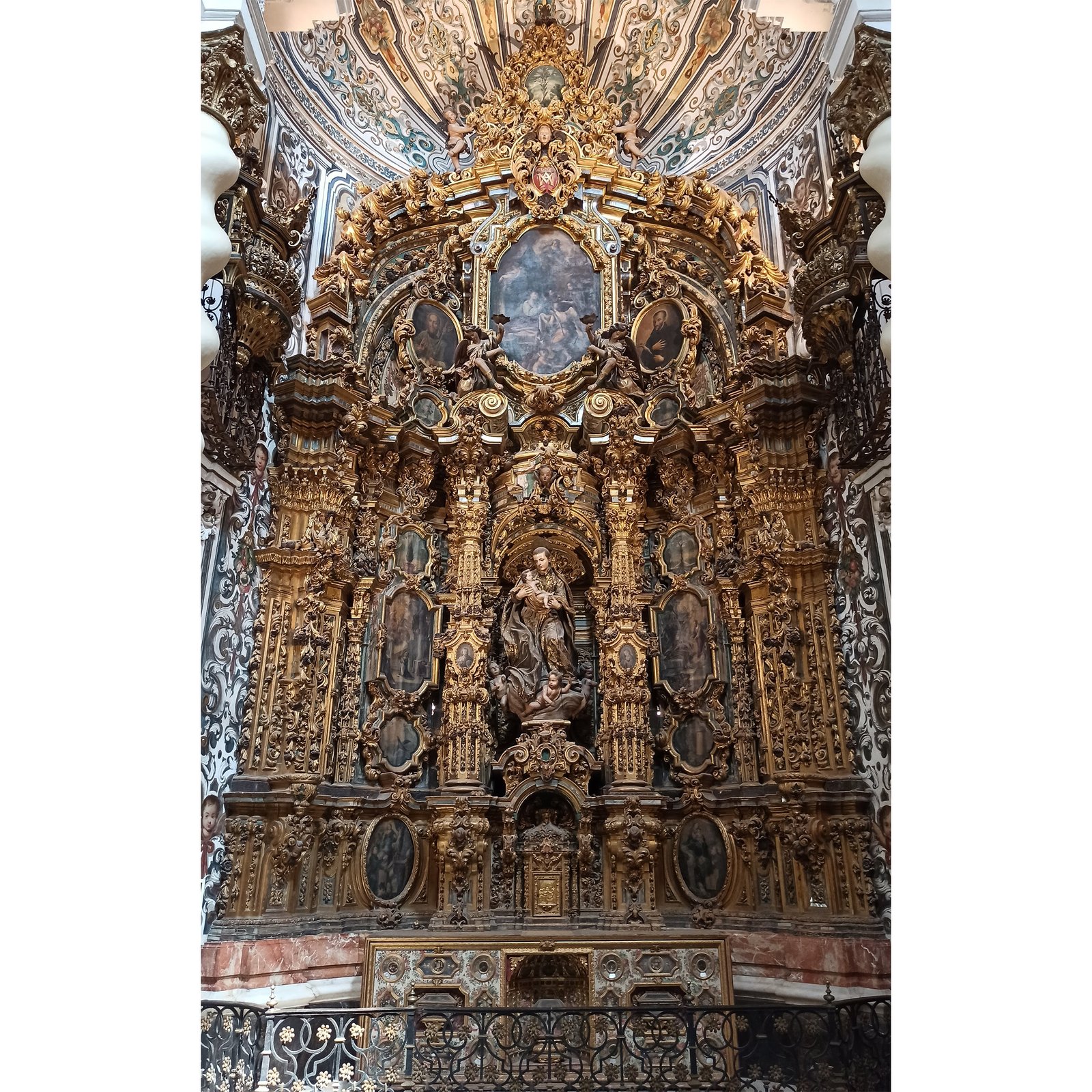
The two altarpieces on the side arms, dedicated to San Francisco de Borja and San Estanislao de Kostka, are also due to Duque Cornejo. Both consist of an identical structure, with a bench, a central body divided into three streets, and an attic. In the central niches are the sculptures of the owners and on the sides a series of canvases that allude to them, the work of Domingo Martínez.
In the four buttresses that support the dome there are four smaller altarpieces, but with a similar structure and decorative exuberance. Saint Francis Xavier, Saint Ignatius of Loyola, Saint John Francis of Regis and Saint Louis Gonzaga are dedicated.
Domestic Chapel
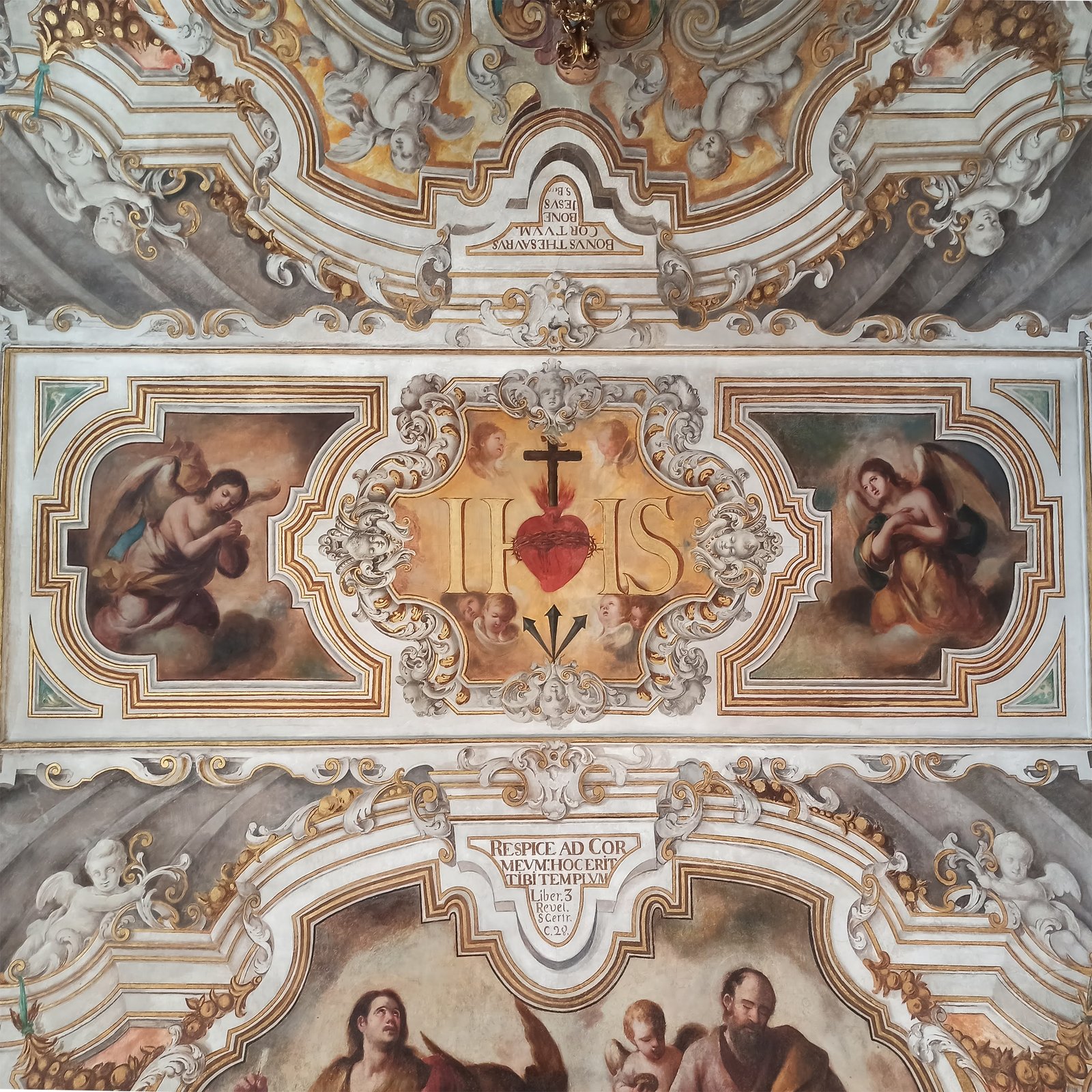
In addition to the church, within the premises of San Luis de los Franceses there is another space of enormous artistic value called the "domestic chapel". It has a single nave, covered by a barrel vault with lunettes and transverse arches, while the presbyter area is covered by an elliptical vault. The altarpiece is also the work of Duque Cornejo, from around 1730, and includes a profusion of Jesuit saints. Among the numerous sculptures, it is worth highlighting an Immaculate Conception that stands above the Tabernacle in a style very close to that of Gregorio Fernández.
The entire chapel is profusely decorated. On the walls there are a series of paintings of the apostles, interspersed with reliquaries and a set of Flemish bronzes on the life of the Virgin. Equally rich is the pictorial decoration of the presbytery and the vaults, works by Domingo Martínez and his workshop.
-
- Alzado
-

- Interior de la cúpula

-
- Retablo mayor
-

- Retablo de San Francisco de Borja

-
- Retablo de San Estanislao de Kostka
-

- Capilla Doméstica

-
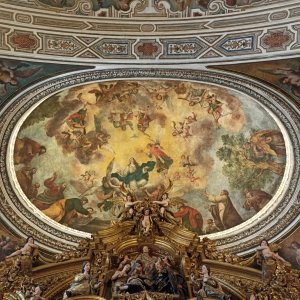
- Capilla Doméstica (detalle)

-
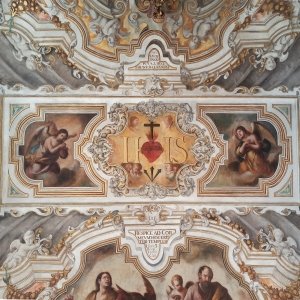
- Sacristía de la Capilla Doméstica (detalle)