SUSANA BEN SUSON (SUSONA)

SUSANA BEN SUSÓN (LA SUSONA)

(15th century)

The woman popularly known as "la Susona" is probably the most famous figure of the old Jewish quarter among the Sevillians. She lived in the street that today bears her name at the end of the 15th century and was the daughter of Diego ben Susón.

We know that the events that made her famous occurred around 1481, when the members of the Inquisition sent to Seville were working hard to ensure that those Jews who adopted the Christian faith did so sincerely. Throughout the 15th century, a large part of the Sephardic Jews decided to convert to Christianity as a way of avoiding the terrible and growing conditions that the Mosaic faith brought to the peninsular kingdoms.

According to the most widespread version of the story, Susona's father was one of these "new Christians" who had changed religion more out of pragmatism than conviction. When the Inquisition began to order arrests and imprison suspected converts, fear grew among the members of this community, to the point that some of them considered organizing a revolt that would end the lives of the inquisitors. Apparently, Diego ben Susón was one of the ringleaders of this revolt.

From then on, the versions of the story differed greatly. We will stick here to the one told by Mario Méndez Bejarano in his "History of the Jewish Quarter of Seville" (1914):

Susan [Diego ben Susón] had a daughter of surprising beauty; she was called "the beautiful woman" and commonly called Susona; she denounced the plot to the inquisitors but it is most likely that she was not the one who informed on her, since she received in her house a Christian gallant who, in his religious zeal, must have reported to the Holy Office the confidences she shared with him. Whatever the case, the conspirators were surprised with weapons in Benedeva's house by a hundred men and were locked up in the dungeons of the Inquisition. The main conspirators: old Susan, the learned Abolafia, the venerable old man Benedeva and the rich Sauli and Torralba were burned on February 6, 1481. It is said that when Susan went to the stake, the rope she wore around her neck dragged along the ground. Maintaining his Andalusian charm until the last moment, he said to those who accompanied him: “Take this Tunisian cap off me.”

Reginaldo Romero, bishop of Tiberias, did everything possible to force Susana to profess, but the sensual pleasures of the Jewess were poorly suited to the discipline of the cloister and leaving the convent before professing she lived with various lovers, of increasingly lower status, to end up in the arms of a spice seller. In her will, the “beautiful Jewess” expressed the wish that her head be placed on the door of her house “where she had lived badly, as an example and punishment for her sins.”

According to tradition, Susana’s skull was displayed on the façade of her house for centuries. Over time, the place began to be called the “street of Death,” given the logical association between this concept and the skull. It was called that until 1845, when it was renamed to its current name, “street of the Susona". The exact location of the house and where the skull was displayed are unknown. In the "Historical Report of the Jewish Quarter of Seville" (José María de Espinosa, 1820) a manuscript is cited in which this reference appears:

His skull is on a wall, opposite Calle del Agua at the exit of the narrow passage that leads to the Alcázar where the water flows.
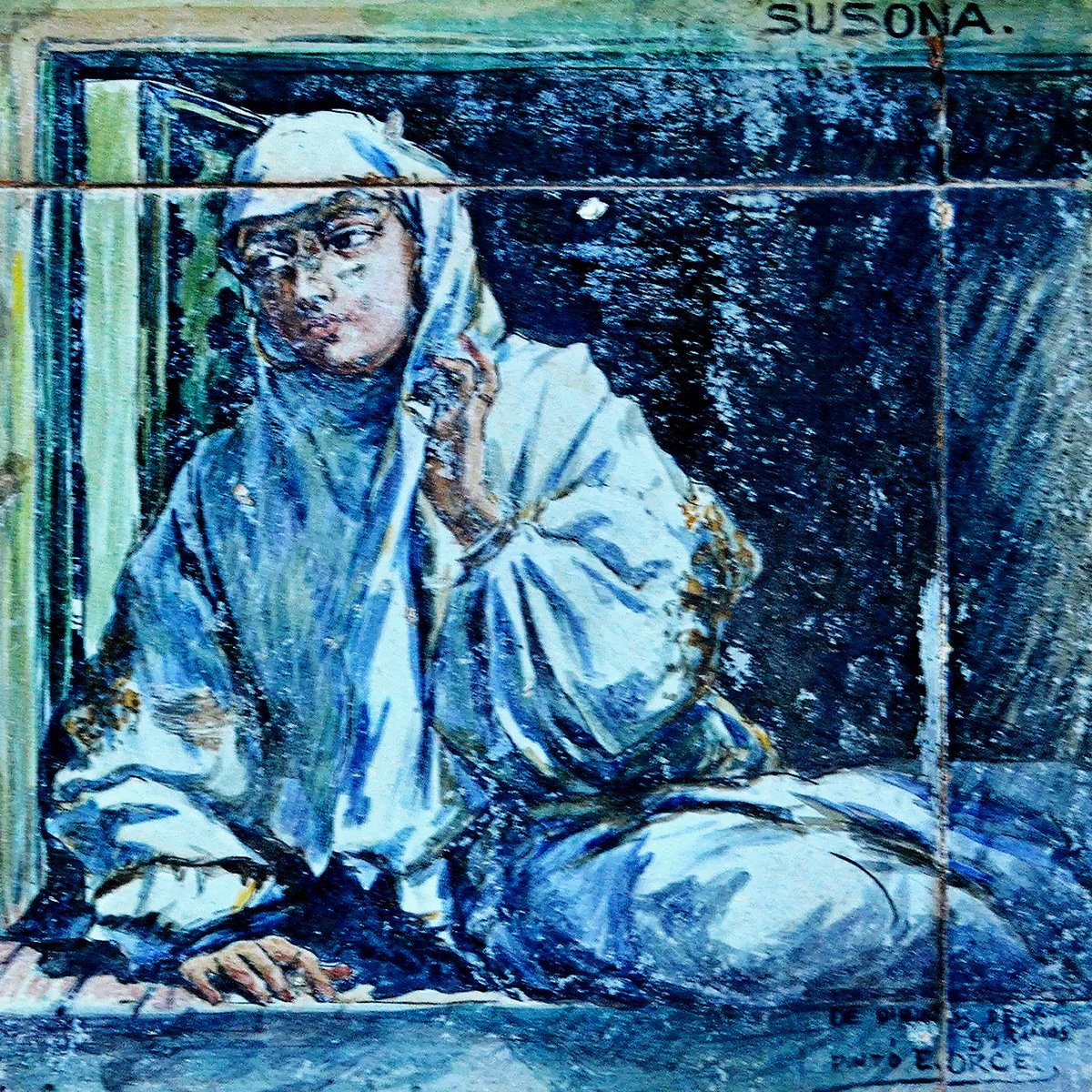
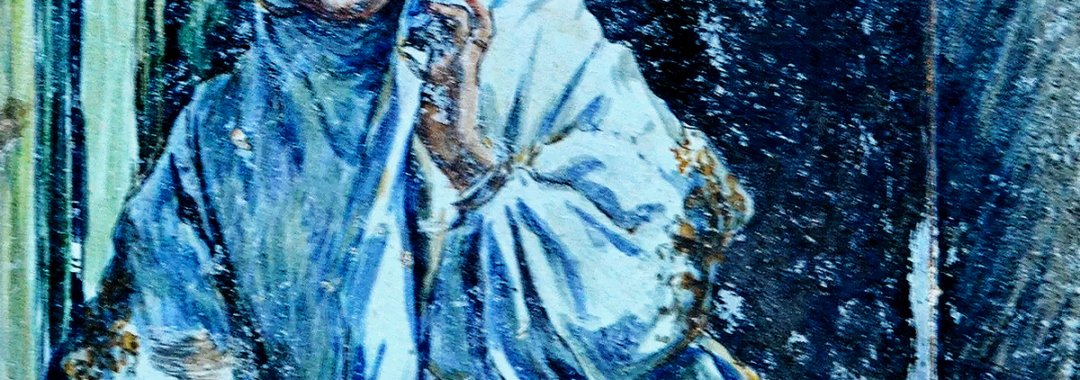
Representation of Susona in the ceramic decoration of the Mas y Prat roundabout in the María Luisa Park. It was made by Enrique Orce at the Manuel Ramos Rejano Factory, using a painting by José García Ramos as a model.

Tile on the façade of a house on Susona Street, marking the place where, according to tradition, the skull of the "beautiful woman" was displayed.
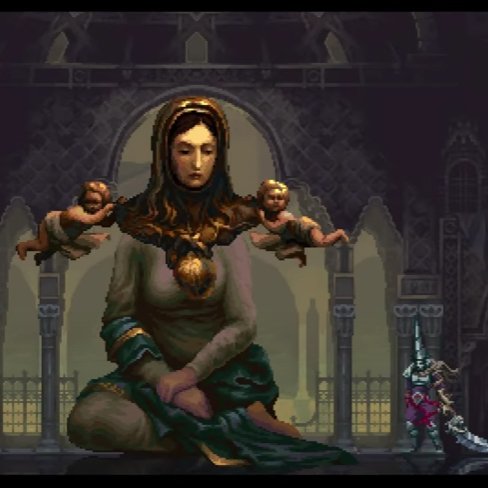
Image from the video game "Blasphemous II", by the developer The Game Kitchen, where you can see the character "Svsona, fermosa fembra".

The Santa Cruz neighbourhood was extensively renovated in the first decades of the 20th century, making it difficult to locate the scene of the events. In general, tradition places Susona's house at number 10 on her street, where a small tile can be seen that recalls the story.

In any case, the character of Susona is part of the popular heritage of Seville. Versions of her story can be found in essays about the city and novels. There is also an opera called "La Bella Susona", by the composer Alberto Carretero, and the story also appears in one of the chapters of the historical series "Isabel" (RTVE). The young Sevillian has even inspired one of the central characters in a video game. It is "Blasphemous II", by the developer The Game Kitchen. In this game, "Svsona, Fermosa Fembra" is one of the bosses to defeat.
MOSSE IBN ZARZAL

MOSSE IBN ZARZAL

(14th-15th century)

A doctor and poet born in Seville, a city where his father, also a doctor, had recently settled. His exact date of birth is unknown, but he lived between the 14th and 15th centuries. He achieved a great reputation as a doctor, and personally took care of the health of King Pedro I and, years later, of Enrique III.

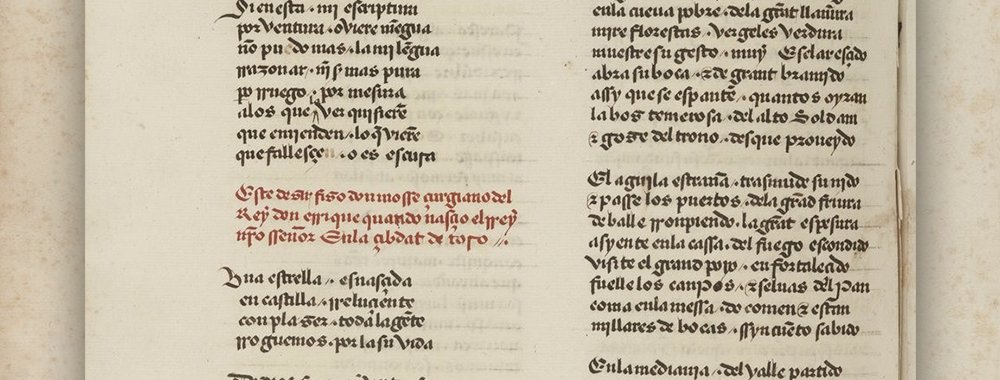
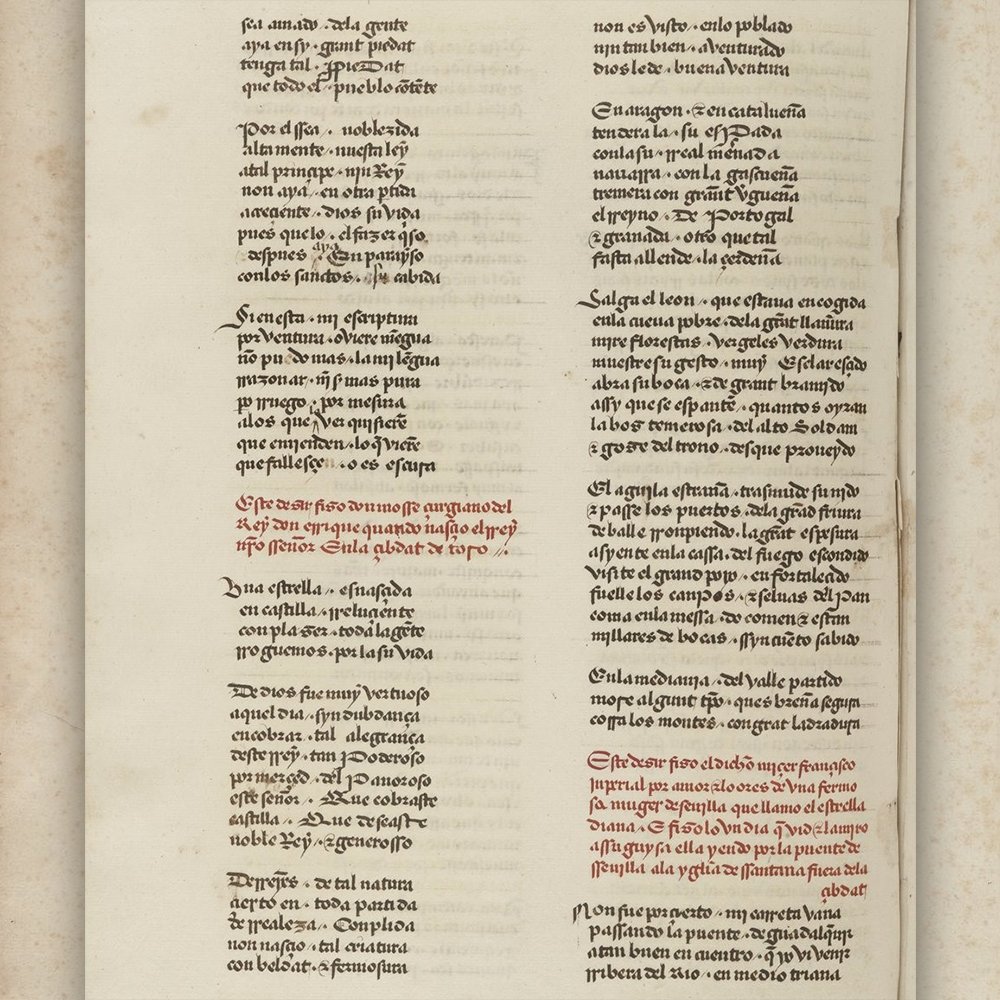
From his role as a poet, a poem that he composed in 1405 on the occasion of the crown prince, the future Juan II, has been preserved. It forms part of the famous collection of poems known as the "Cancionero de Baena". It is preceded by a short introduction that says: Este dezir fizo Don Mossé çurgiano del Rey don Enrique quando nasçio el Rey nuestro señor en la çibdat de Toro (This saying was made by Don Mossé, surgeon to King Enrique, when our lord the King was born in the city of Toro). We include the complete poem here:

Page containing the poem by Mosse ibn Zarzal, whose first verse is Una estrella es nascida (A star is born). It is found on folio 74.v of the "Cancionero de Baena", the original of which is preserved in the National Library of France.

Una estrella es nascida

en Castilla reluciente:

con placer toda la gente

roguemos por la su vida.

De Dios fué mui venturoso

aquel dia sin dubdanza

en cobrar tal alegranza

deste rei tan poderoso:

por merced del pavoroso

este gran señor cobraste,

Castilla, que deseaste

noble rei é generoso.

De reyes de tal natura

cïerto en toda partida,

de realeza complida

non nasció tal criatura.

Con beldad é fermosura

non es visto en lo poblado,

nin tan bien aventurado.

¡Dios le dé buena ventura!

N’ Aragon i Catalueña

tenderá la su espada,

con la su real mesnada:

Navarra con la Gascueña

tremerá con gran vergüeña

el reino de Portugal

é Granada otro que tal

fasta allende la Cerdeña.

A star is born

in shining Castile:

with joy all the people

let us pray for its life.

God was very fortunate

that day without doubt

in gaining such joy

from this powerful king:

by the mercy of the fearful

this great lord you gained,

Castile, that you desired

a noble and generous king.

From kings of such nature

true in every game,

of complete royalty

such a creature was not born.

With beauty and splendor

he is not seen in the populated areas,

nor so fortunate.

May God give him good fortune!

In Aragon and Catalonia

he will stretch his sword,

with his royal men:

Navarre with Gascony

will tremble with great shame

the kingdom of Portugal

and Granada another than that

far beyond Sardinia.

SALOMÓN BEN ABRAHAM

SALOMÓN BEN ABRAHAM

(14th century)

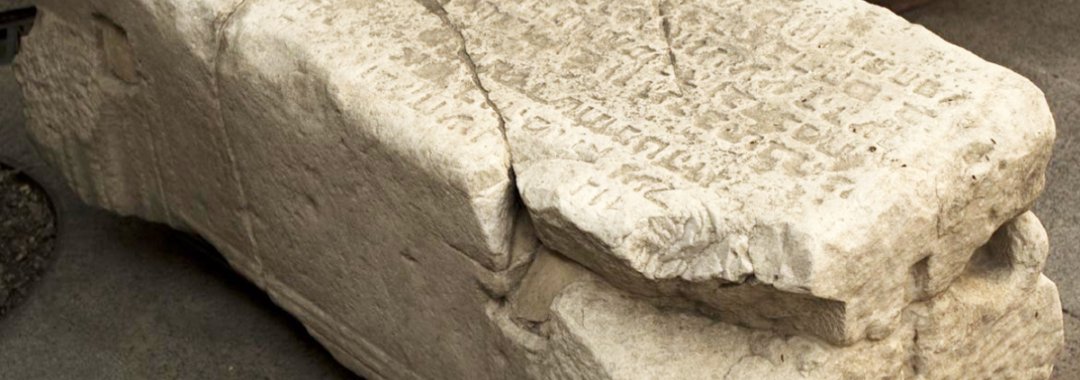
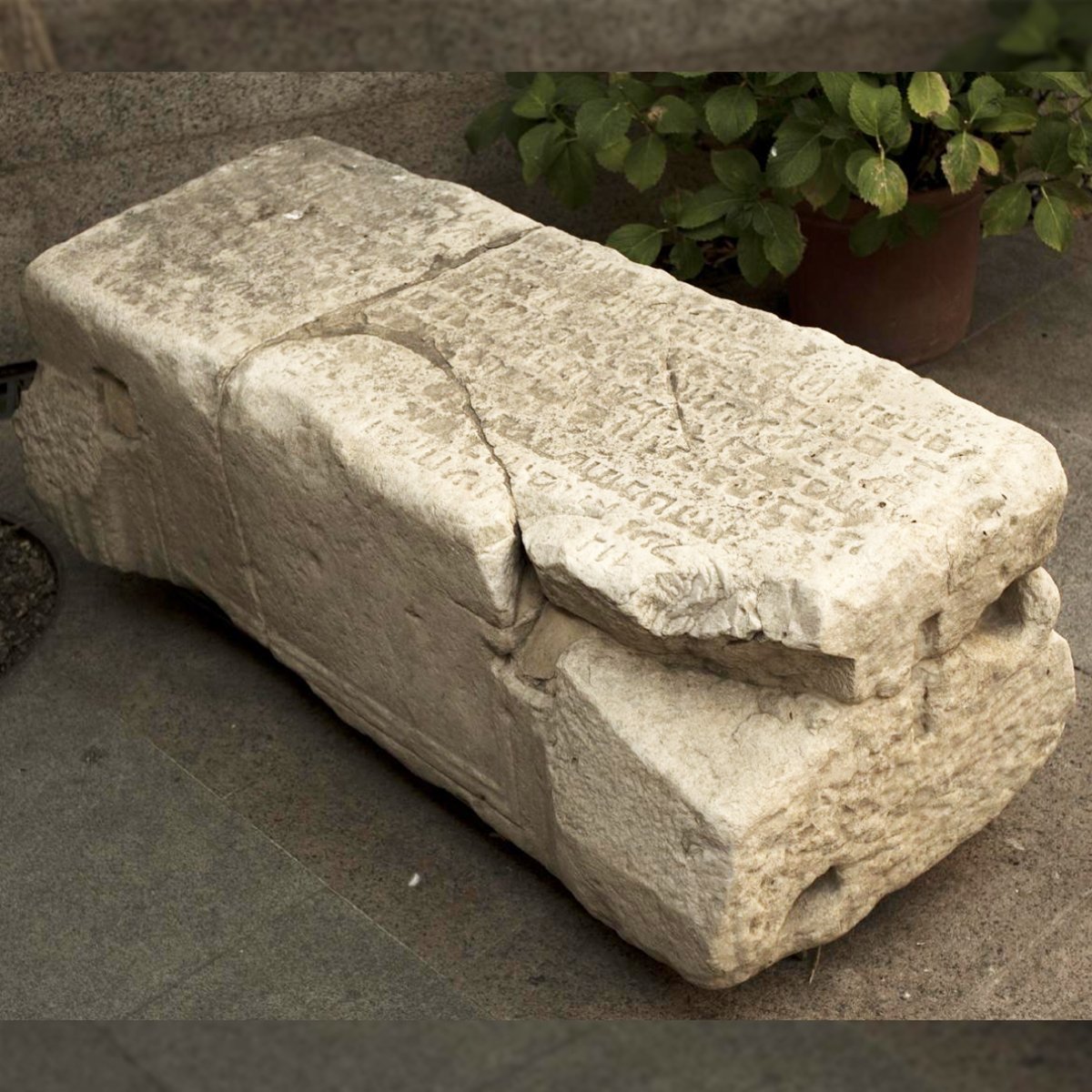
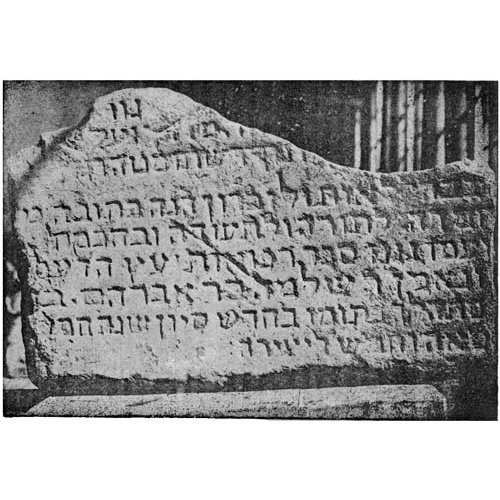
A Sevillian rabbi, astronomer and doctor whose existence is known to us through a tombstone preserved in the Sephardic Museum of Toledo. It is made using a white Roman cippus, currently broken into three pieces. It consists of a Hebrew inscription distributed in eight and a half lines in which R. Selomó, son of Abraham ben Yais, is remembered. Apparently, the tombstone was reused when the construction of the cathedral was undertaken in the 15th century.

Although the inscription is damaged in some of its parts, it has been possible to interpret it to a large extent. This is the transcription by Francisco Cantera Burgos:

Who sees in conspiracy? those who... against me/ the eye of... my fate was opened;/ because of... on my eyelids/ I... with enthusiasm?... my footwear./ Who crushes (tramples or vexes) a man.../ in the middle of his net he drew my foot. / This heap is a witness, and this pillar is a witness, as a sign and a reminder. It is written that here a museum of all precious objects concerning the Law and the Testimony was buried, and in the science of the stars he spoke wonders, and with him a book of medicine was hidden. Tree of knowledge, expert physician, pious, upright and truthful: R. Shelomo son of R. Abraham ben Ya`is - may he rest in glory - gathered his people, walking in his integrity, in the month of Sivan of the year five thousand one hundred and five of Creation.

The date (Sivan, 5105) is between May 3 and June 1, 1345. It should be noted that this epitaph is the only information we have about this character, since he is not mentioned in the rabbinical libraries nor does he appear in any other source. However, the quality and extent of his mortuary inscription is exceptional in the context of peninsular Judaism, which is why Rabbi Solomon deserves a mention when speaking of the Jewish quarter of Seville.

Rabbi Salomon's tombstone preserved in the Museo Sefardí de Toledo. The black and white image is taken from the article by Fidel Fita Colomé entitled "El cementerio hebreo de Sevilla. Epitafio de un rabino célebre"

JOSEPH PICHON

JOSEPH PICHON

(14th century)

His name is also transcribed as Yuçaf Picho. He was almojarife and chief accountant of the city and archbishopric of Seville. He was appointed in 1369 by Henry II of Castile, who highly esteemed him for his honesty and intelligence. But, following accusations brought by some rich coreligionists who had also been admitted to the court, Pichón was imprisoned by order of the king and sentenced to pay 40,000 doubloons. After paying this large sum within twenty days, he was released and reinstated in his position; in turn, he brought a serious accusation against his enemies, either in revenge or in self-justification.

Meanwhile, Henry had died and his son, John I, was his successor. Many rich and influential Jews had gathered from different parts of the country for the auction of the royal taxes in Burgos, where John's coronation took place. These Jews conspired against the life of Pichón, who was very popular with the Christians and had received considerable attention from the courtiers. It is not known whether he can be blamed in any degree for the extraordinary tax of 20,000 doubloons which Henry had imposed on the Jews of Toledo; but, be that as it may, some prominent Jews, representatives of various communities, went to the king on the day of the coronation and, explaining to him that there was among them a "malsin," that is, an informer and traitor who deserved death according to the laws of their religion, asked him to authorize the royal officers to execute the offender.

It is said that some of the king's henchmen, bribed by the Jews, induced Juan to give the order. The delegation then carried this order, together with a letter from several Jews who were the leaders of the community, to Fernán Martín, the king's executioner. The latter did not hesitate to carry out the royal order. On August 21, 1379, early in the morning, he went with Don Zulema (Salomon) and Don Zag (Isaac) to the residence of Pichón, who was still asleep. Pichón was awakened on the pretext that they were going to seize some of his mules; and, as soon as he appeared at the door, Fernán grabbed him and, without saying a word, beheaded him.

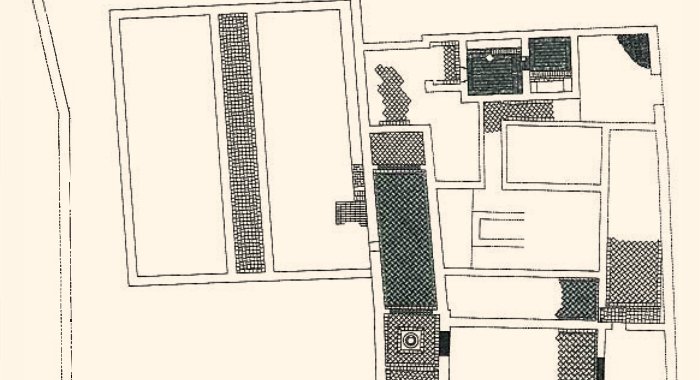
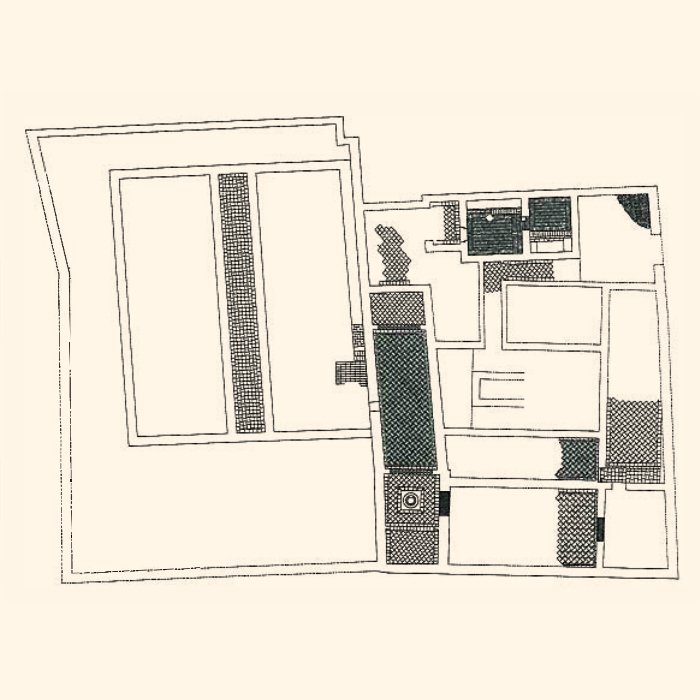
Plan of José Pichón's house in the Jewish quarter of Seville, according to the archaeological findings in the framework of the restoration of the Altamira palace. As we can find in "La restauración del palacio de Altamira" (Junta de Andalucía, 2005): The house built on plot C, with a surface area of ​​almost 1,000 m², was distributed on two parallel terraces with a difference in level of one metre between them, determining two areas differentiated by their use, each of 500 m². The highest one was used as a garden-orchard and the other as useful built surface. The entrance with a façade on the Dos Hermanas alley gave access to service areas, following at the back the noble rooms with the large open-air recreational space.

The execution of Pichon, whose name had been kept from the king, created an unpleasant sensation. The monarch was extremely angry at having been tricked into signing the death warrant of a respected and popular man who had faithfully served his father for many years. He had Zulema, Zag, and the chief rabbi of Burgos, who was in on the plot, beheaded; and Martin was to have suffered the same fate, but was saved by the intercession of some knights. He paid for his haste in the matter, however, by the loss of his right hand. As a consequence of Pichon's execution, the Cortes deprived the rabbis and the Jewish courts of the country of the right to decide criminal cases. The affair had the most disastrous consequences for the Jews of Spain, stimulating hatred of the population against them and contributing to the great massacre of 1391.

Joseph lived in Seville in a luxurious house that stood where the Altamira Palace is today, in the most central area of ​​the Seville Jewish quarter. During the archaeological excavation that took place at the end of the 20th century as part of the restoration of the palace, the structure of this house and its rich Mudejar decoration could be seen.

SAMUEL ABRAVANEL

SAMUEL ABRAVANEL - JUAN SÁNCHEZ DE SEVILLA

(14th century)

Samuel Abravanel was a Jewish financier and administrator whose date of birth is unknown but who developed his career in the second half of the 14th century. Although his place of birth is also uncertain, it is known that he was the son of Judah Abravanel, who held the position of chief almojarife during the time of Ferdinand IV of Castile. The anti-Jewish climate that broke out during the Castilian civil war between Pedro I and Enrique de Trastámara forced Samuel to adopt the Christian faith, taking the name of Juan Sánchez de Sevilla.

Samuel Abravanel was a Jewish financier and administrator whose date of birth is unknown but who developed his career in the second half of the 14th century. Although his place of birth is also uncertain, it is known that he was the son of Judah Abravanel, who held the position of chief almojarife during the time of Ferdinand IV of Castile. The anti-Jewish climate that broke out during the Castilian civil war between Pedro I and Enrique de Trastámara forced Samuel to adopt the Christian faith, taking the name Juan Sánchez de Sevilla.

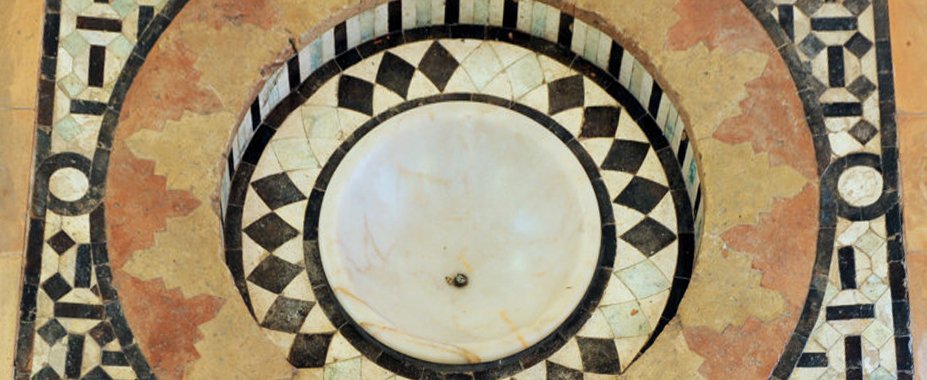
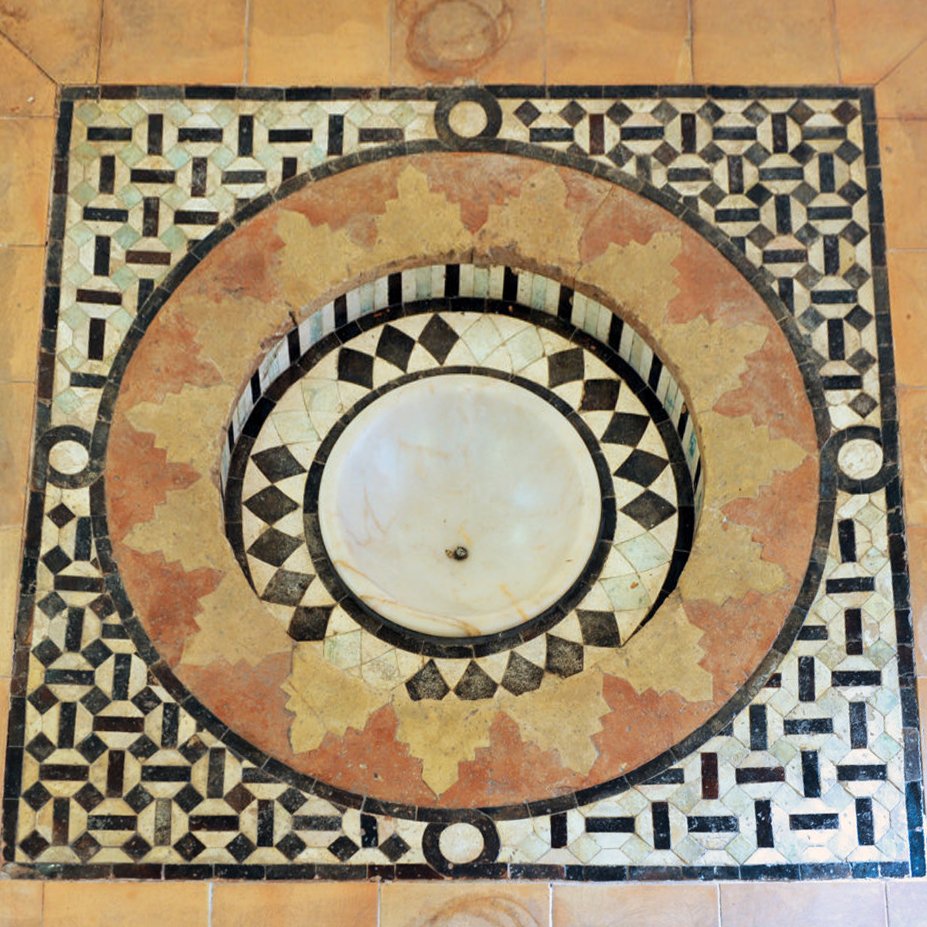
Fountain decorated with Mudejar tiling found in the archaeological excavation that took place in the Altamira Palace. It is believed to have belonged to the house where José Pichón and Samuel Abravanel lived successively.

Menahem b. Zerah wrote of him that he was intelligent, loved the wise, befriended them, was good to them, and was eager to study whenever the stress of time permitted. He and his family apparently later fled to Portugal, where they returned to Judaism and held important government posts. His son, Judah was in the financial service of Infante Ferdinand of Portugal.