BUILDING OF THE SEVILLE CHARITY ASSOCIATION

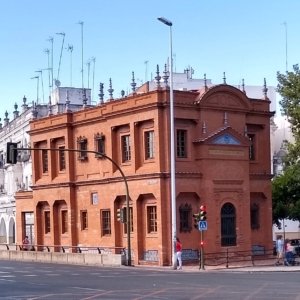
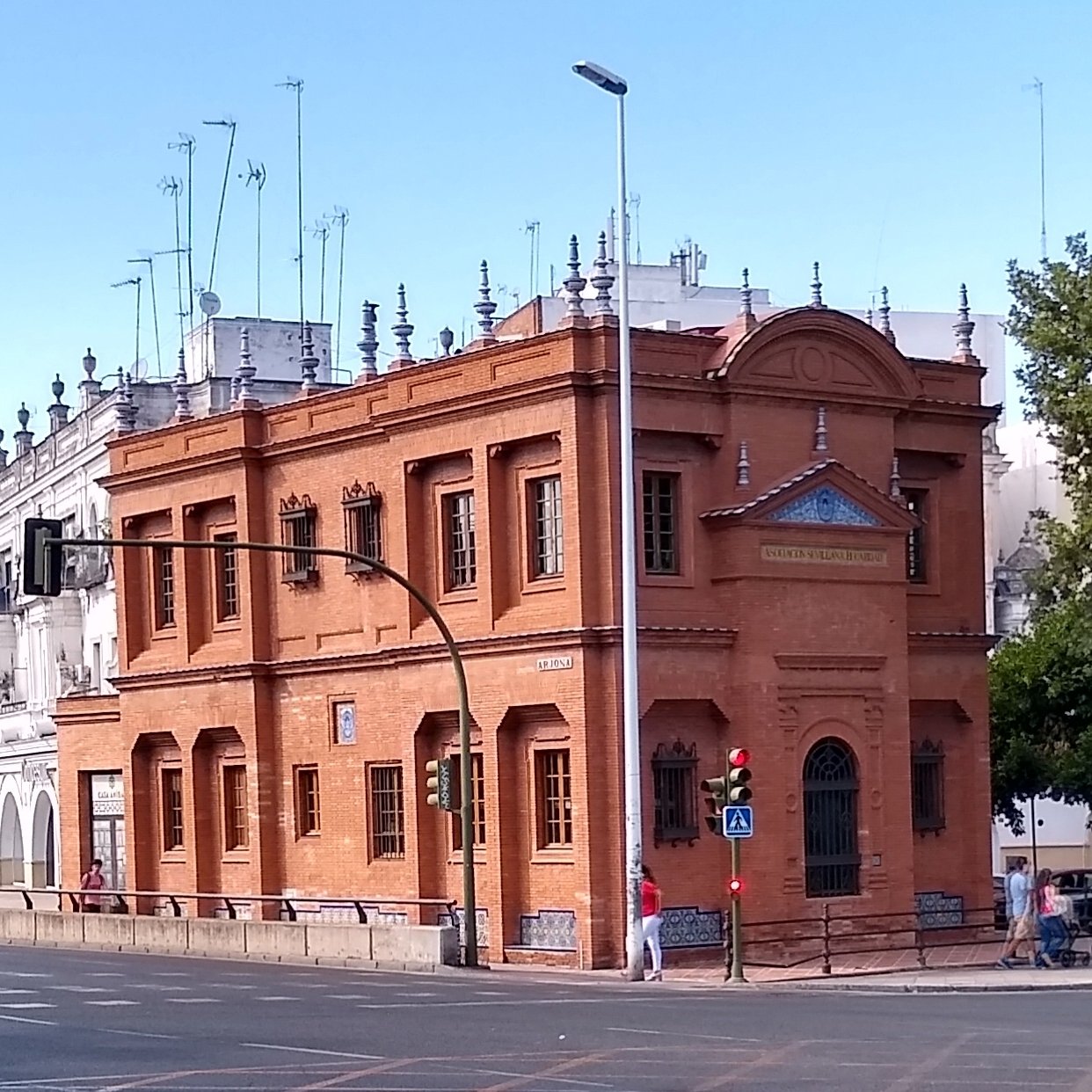
This regionalist building designed by Aníbal González stands at the intersection of Arjona and Reyes Católicos streets. It is known by the name of the organisation that commissioned its construction, the Asociación Sevillana de Caridad. It was built between 1912 and 1914 and originally had only one floor. In 1937, the architect Aurelio Gómez Millán was commissioned to build the upper floor, respecting the original layout as much as possible.

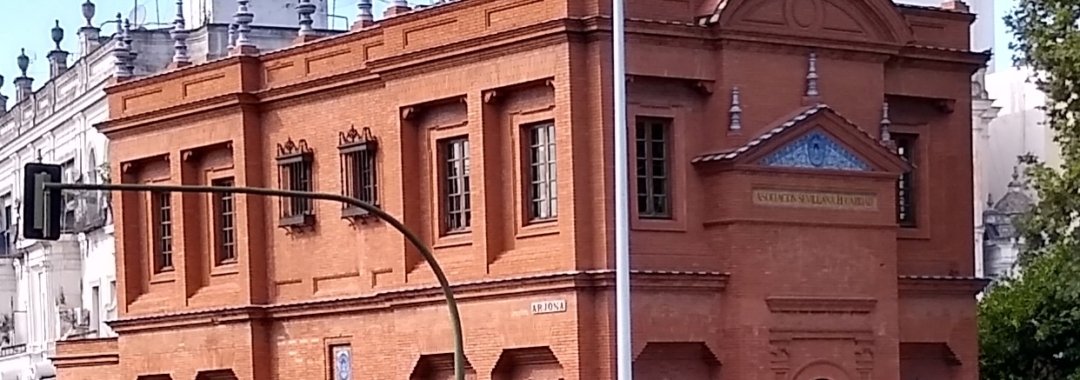
From the outside, the main feature of all the facades is exposed brick, which is abundantly used as one of the most characteristic elements of regionalist architecture. In the upper part, decorative ceramic elements help to break up the monochrome of the whole.

The two main entrances are framed by very classical structures. The one facing Reyes Católicos is flanked by pilasters and topped by a triangular pediment decorated with glazed ceramics. The entrance on Calle Segura is framed by columns, also made of brick, which support an entablature with a curved pediment, also with ceramic decoration.

Today, the building houses a restaurant and a hospitality school, both known as “Casa Aníbal”, in reference to the architect who created the original project.
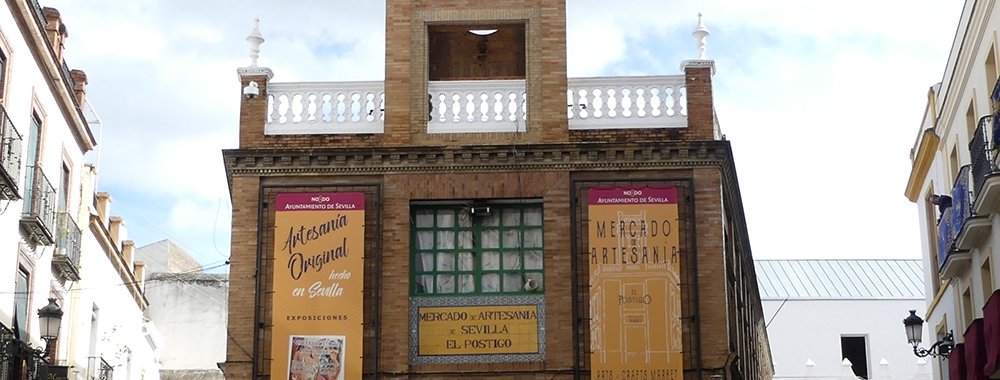
MERCADO DEL POSTIGO – POSTIGO’S MARKET

The Postigo Market is an interesting regionalist-style building designed by Juan Talavera y Heredia around 1926. Today it houses the El Postigo Craft Market, where around twenty local artisan workshops sell their products.

The building occupies a small block between streets, so it adopts a triangular shape with chamfered corners. It has two floors, in addition to the basement, which are arranged around a central space covered by skylights that allow light to pass through.


On the outside, we find exposed pressed brick and on the second floor there is a concrete balustrade that surrounds the terrace. Its main façade is the one facing north (Arfe Street). As it is the shortest, the architect emphasises its importance by erecting a simple square-shaped viewing tower above it, also topped by a balustrade.

* : Wikimedia

HEADQUARTERS OF THE REAL MAESTRANZA

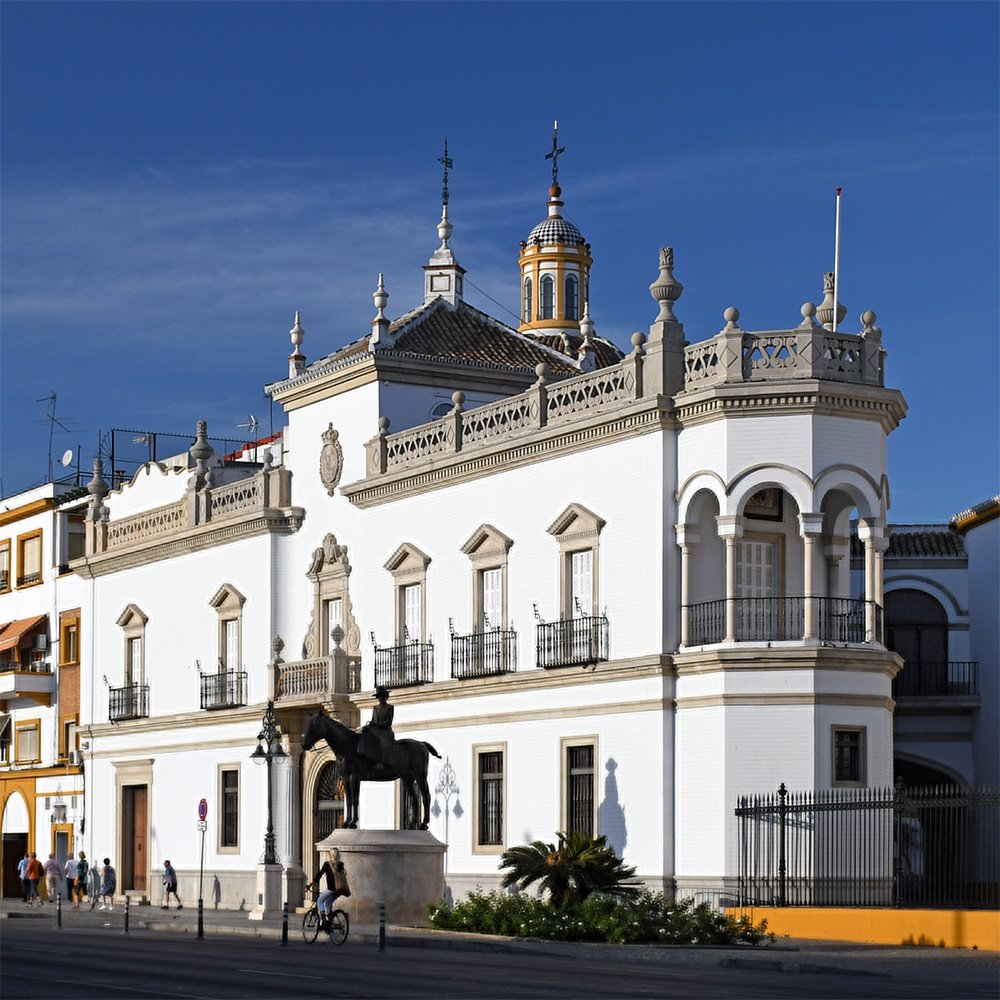
The headquarters of the Real Maestranza de Caballería is located next to the Plaza de Toros, of which this institution is the owner. It is a regionalist building in the neo-baroque style, designed by Aníbal González in 1929.

However, the property would undergo successive renovations and expansions in the following decades. In 1956 the chapel was inaugurated, the construction of which was directed successively by Gómez Millán, Medina and Barquín Barrón. It has a Latin cross plan, with a single nave covered by a barrel vault with lunettes. The central space of the transept has been covered by a lowered dome with a drum and lantern, sitting on pendentives.

The main altarpiece is recomposed taking parts of the primitive altarpiece that occupied the chapel that the Maestranza had in the church of the disappeared convent of Regina Angelorum. It was originally made under the direction of Francisco Dionisio de Ribas in 1668 and its sculptures are the work of Pedro Roldán. In its central niche, a dress image of the Virgin of the Rosary is venerated, a work by Cristóbal Ramos from the 18th century, considered the official patron saint of the corporation.